
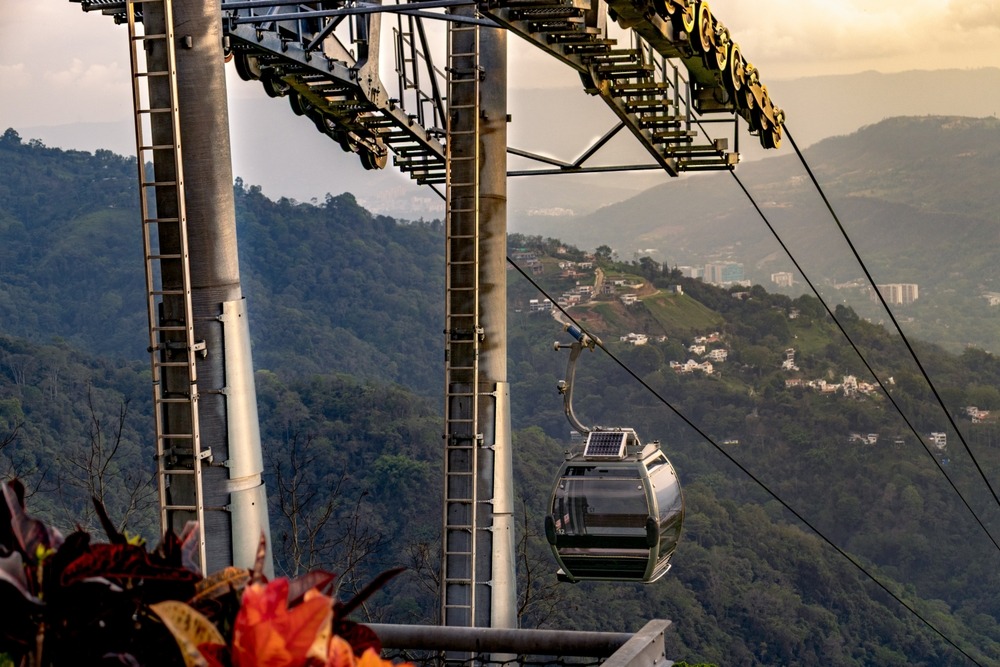
The project to build a cable car between the La Aurora International Airport and Antigua Guatemala will advance to a new analysis stage that will allow us to determine if the work can become a reality.
Although the proposal has generated expectations for its potential to reduce travel times and improve tourist connectivity, the authorities clarified that the project still does not have final approval and remains in the evaluation phase.
Representatives of the Central American Bank for Economic Integration (CABEI) They explained that the initiative will enter a pre-feasibility stage, in which key aspects will be analyzed to define whether the system is technically, environmentally and financially viable.
Second prefeasibility phase: What does it mean for the project?
According to CABEI, the project enters the second prefeasibility stagewhich consists of more in-depth studies that will allow us to answer a central question: is it viable to build a cable car between La Aurora and Antigua Guatemala?
For this, in-depth analyzes and studies will be carried out, among others:
- Demand study
- Analysis of alternatives
- Engineering technical evaluations
- Preliminary environmental and social analyzes
- Economic and financial evaluation
- Analysis of climate change and gender
- Definition of requirements for future development stages
The results will be used to determine if the project can advance to more detailed studies and eventually to a execution phase.
How long will the second pre-feasibility phase last?
According to CABEI, the consulting firm has not yet been hiredbut once the contract is signed, the second pre-feasibility phase will last approximately nine months.
During this period, technical information will be collected and different scenarios will be evaluated to establish if there is a viable mass transportation alternative between the capital and the colonial city.
Do you already know the cable car route?
The route that the future cable car would follow between La Aurora Airport and Antigua Guatemala It is one of the questions that arouses the most interest among Guatemalans. However, CABEI clarified that there is still no official definition of the route, the number of stations or the exact location of the stops, since these aspects will be part of the analyzes that will be carried out during the new phase of studies.
In recent days, a possible connection between the La Aurora Airportthe area of Cerro Alux and Antigua Guatemalabut the entity indicated that these options continue to be analyzed.
Precisely one of the objectives of the new studies will be to identify which are the most appropriate routes and which technology would offer the best results.
RELATED READINGS


What was done in the first phase?
Before reaching this stage, the project completed a conceptualization phase that concluded during 2025.
This work included a diagnosis of technological alternatives and possible routes to connect Guatemala City with Antigua Guatemala.
The information obtained served as a basis to advance towards more specialized analyzes that allow decisions to be made about the future of the initiative.
Who will finance the second pre-feasibility phase?
The new pre-feasibility studies will be financed by the German Development Bank KfWwhich joins the project as part of an international cooperation scheme for sustainable mobility initiatives.
RELATED READINGS
CABEI explained that this type of shared financing is common during the pre-investment stages and assured that it will continue to accompany the development of the project.
What impact would the cable car have?
If the studies determine that the initiative is viable, the project could become a new transportation alternative to connect one of the main entry points to the country with one of its most visited tourist destinations.
In addition to improving the mobility between La Aurora Airport and Antigua Guatemalathe proposal seeks to reduce transfer times, strengthen tourism activity and offer a more sustainable transportation option for national and international visitors.
For now, the future of the cable car will depend on the results of the pre-feasibility studies in the coming months.