
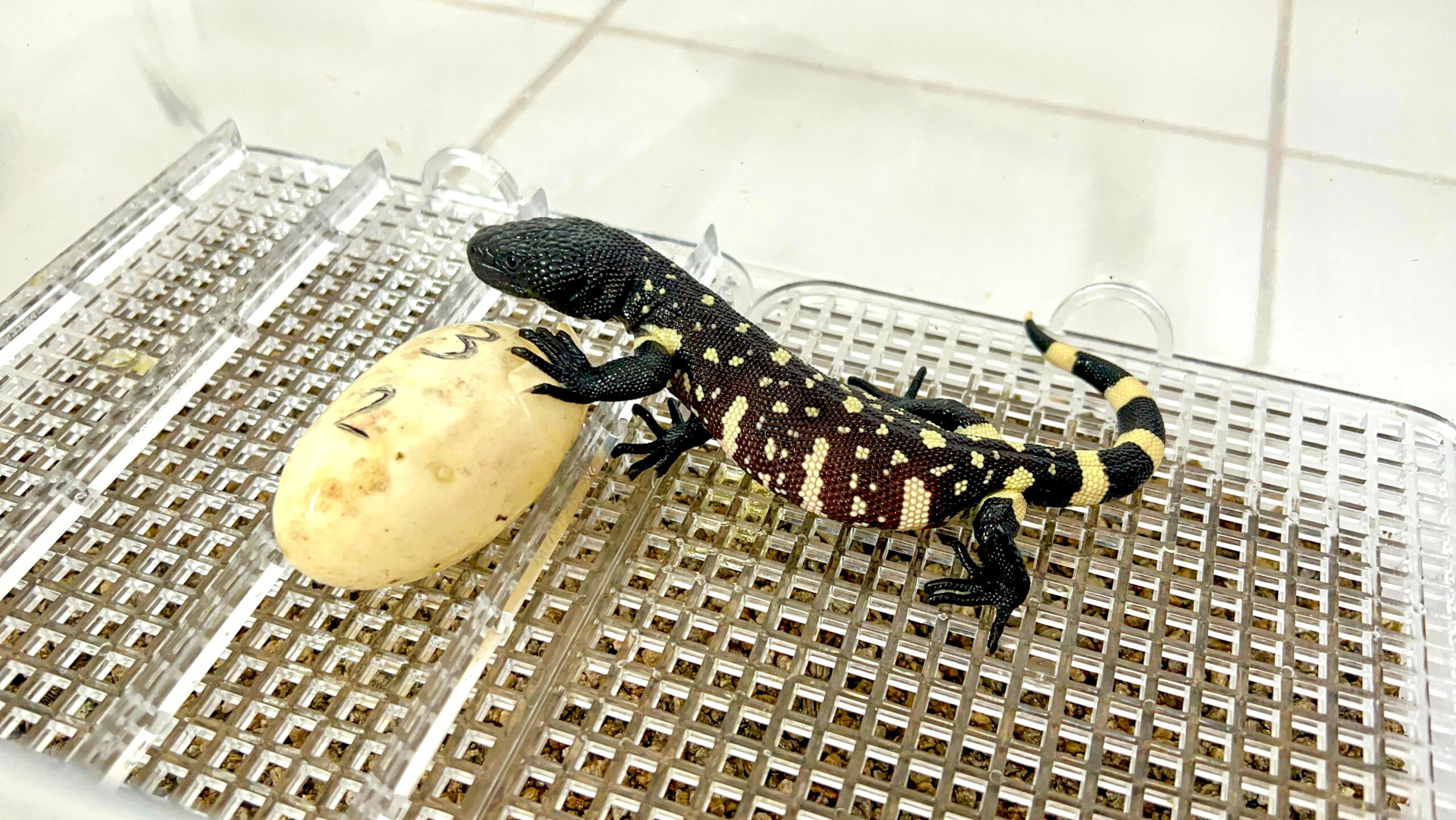
Heloderma charlesbogerti is classified as Endangered (EN) by the International Union for Conservation of Nature (IUCN), and approximately 500 individuals are estimated to survive in the wild. The species inhabits dry forest and tropical thorny forest ecosystems in the Motagua Valley, as well as a remnant population on the slopes of the Pacaya Volcano.
This event represents the second consecutive year of successful births under professional care and constitutes an important step forward for the conservation of one of the most endangered reptiles in the world.
In 2025, La Aurora Zoo achieved the first documented birth of Heloderma charlesbogerti within an ex situ conservation program in Guatemala and outside the United States. The birth of three new offspring in 2026 confirms the continuity of the reproductive program and strengthens the technical and scientific capabilities developed in the country for the conservation of the species.
“The consecutive birth of Heloderma charlesbogerti hatchlings evidences the technical and scientific consolidation of the conservation program developed in Guatemala. These results provide valuable information for the recovery of the species and strengthen collaborative work between institutions committed to the protection of national biodiversity,” said Dr. Rowland Griffin, Chief of Conservation of the La Aurora National Zoological Park.
The program began in 2019 as part of the National Strategy for the Conservation of Heloderma and its Habitats promoted by the National Council of Protected Areas (CONAP), in collaboration with the Universidad del Valle de Guatemala, the Heloderma Natural Reserve and Atlanta Zoo.
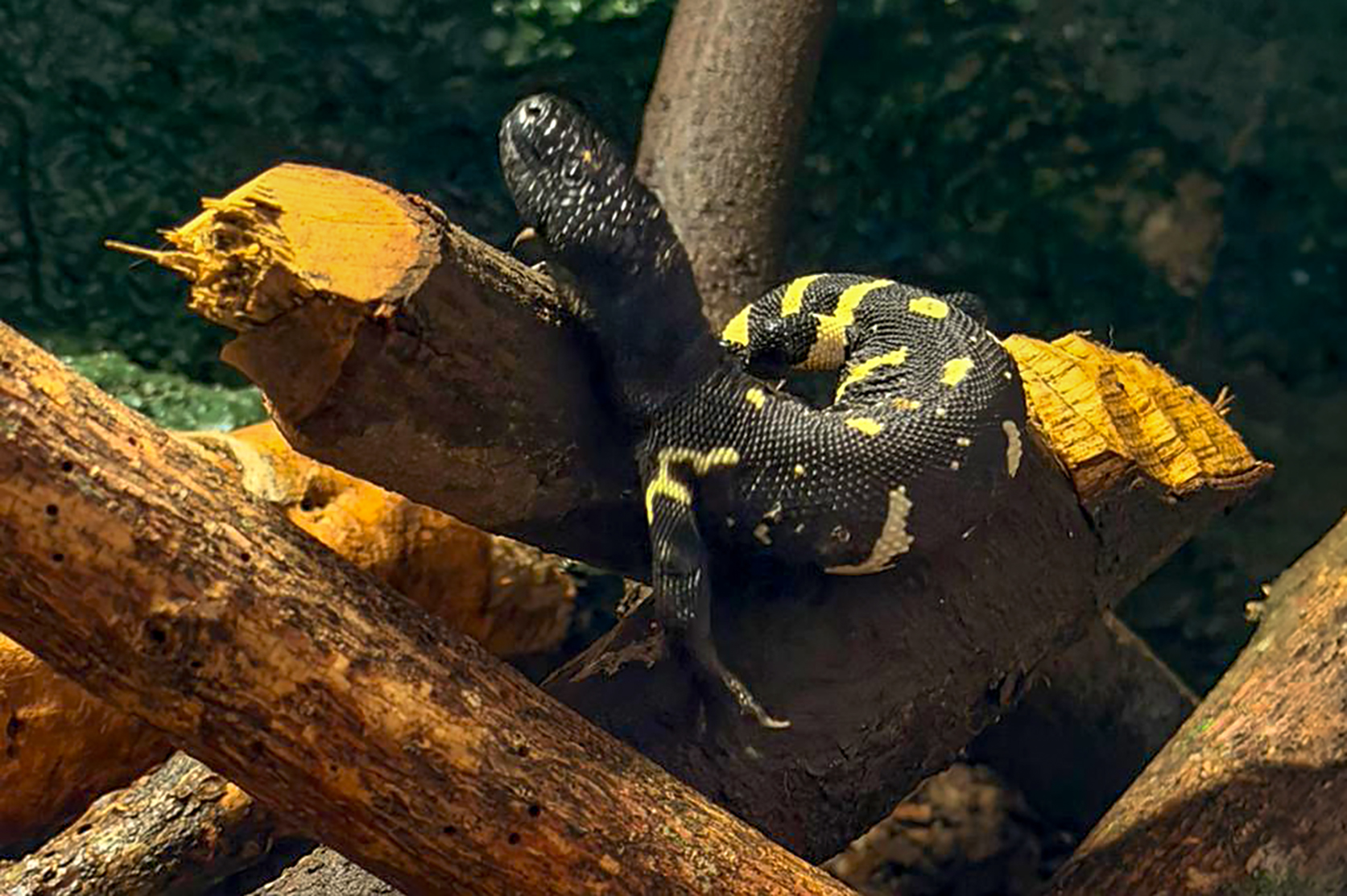
Currently, the project protects a population made up of individuals recovered from illegal wildlife trafficking and specimens born as a result of conservation efforts, contributing to the construction of a genetically viable backup population for the species.
The program integrates specialized management in herpetology, veterinary medicine, population genetics and reproduction. The enclosures replicate arid microhabitats of the Motagua Valley through thermal gradients, shelters and suitable substrates. In addition, specialized protocols for poisonous species, continuous veterinary monitoring, reproductive ultrasonography, nutritional control and artificial incubation are implemented.
Reproduction of Heloderma charlesbogerti represents a considerable technical challenge due to its highly specialized biology and low natural reproductive rate. The reproductive plan developed by the La Aurora Zoo includes ethological observation, follicular monitoring, controlled reintroductions, oviposition management and artificial incubation for approximately six months between 26.7 and 27.7 degrees, protocols that allowed the successful hatching of the three hatchlings born in 2026.
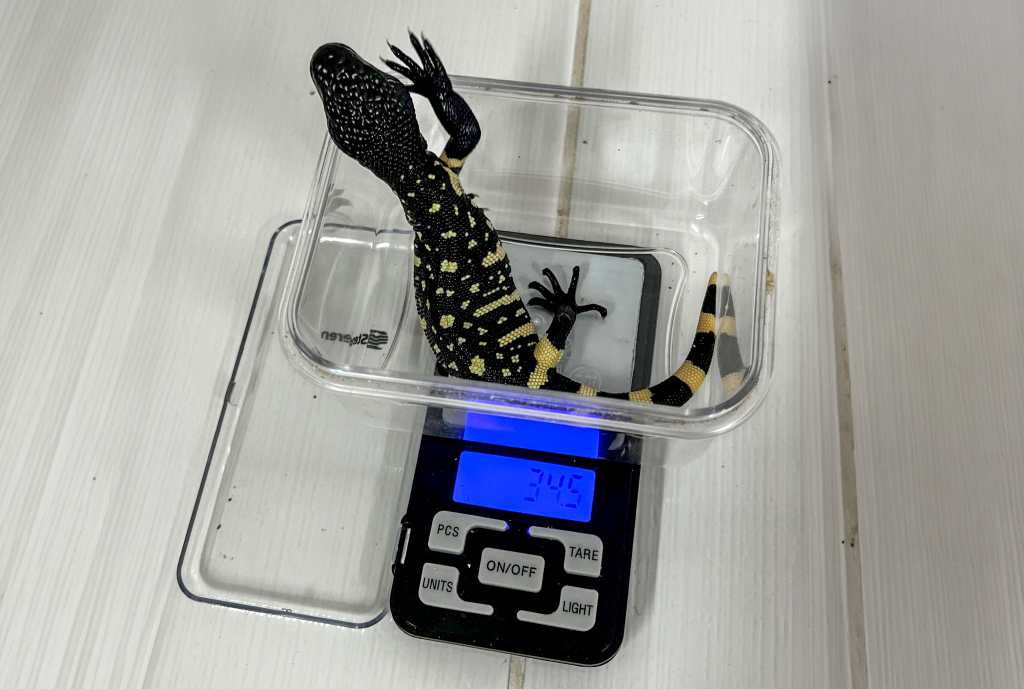
The project prioritizes gradual processes of adaptation and biological evaluation prior to reintroduction, seeking to maximize the survival and establishment of individuals in private reserves within their natural habitat in the Motagua Valley. This approach strengthens behavioral, health and adaptive preparation before re-entry into the wild.
In addition to its importance for population conservation, the program has generated scientific information on neonatal biometry, growth and reproductive management of the species, contributing to international technical knowledge about the Heloderma genus.
With this new achievement, the La Aurora National Zoological Park reaffirms its commitment to scientific research, the conservation of threatened species and the strengthening of national strategies for the protection of Guatemalan biodiversity.