
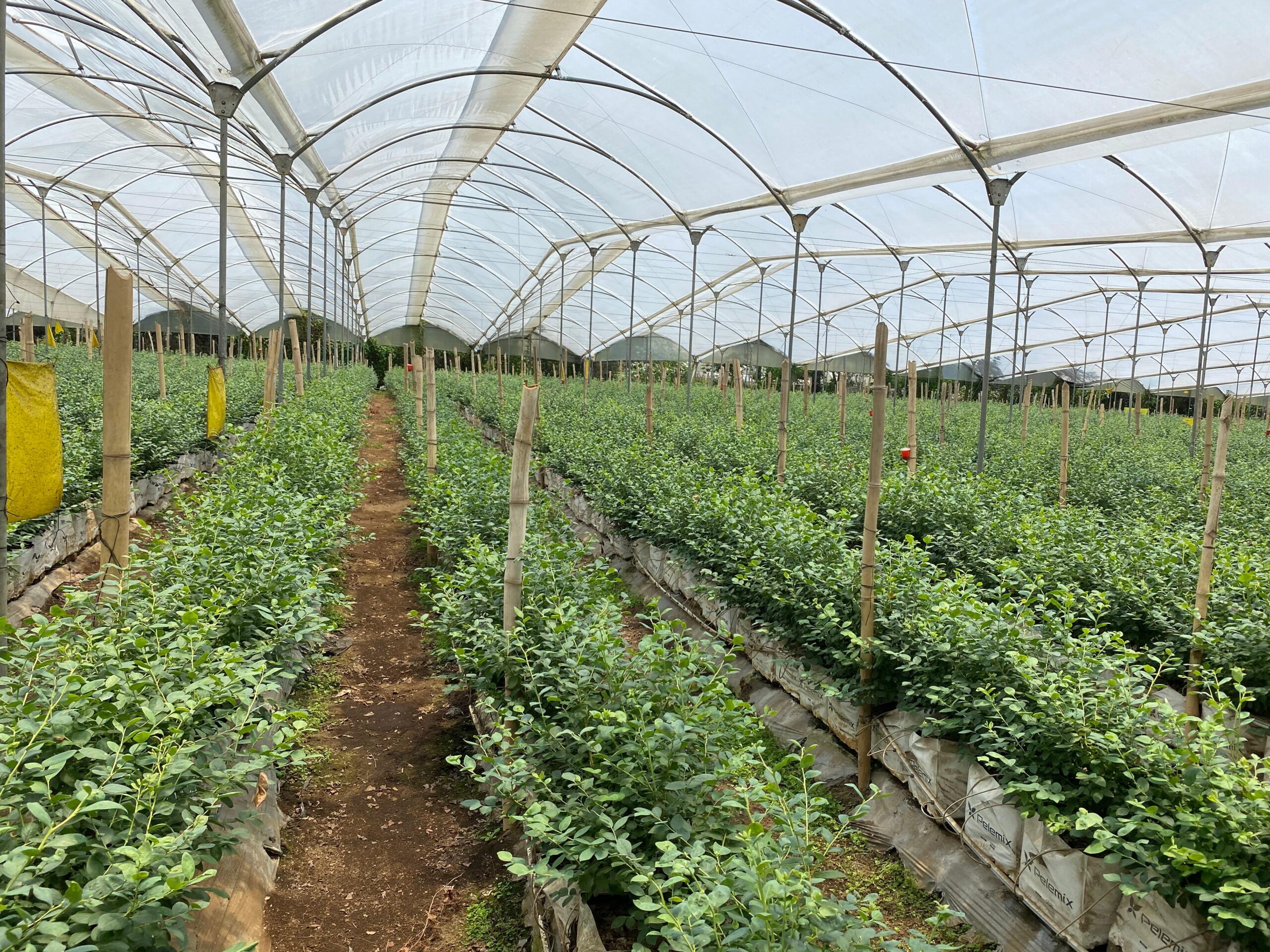
A review of the Free Trade Agreement (FTA) between Guatemala and Peru was requested by the country’s main producer and exporter of blueberries, which described the commercial instrument as disadvantageous.
The entry into force of the FTA between Guatemala and Peru, scheduled for July 1, is considered disadvantageous by the main producer and exporter of blueberries in the country. For this reason, consultations were raised with the Ministry of Economy (Mineco) and the Ministry of Agriculture, Livestock and Food (Maga) about the access conditions for fruits.
The request for review before the authorities was presented by Roberto Castañeda, president of the agro-exporter Planesa. The company has its production center in Parramos, Chimaltenango; It maintains production chains in its area of influence and supplies supermarket chains in several countries.
On July 5, José Reyes Llanos, Minister of Foreign Trade and Tourism of Peru, and Gabriela García de Quinn made official the entry into force of the commercial instrument between both countries, which had remained in suspense for several years.
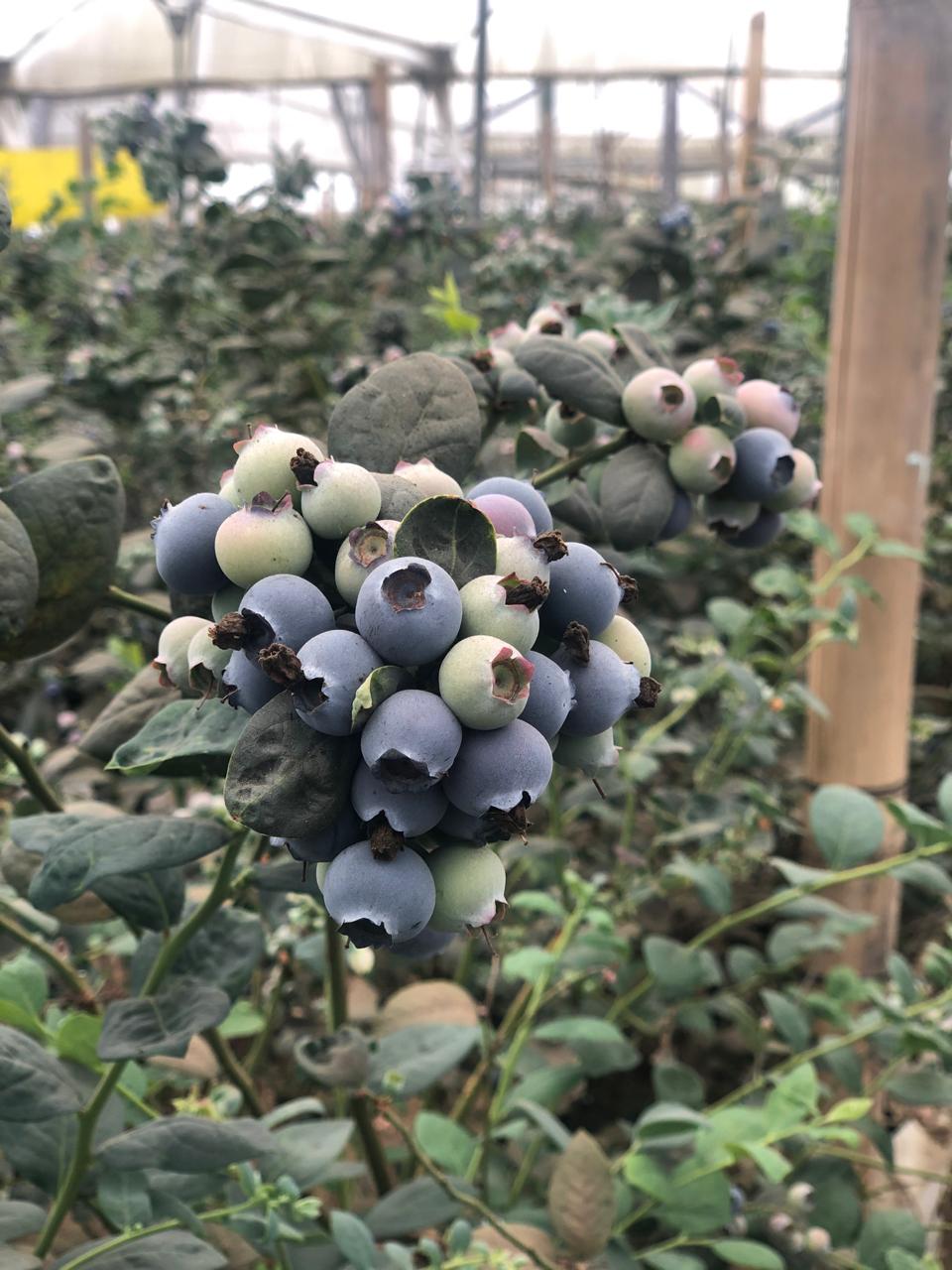
According to Castañeda, in this case the necessary consultations were lacking, since the current conditions differ from those that existed when the treaty was negotiated. He explained that Peru is now one of the main producers of blueberries and exports to the United States and China. In addition, it has turned its attention to Central America, which could displace national production, affected by the application of a 10% tariff to market in the United States.
Blueberries on alert due to TLC
Castañeda explained to Free press that the concern lies in the fact that the FTA with Peru was negotiated in 2011 and will come into force in 2026. He considered that it is too long a period, during which there have been numerous commercial changes, especially in the agricultural sector, so several crops that did not exist then could now be affected.
He cited as an example the application of a 10% tariff by the United States on fruits and vegetables, a measure that, according to him, has hit agriculture, employment and small businessmen dedicated to the cultivation of vegetables and blueberries.
He added that, due to tariffs, Peru has directed part of its trade strategy towards Central America, within a diversification process that it had been developing for several years.
Mexico is the main producer and exporter of blueberries to the United States and accesses that market free of tariffs. In Europe, demand is met according to the production season.
Regarding Canada, he indicated that Guatemala already supplies that market, although there is uncertainty due to the political situation related to the United States.
He recalled that Guatemala began negotiations with Peru in 2011 and ratified the FTA in 2014, while Peru did so in 2026.
“The problem here is that from 2011 to 2026 there have been a number of changes in production, both theirs and ours. And in the case of Guatemala, it turns out that, of the sensitive products, 50% of what they are interested in in this treaty corresponds to agriculture,” said Castañeda.
When asked about the issue, the Peruvian ambassador to Guatemala, Guido Toro, indicated that he could not comment on the matter.
They point out phytosanitary risk
The other part of the review focuses on phytosanitary aspects, because in Peru there are pests that are not present in Guatemala and that represent a risk for national agricultural production.
He specified that this is what free trade agreements are for: to protect local producers, promote employment and allow the exchange of those products in which there is capacity for competition, without affecting the most vulnerable sectors.
“The problem here is that from 2011 to 2026 there have been a number of changes in production, both theirs and ours. And in the case of Guatemala, it turns out that, of the sensitive products, 50% of what they are interested in in this treaty corresponds to agriculture.”
Roberto Castañeda, president of Planesa
As an example, he mentioned that Mexico exports to the United States with a 0% tariff, a situation that affects the competitiveness of other products, such as minivegetables and some fruits.
According to Castañeda, one of the disadvantages is that Guatemala does not have access to the Peruvian market to export blueberries, while Peru could enter that product into the Guatemalan market. In addition, he warned about the risk that pests represent for non-traditional agricultural crops.
Treaty does not reflect changes
Former negotiator and foreign trade consultant Sonia Reneé Lainfiesta explained that it is common for there to be an outdated text between the negotiated text of a treaty and the one that finally comes into force.
He indicated that, when an FTA comes into force many years after having been negotiated, as is the case in Peru, it is normal for differences to arise between the original text and the current productive reality.
He explained that the protocol that Guatemala and Peru signed in 2025 sought to update the treaty without reopening the entire negotiation. To this end, the rules of origin were adjusted to the current Harmonized System, the tariff lists were correlated and some annexes related to services and investment were reviewed, although The basic market access structure agreed upon more than a decade ago was maintained.
“This explains why today products appear that at that time were of no interest and that, therefore, were not prioritized in the original lists,” he added.
Mineco can propose changes
Lainfiesta explained that the FTA contemplates review mechanisms through which new approaches could be incorporated, as requested by one of the parties. He added that this management corresponds to the Ministry of Economy (Mineco).
FTAs, he indicated, usually include joint administration mechanisms that allow them to be reviewed and updated without the need to renegotiate them from scratch.
“Once the FTA with Peru is in force, the Ministry of Economy can use the administrative commission of the agreement to propose specific reviews; for example, accelerate the reduction of tariffs on certain products, adjust deadlines or even incorporate new tariff lines that are more relevant today,” he indicated.
On the other hand, he pointed out that This type of treaty also includes trade defense instruments.
The agreement with Peru includes a safeguards chapter that allows temporary measures to be applied if a sudden increase in imports associated with the FTA and serious damage to local production is demonstrated, in order to provide respite for national producers.
“This implies that, beyond the agreed tax reduction, Guatemala retains tools to react to an extreme scenario,” he warned.
Producers can resort to safeguards
Regarding blueberries and other fruits, the foreign trade specialist proposed several possible scenarios.
In the case of blueberries, he indicated that the first step is to closely monitor the evolution of Peruvian fruit income, in terms of volumes, prices and impact on employment and local investment.
He explained that, if in one or two years a disproportionate growth in imports is observed that affects Guatemalan producers, there would be two complementary routes. The first would be to use the safeguard mechanisms provided for in the treaty itself and, the second, to propose to the administrative commission a review of the tax relief schedules or certain specific conditions.
He added that the FTA does not leave the producer defenseless, since it combines trade opening with instruments to correct imbalances, always based on technical evidence and through dialogue between the parties.
He reiterated that the activation of any of these mechanisms requires demonstrating that the impact on national production is due to the increase in imports of a specific product as a result of the tariff relief granted in the treaty.