
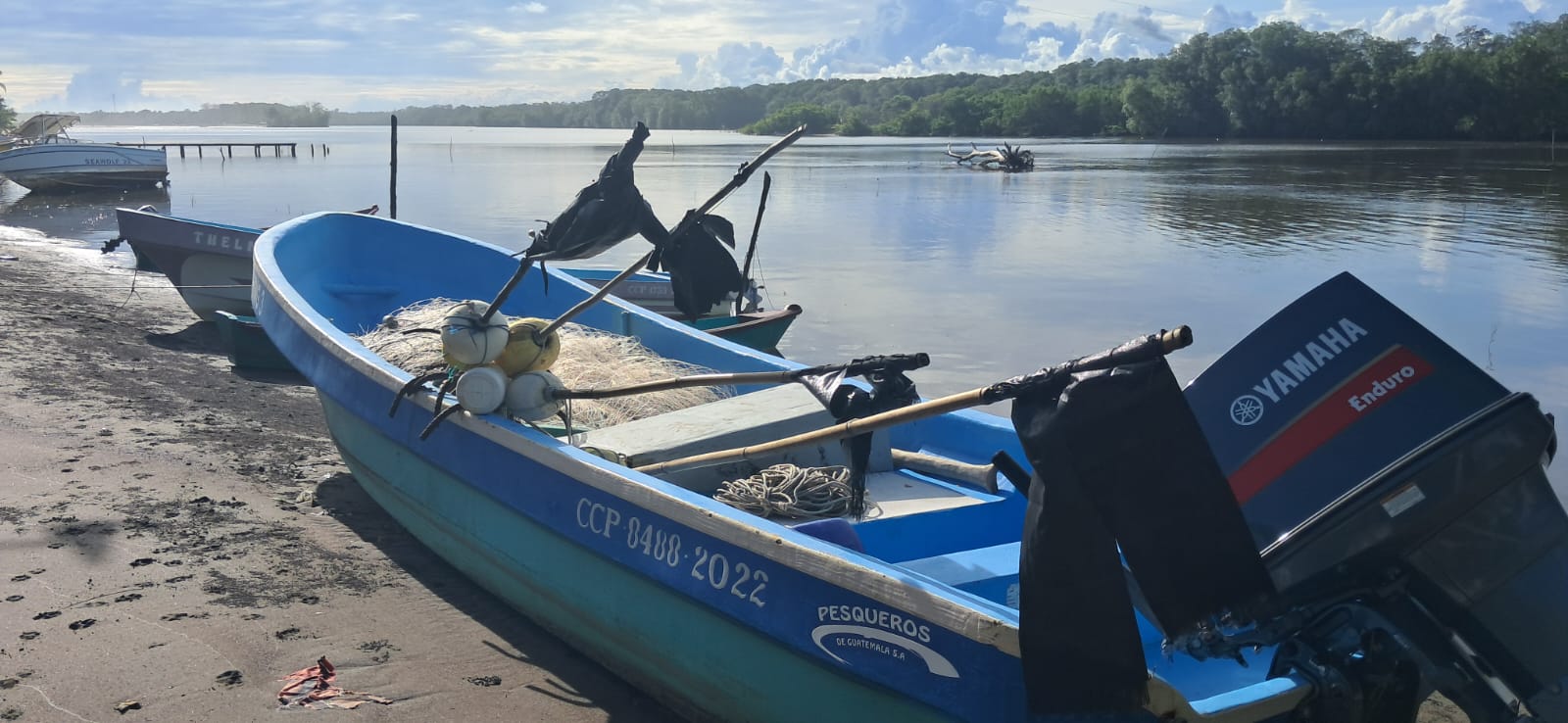
There are mornings when the Pacific Ocean does not dawn calm, but rather imposes its force. Tuesday of this week was one of them. While the rest of the country woke up with the usual routine, on the high seas, aboard a small 21-foot boat, Antonio Flores and two companions felt the water change at a strong and unusual rhythm. The Storm Christina I didn’t come alone; brought with it indirect effects that the artisanal fishermen of the village El Jiote, Pasaco, Jutiapathey hadn’t seen each other for a while.
“That day we spent 40 minutes waiting for the chance to enter, because they were waves that crashed head-on, sideways. Sometimes in five or 10 minutes we managed to cross, but that day was different,” he said.
At times, the waves were so high that the coast disappeared from view. “When the wave passed, we were left in a void and we could no longer look at the land. That’s when we noticed that this was not normal,” he recalled.
“We stayed because we know that this is what a day of work can be like, but without knowing that it would be the last thing we would catch, and we had no idea what was happening on the shore of the beach; we realized it even when we returned,” he added..
They found water where there is normally dry sand. The sea had overflowed into the estuary, breaking natural barriers and entering homes.
The “tumbos”, as the currents are called locally, were entering the land. They didn’t seem strong, but, as a video shows, they were steady and pulled the water in quickly.
“We ran to get to the houses. The first thing I did was look for my children and start protecting the things in the house. Because as a parent, the first thing you think about is that, how to protect your family. The children are the ones who suffer the most because they get scared and cry when these things happen,” he said.
Antonio lives practically between the sea and the Chiquimulilla canal. Since he was a child, he has known the behavior of the tides and assures that this week’s phenomenon was different from any normal rainy season.
“When the tide rises normally the wave is small. This time both things grew at the same time. The natural barrier that protects the beaches no longer worked and the water began to get in,” he explained.
Although he remembered a similar event about 10 years ago, he assures that the current one was much more severe.
A sea that advances every year
Beyond the immediate damage, there is something that has worried the inhabitants of El Jiote for years; they feel that the ocean is gradually approaching their homes.
“Before the beach was about 100 meters away. Now we have it 10 or 15 meters away. The sea has been eating up land year after year,” said Flores.
Your case is an example. A beachfront building was about 60 meters away during the dry season. After the effects of this week’s waves, he estimates that he is now just five or 10 meters from the edge.
“Only with the rainy season and this phenomenon did the sea get about 30 meters closer. The difference was noticeable,” he added.
“If this continues like this, in about 10 years it will be hard to live here. We have to start looking for safer places for our families,” he said.
The situation has led many families to discuss something they did not think about before: leaving the place where they have lived for generations. However, it is not an economically easy decision.
Fishing stopped and income disappeared
At first glance, today the weather seems to have improved. The sun shines on the coast of Jutiapa, but calm does not come for the fishermen. Behind the apparent normality lies the crisis of a coastal region that lives in isolation, faces hunger and was left restless by the advance of the sea.
The community’s main source of income was paralyzed.
After the strong waves, the sea was agitated by the effects of the phenomenon. The currents removed the seabed and what they dragged remains suspended in the water or is trapped in the nets.
“Right now the problem is not so much the waves, but all the sediment that was left. The sea moved the bottom and dragged mountains, grass, sticks and mud. When we throw the nets, the first thing they grab is garbage and not fish. We have to wait for the sea to settle again,” he explained.
Since then, Flores and dozens of fishermen have not been able to work normally.
“A colleague went out fishing and returned with the boat almost sunk from so much bush and grass he pulled out. He didn’t catch any fish. It was practically a loss,” he explained. He estimates it could take another six to eight days before conditions are favorable again.
Artisanal fishing is the economic base of many families in the sector. On an average day, each fisherman can get between Q100 and Q200 a day after selling snapper and bass in the neighboring village of Las Lisas, depending on the catch. Now that income has disappeared.
They haven’t been able to work for four days. At Antonio Flores’ table he eats the last fish he managed to freeze before the disaster, but the days go by and his worry grows: his three children must attend school and cash is scarce.
“We have children studying. We need cash to move, to buy food. We cannot wait long,” he stressed.
While the time comes to return to the sea, they survive with the last reserves of fish they managed to catch before the emergency.
“The last fish I caught I kept in my freezer. That’s what we’ve been eating these days,” he said.
The other blow: tourism
Flores is not only a fisherman, he is an entrepreneur who built a small tourist project facing the sea with effort and bank loans. It offers bungalows equipped with air conditioning and swimming pool. It also offers live tourism tours, such as sport and artisanal fishing, scientific observation tours and whale watching. Today everything is paralyzed.
Therefore, while he observes the damage left by the waves, he also faces another concern: the images spread on social networks drive away visitors.
“What we live here is from fishing and tourism. But right now, with all that amount of videos that people have uploaded, the entire sector was alarmed. I had reservations and people have canceled; they say that they are not going to come until the summer because of the fear that was spread. And what is going to happen with the infrastructure credits? If we are not generating, I don’t know what is going to happen,” he stated.
He worries that the emergency will leave a wrong perception about the destination.
“The phenomenon affected us, yes, but we are also worried that people think they can no longer come. We depend a lot on tourism,” he said.
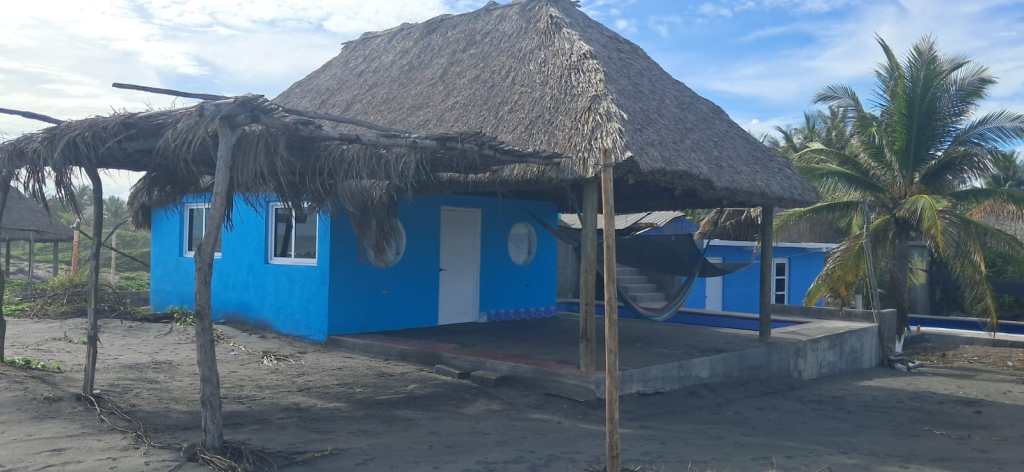
The problems continue even after the sea receded. The waves flooded the village’s artisanal wells and contaminated them with seawater, a situation that affects daily activities such as bathing, washing clothes or cooking.
“The wells were contaminated with salt water. It’s complicated because here we depend on that water, it’s hard to bathe in salt water. Also, right now my wife and daughter got a fever, a lot of headaches, bone pain… There are a lot of mosquitoes.”
El Jiote is isolated, enclosed between the Chiquimulilla channel, the ocean and two bocabarras. No vehicles enter; all transportation is by boat. The nearest health center is miles away and lacks medicine. “They give us a piece of paper to go buy medicine at the pharmacy,” Flores lamented.

A call to the president: “We are isolated”
As vice president of Community Development Council (Cocode)Antonio Flores has spent the last few days managing help so that the community receives assistance. The National Coordinator for Disaster Reduction (Conred) promised 42 servings of food and ecofilters for the village families. However, he knows that the food bags are only a temporary relief for the community that survives on the South Coast coastline.
Institutional abandonment is historic. The El Jiote village suffers a political division: one part belongs to Moyuta, another to Pasaco and another to Chiquimulilla, Santa Rosa. In the past, when asking for support for high-rise stilt housing projects, the municipal response was a slam of the door: “They told us that there are too few inhabitants for a project to merit.”
Today, seeing how the planet “is warning us to look at it more” due to pollution, Flores takes the opportunity to make a direct and humane call to the President of the Republic so that he does not leave them forgotten:
“We ask Mr. President to support us, to look back at these coastal communities. We are isolated, we have no roads and the sea is gaining ground on us. We need safe housing alternatives to protect our families, children and women who are the ones who suffer the most and cry when they see the magnitude of this. “Don’t leave us alone,” he said.
Read also: Soil saturation in seven departments increases the risk of flooding and river flooding