
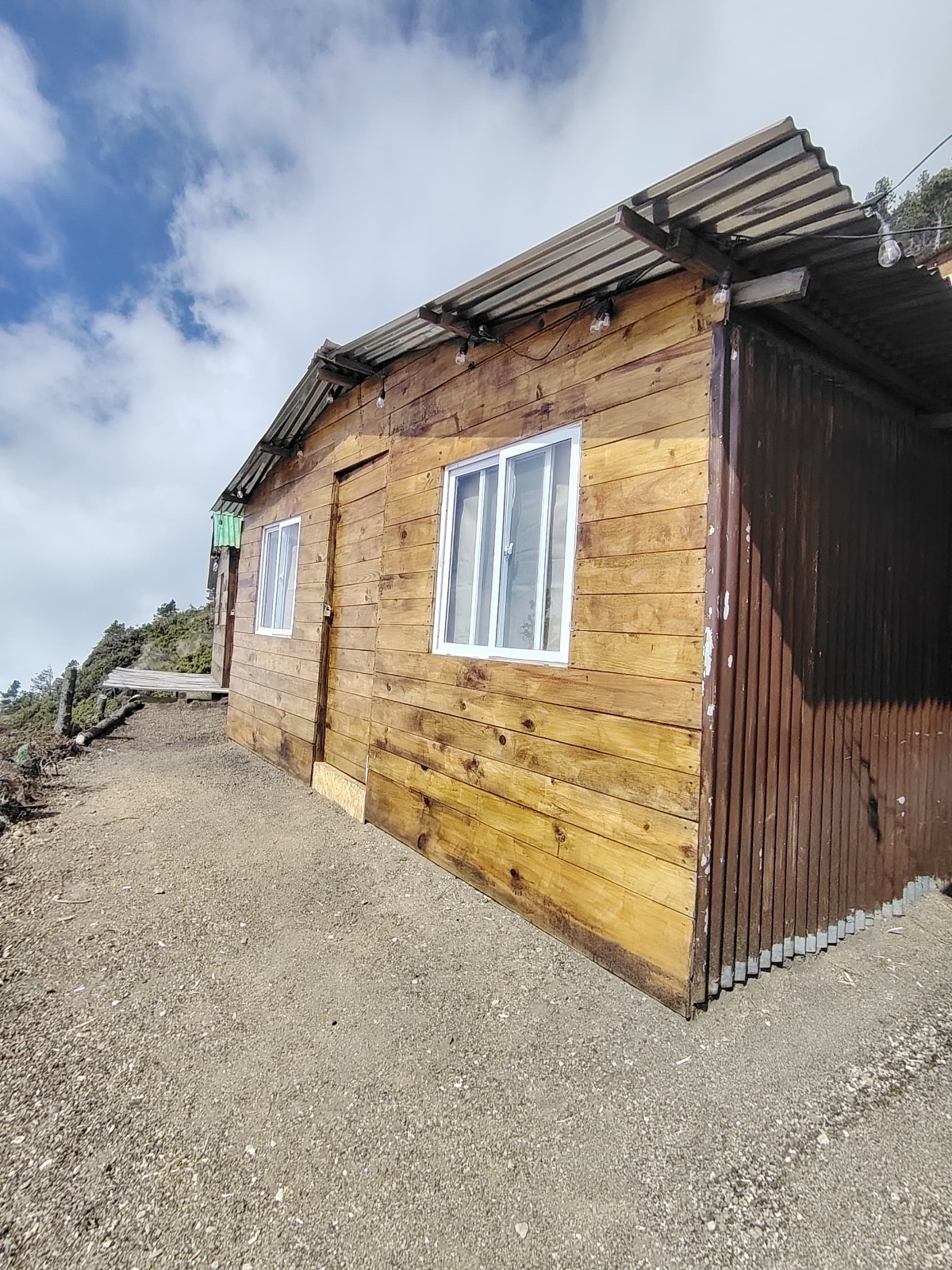
The image looks like something taken from a postcard. A tourist wakes up in a cabin installed on the slopes of the Acatenango volcano, Open a window, have a cup of coffee and observe, in the distance, the explosions of lava, ash and rock ejected by the Fuego volcano. The scene, spread by tourism agencies and content creators on social networks, became one of the main tourist attractions in Guatemala for national and foreign visitors in recent years.
However, behind this experience promoted as unique there is a reality that worries environmental authorities, mountaineers and conservationists: the proliferation of unauthorized constructions, forest clearing, trail erosion and growing pressure on one of the most important mountain ecosystems in the country.
Over the past five years, the Acatenango volcano has experienced accelerated growth in the number of visitors. Testimonies collected by Prensa Libre during a visit to the site indicate that tour operators abroad identified a business opportunity in the face of growing international demand, particularly from European tourists attracted by the possibility of closely observing the activity of the Fuego volcano.
Genesis of the business
A mountaineer, who prefers anonymity for safety reasons, details that in 2021 there was a boom in visitors, especially foreigners.
“Nothing was by chance. Here, the tour guides began to notice a significant increase in visits, and tourists asked to stay in a cabin. There were not two or three reservations; I remember that there were large groups of foreigners who climbed the volcano and requested a place to spend the night. That same year there were people who built the first cabins. They were people I met and whose job was to protect the forests, but demand and business led them to build,” he remembers.
“What the guides or the agencies that built cabins do not say is that the boom began with foreign agencies. In 2021, agencies in Europe sold the idea of coming to sleep at the Acatenango volcano to observe the eruptions of the Fuego volcano. From abroad they saw the opportunity to secure expeditions of one hundred or 150 tourists, who pay in their country and here have everything insured. There is a well-established organization since 2021, in which agencies from Guatemala and the foreigner,” reveals the source.
What for years was a destination frequented mainly by hikers and nature lovers became one of the most popular tours in the country. The influx of visitors prompted the construction of cabins for accommodation and services in high mountain areas.
tourist corridor
For those who knew the Acatenango volcano before the tourist boom, the changes are evident. The mountaineer Josué Castellanos, known as the Mountaineering Profe, assures that the increase in visitors became especially visible after the covid-19 pandemic.
“It was after the pandemic, in 2021, when a kind of boom occurred. Many people looked for new outdoor activities and mountaineering became an attractive option. Since then, overcrowding began on the volcanoes and, specifically, in Acatenango,” he says.
Although it recognizes that tourism generates economic benefits for nearby communities, it considers that the growth occurred without sufficient environmental education.
“More and more people are arriving and polluting with garbage and noise. Before the pandemic, fewer visitors came and the forest was better preserved,” he says.
The mountaineer remembers that on his first visits he found little-traveled trails, an absence of buildings and an experience that he describes as almost mystical. “There was more peace and quiet. You could even hear the coyotes howling at night. I’ve been back many times and I haven’t heard them anymore,” he says.
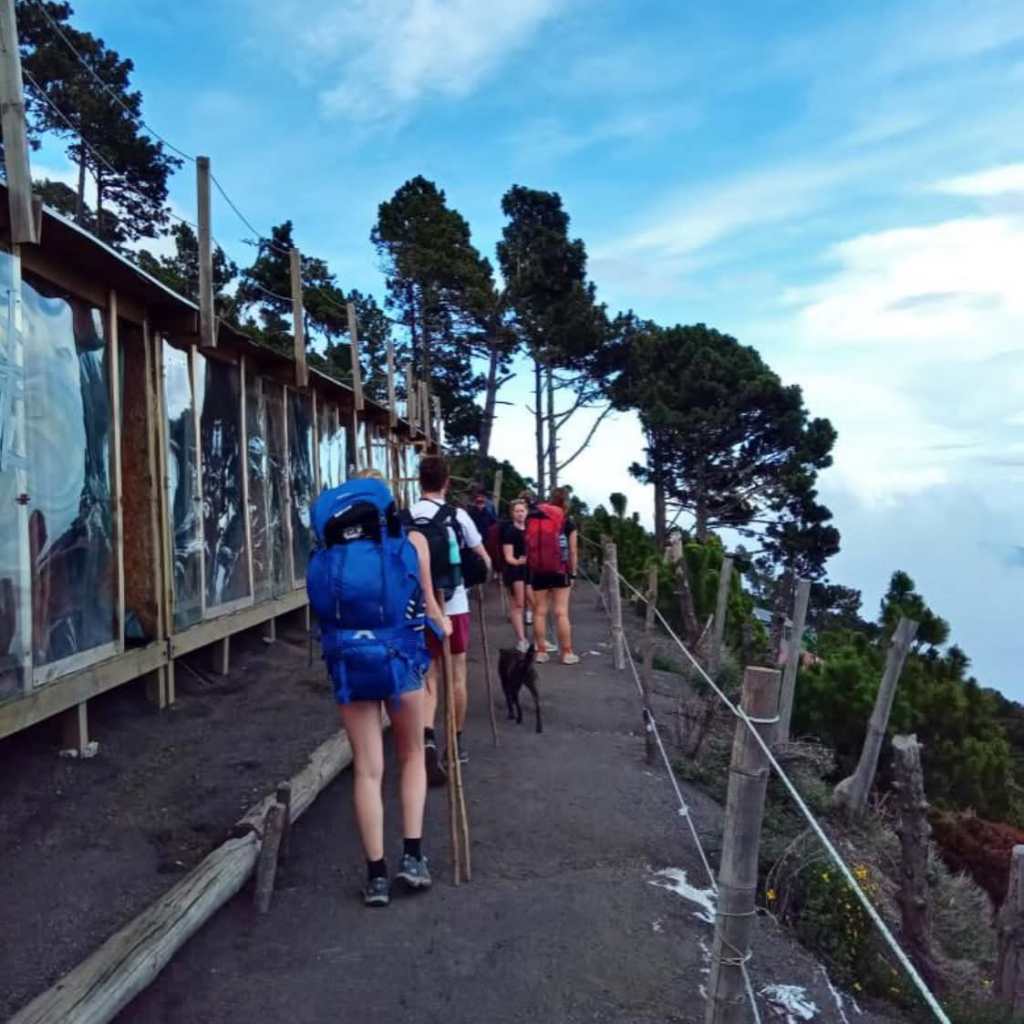
According to Castellanos, the impact is also visible in the erosion of the trails and in the saturation of visitors during weekends and high seasons.
Infrastructure
The main symbol of this transformation are the cabins built near the top of the volcano.
The National Council of Protected Areas (Conap) warns that many of these buildings were built without authorization within a closed area and represent risks to both the ecosystem and the people who use them.
Lucila Pérez, in charge of Tourism at Conap, explained that the institution detected the first irregular constructions and filed a complaint in 2021 with the corresponding authorities.
“Illegal infrastructure puts the integrity of visitors and people who provide services at the volcano at risk, in addition to affecting the ecosystems,” he said.
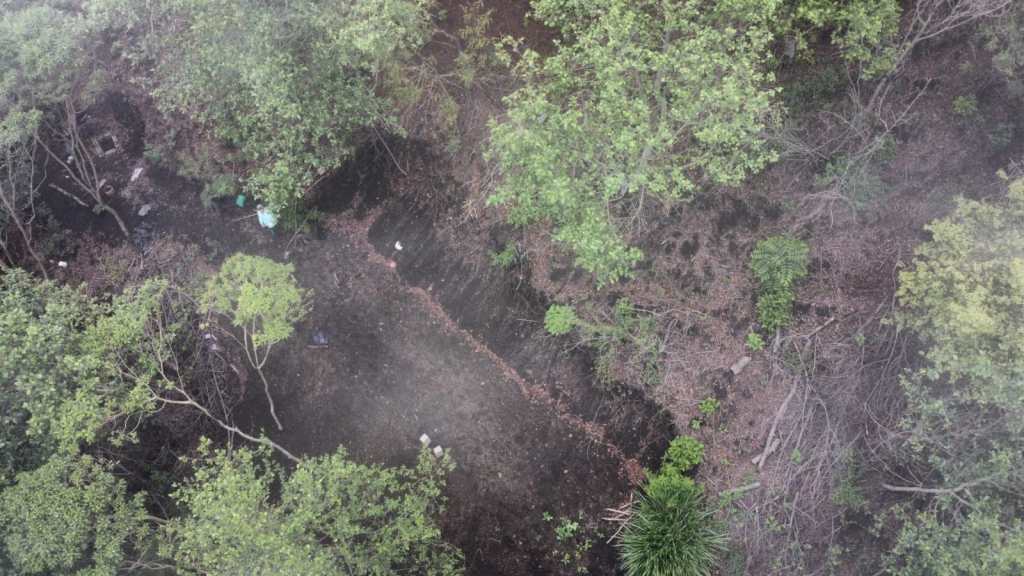
According to the official, the constructions involved changes in land use and the elimination of forest cover to create spaces for tourist accommodation.
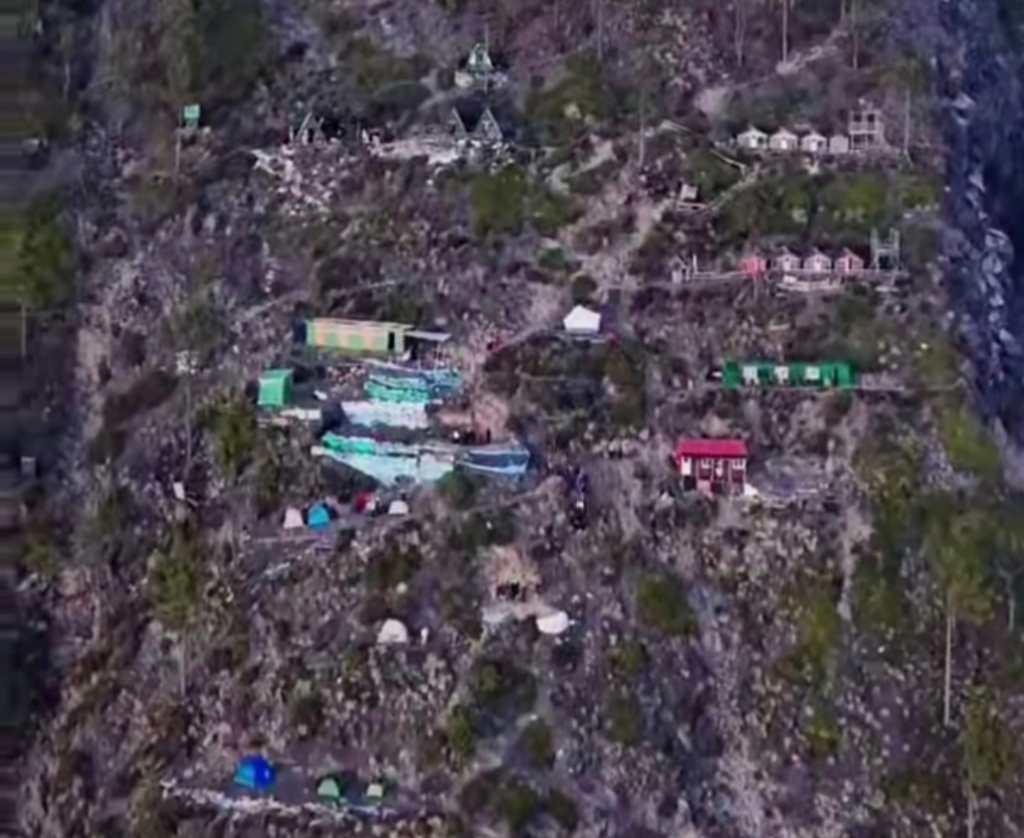
Authorities estimate that the phenomenon has grown rapidly in recent years. Although there is still no updated official count, the existence of more than a hundred structures distributed in different sectors of the mountain has been mentioned.
Complaints
Conap maintains that the complaint filed in 2021 did not produce significant results, so in 2025 it filed a new action to once again request the intervention of the competent authorities.
The institution also attempted to carry out a joint inspection with the Public Ministry, the Guatemalan Tourism Institute, the National Coordinator for Disaster Reduction and municipal authorities.
However, according to the entity, entry to the area was prevented by people who intercepted the procession and prevented the process from taking place.
As a result, authorities were unable to accurately determine the number of existing buildings or fully assess their environmental impacts.
Ecosystem at risk
The authorities’ concerns go beyond the legality of the buildings.
Conap warns that the expansion of infrastructure and the increase in visitors generate visible effects on the natural environment. Among them, he mentions the felling of trees, the degradation of ecosystems, the accumulation of waste and the increase in risks for the communities settled on the slopes of the volcano.
The loss of forest cover also increases vulnerability to landslides and other events associated with rain, in addition to affecting the water regulation capacity of forests.
Environmental authorities also warn about the promotion of tourist activities in sectors considered high risk, including areas near the crater of the Fuego volcano, one of the most active in Central America.
As the popularity of the Acatenango volcano continues to grow on social networks and tourism platforms, the discussion about the limits between economic development, environmental conservation and visitor safety becomes increasingly relevant.
The challenge for the authorities will be to determine whether the tourism model that boosted the volcano’s international fame can coexist with the protection of an ecosystem that, according to those who have visited it for years, already shows obvious signs of transformation.
Complaint and market
The expansion of cabins in Acatenango did not take all tour operators by surprise.
The representative of a Guatemalan tourism agency, who omits his identity for security reasons, recalled that since 2018 they have alerted the authorities about the construction of infrastructure in the mountains, but assures that they have not received a response from the competent entities.
“The corresponding complaints were made to all entities, but none of them paid the necessary attention at that time,” he indicated.
The operator stated that they even received threats for questioning the first constructions that began to be installed in the camping areas of the volcano.
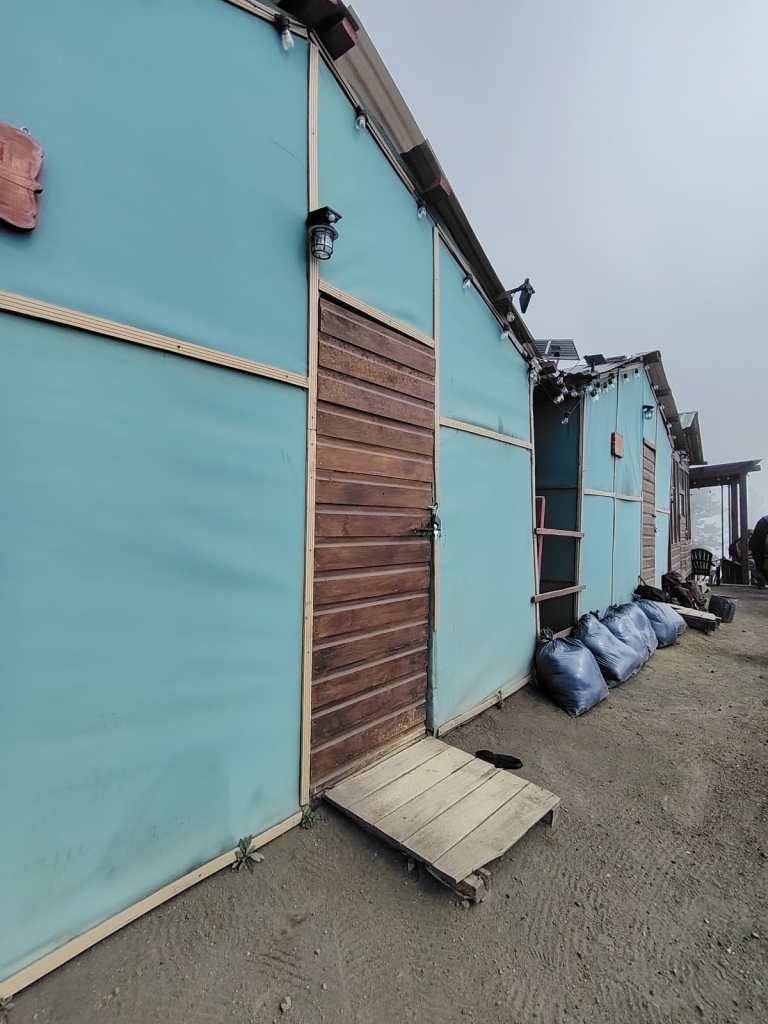
According to his version, the growing demand from foreign tourists modified market conditions. For several years, he explained, his agency operated solely with tents, while other foreign tourism companies began offering accommodation in permanent structures.
“All the clients, both American and from other parts of the world – European – wanted to camp in a cabin, but we didn’t have it,” he said.
The businessman maintains that commercial pressure led several operators to adopt a similar model in order to compete.
According to him, many tourists stopped looking for the traditional experience of camping in tents to opt for services with greater comfort, including cabins and permanent accommodation areas.
In his opinion, this change in demand promoted the proliferation of infrastructure in the mountains and generated unequal competition between operators that maintained traditional camping modalities and those who offered more comfortable facilities.
The operator also noted that there are foreign companies that market experiences in Acatenango at prices significantly higher than those charged by local agencies.
Permissions
During the interview, the businessman assured that operators paid Q15 thousand to personnel from the Municipality of Acatenango and obtained permits, the scope and validity of which are currently the subject of questioning.
“There are tourism operators that currently retain these permits and it is proof of the endorsement that the Municipality of Acatenango gave for them to build the cabins, although for these works the Ministry of Environment fined Q50 thousand, and they were paid,” he details.
“Before, camping was offered, but the cabins changed the business on the volcano”
Without authority
Given the growth of tourist infrastructure on the Acatenango volcano, the Social Communication Office of the Guatemalan Tourism Institute (Inguat) assured that it has not authorized any agency or company to set up camps or provide overnight services within the protected area.
The institution explained that the authorization to install camps, enable accommodation spaces, define permitted areas, regulate land use, control carrying capacity and manage the natural attraction does not correspond to Inguat.
Inguat specified that agencies that offer promotions, guide services, transportation or tourist packages can be registered in the Registry of Tourist Service Providers; However, said registration “does not constitute an authorization to install camps or infrastructure within the protected area.”