
The European Union Accompaniment Mission to the processes of renewal of judicial and electoral authorities in 2026 concluded that Guatemala maintains important challenges to strengthen institutional independence and regain citizen trust in the organizations in charge of guaranteeing the rule of law.
The final report was delivered this Tuesday, June 16, by the ambassador of the European Union (EU) in Guatemala, Johanna Karanko, to the Minister of Foreign Affairs, Carlos Ramiro Martínez. According to the evaluation, the integration processes of the Supreme Electoral Tribunal (TSE), the Constitutional Court (CC) and the appointment of the attorney general had strategic importance for the country’s democratic institutions, although they also evidenced the persistence of structural problems that affect the legitimacy of the appointments.
During the presentation of the document, Karanko stated that the mission arose from the European commitment to support Guatemalan democracy and recalled that the events after the 2023 elections evidenced both the citizen will to defend the democratic system and the need to have solid, independent and transparent institutions.
The Mission concluded that, despite some progress observed during the selection processes, factors that limit institutional credibility continue to be present.
Among the main problems identified are discretion in procedures, political influence, judicialization of selection processes and the incidence of power networks that affect the perception of independence of institutions.
The report indicates that these conditions developed in a context characterized by high political and institutional polarization, fragmentation of the party system, persistence of corruption problems and low citizen confidence in public institutions.
The evaluation also links these processes to a deterioration in the rule of law. The Mission expressed concern about the criminalization of social and political actors, restrictions on civic space, pressure against justice operators and various threats and intimidation registered during the election processes.
Likewise, the document questions some actions of the Public Ministry and considers that certain judicial actions could have generated intimidating effects on the mechanisms of institutional renewal.
One of the aspects highlighted by the Mission was the active participation of social organizations, non-governmental organizations, indigenous authorities, citizen movements and representatives of the private sector.
According to the report, these sectors developed observation, monitoring and public surveillance tasks to demand more transparent and independent processes.
The Mission especially highlighted the role played by indigenous authorities in defending the democratic order since the political and electoral crisis of 2023.
Supreme Electoral Court
The Mission recognized positive aspects in the renewal of the TSE, among them the general compliance with legal deadlines, the broad participation of applicants and the citizen interest generated by the process.
However, it identified various deficiencies that affected its credibility, including questions about the legitimacy of some members of the Nomination Commission, limited publicity in certain decisions, absence of public deliberations, lack of interviews with candidates and weaknesses in the evaluation mechanisms.
The report concludes that the process failed to fully strengthen public confidence in the highest electoral authority.
Constitutional Court
Regarding the integration of the CC, the Mission observed the appointments made by the Congress of the Republic, the President of the Republic, the Supreme Court of Justice, the College of Lawyers and Notaries of Guatemala and the Higher University Council of the University of San Carlos of Guatemala.
Among the positive aspects, compliance with constitutional deadlines and the holding of public interviews by Congress stood out.
However, he pointed out as worrying factors the judicialization of some appointments, challenges considered poorly founded, external pressures and controversies related to the integration of the Higher University Council.
According to the report, these circumstances had a negative impact on public perception of the legitimacy of some designations.
Attorney General
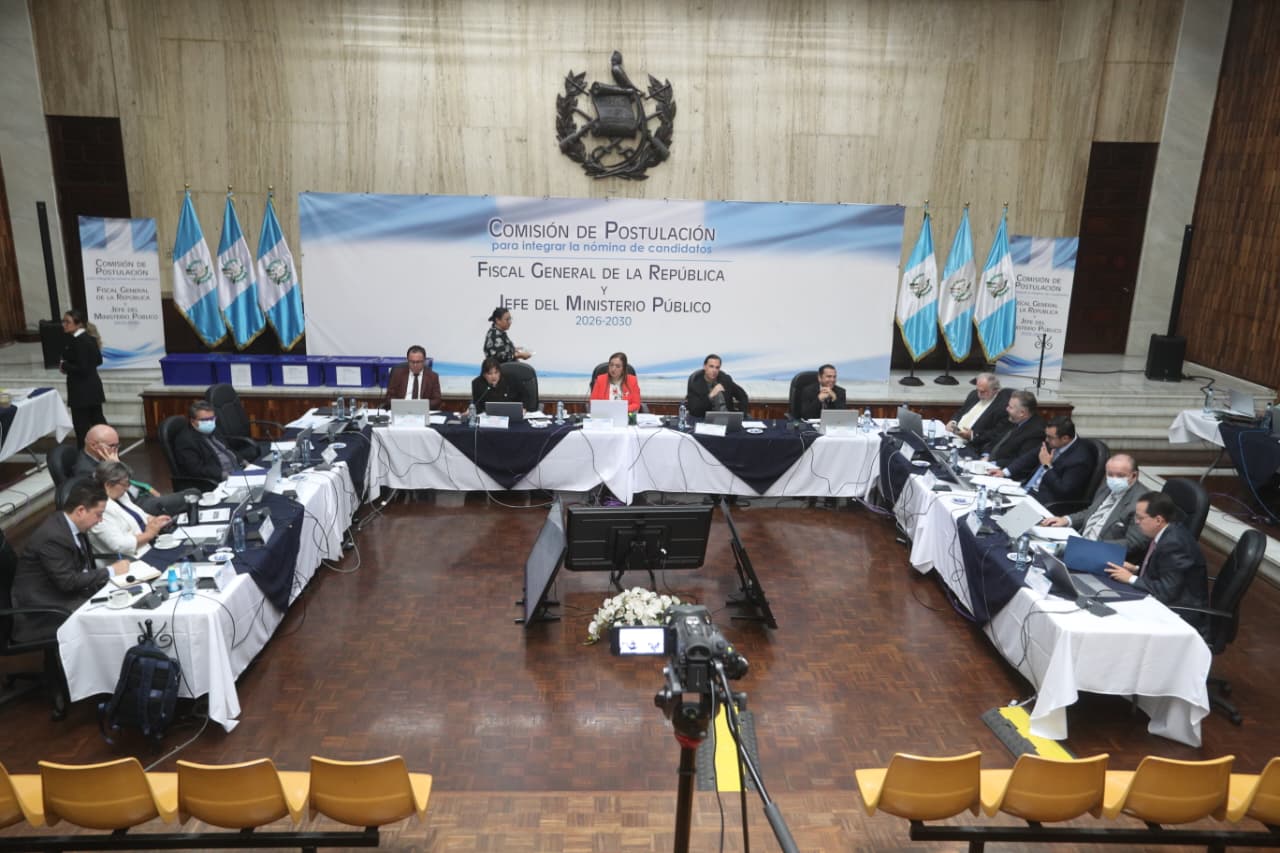
In relation to the election of the attorney general, the Mission valued the publicity of the sessions, the broad participation of candidates and the general respect for the deadlines established by law.
However, he expressed concern about threats and intimidation directed against members of the Nomination Commission, as well as the judicialization of the process.
It also considered that some evaluations did not adequately reflect questions related to the honorability and integrity of certain candidates.
Despite this, the report positively values the appointment of Gabriel Estuardo García Luna as attorney general and considers that this renewal represents an opportunity to strengthen the rule of law.
Institutional trust remains weakened
The main conclusion of the Mission is that the second-degree elections held during 2026 failed to fully restore citizen confidence in the institutions.
Although greater public surveillance, more citizen participation and the incorporation of some profiles perceived as independent were observed, the evaluation maintains that these advances were insufficient to overcome the structural weaknesses of the system.
The document recalls that the new authorities have the responsibility of contributing to the recovery of trust through independent, transparent, technically sound and respectful actions of the constitutional order.
Likewise, it urges the adoption of measures that strengthen accountability and avoid practices of instrumentalization of criminal law and criminalization of independent actors.
Recommendations
The Mission formulated a series of recommendations aimed at strengthening democratic institutions and improving future selection processes for high authorities:
- Comprehensively reform the selection model for high authoritiesincluding a review of the Nomination Commission system and the current constitutional model.
- Strengthen candidate evaluationgiving greater importance to suitability, good repute and integrity standards.
- Reform the integration system of the Supreme Electoral Tribunalpromoting greater technical specialization and incorporating professionals from different disciplines.
- Increase the transparency of processesthrough public deliberations, open interviews and publication of criteria and evaluations.
- Protect institutional independenceavoiding political and judicial pressure on the selection bodies and designated authorities.
- Guarantee respect for the rule of lawthrough mechanisms that strengthen institutional autonomy and accountability.
- Strengthen the credibility of institutionswith the objective of ensuring integrity, impartiality and public trust in the 2027 elections.
*Stay up to date with the Now newsletter. Key information at the moment it happens. Subscribe here.