
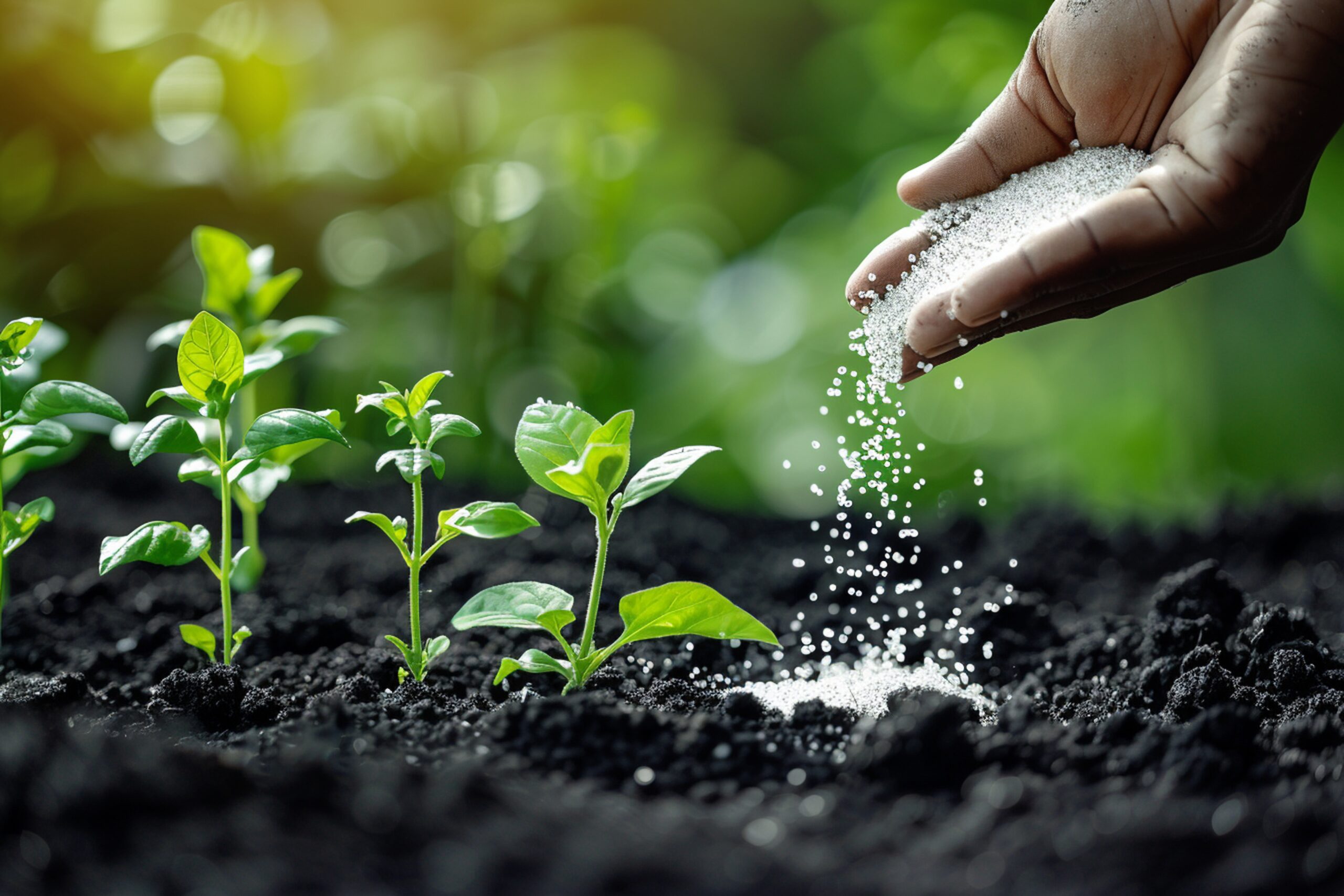
The volatility of international prices for fertilizers and other inputs used in agriculture has forced local producers to look for alternatives that allow them to maintain the productivity of their crops. One of them is the implementation of organic fertilizers made from vegetable, fruit and manure waste.
However, organic fertilizers cannot completely replace the use of chemicals. Given this scenario, representatives of the agricultural sector proposed measures that would reduce production costs to minimize the impact on the economy of the country’s farmers.
Among them is the possibility of exonerating taxes on fertilizers and inputs intended for primary agriculture, a proposal that, according to the sector, could help offset part of the increases registered in international markets.
The topic was addressed during The Talksegment of Guatemala No Se Detiene broadcast by Guatevisión, in which Enrique Tobar, head of the Department of Agroindustrializable Crops of the Vice Ministry of Rural Economic Development (VIDER) of the Ministry of Agriculture, Livestock and Food (MAGA), and Eduardo Solares, president of the Agricultural Sector Board of Agexport, participated.
Solares pointed out that one of the actions that could contribute to reducing costs for producers is the elimination of taxes on agricultural inputs, a practice that, he indicated, already exists in other countries in the region.
“In many countries, including our neighbors, such as Honduras and Mexico, all inputs for primary agriculture are exempt. They do not pay Value Added Tax (VAT), and that could be something that also mitigates this increase in prices. Today our neighbors do have it and Guatemala does not,” he stated.
According to the representative of Agexport, Guatemala maintains a condition of dependence on imported fertilizers, which exposes producers to price variations generated by external factors. “We are, in the end, importers of fertilizers, and that makes us vulnerable to something that we do not control. Price volatility is a global issue,” he said.
Less dependence on chemical fertilizers
In addition to proposing tax incentives, experts highlighted the need to reduce dependence on synthetic fertilizers by incorporating agricultural practices that take advantage of available resources within the productive units themselves.
Solares indicated that some farmers have already managed to significantly reduce the use of chemical fertilizers. “There are producers who have achieved reductions of up to 50% in the use of synthetic fertilizers and, as they advance in the application of these practices, this reduction can be greater,” he stated.
As he explained, one of the strategies consists of reincorporating the waste generated by the crops into the soil to improve its physical and biological characteristics. “Using all the waste and reincorporating it into the soil precisely helps to conserve it, to permeate the water and to improve its conditions. There are many impacts beyond productivity,” he indicated.
Solares considered that this type of practices recovers knowledge historically used in agricultural activities. “The future of agriculture is in ancestral traditions,” he said.
Along the same lines, Tobar also indicated that traditional practices must be recovered and strengthened. “This makes the soil respond better and produce more,” he mentioned.
Have more information
Tobar pointed out that the adoption of these practices requires that farmers better know the characteristics of their plots and the alternatives available to manage crops. “Farmers must be trained. I must empower myself and know my soil well, know the crop well and know the alternatives because the costs are very variable,” he stated.
The official explained that fluctuations in international input prices represent a constant challenge for producers. “The variability of inputs worldwide is very strong and it will be hard for the farmer if he has that dependence,” he noted.
According to Tobar, the implementation of practices such as the use of stubble, the production of organic fertilizers, the construction of living barriers, hillside ditches and agroforestry systems can contribute to improving productivity and the conservation of natural resources.
“If you know these types of practices and take advantage of diversification, the use of stubble and the production of your own organic fertilizers, you can obtain better results,” he indicated.
He added that the objective is to strengthen the productive capacity of the soil in the medium and long term. “Make the land something wonderful that allows them to obtain the economic resources necessary to develop their families,” he expressed.
Harvest with traditional practices
Tobar also referred to the importance of rescuing traditional agricultural practices historically used by rural communities. “Develop that knowledge and perhaps return to tilling the land as we did before manually, incorporating organic materials and producing biofertilizers from harvest residues,” he noted.
He indicated that these practices must be accompanied by crop diversification that strengthens the food security of families. “We have to think about associating on our plot a system that was previously called a milpa, where there was a main crop, but at the same time there were other crops that supported the families’ diet,” he explained.
Although ancestral knowledge could help farmers reduce costs in their crops, these must be complemented with technological tools to generate greater crop yields. “We have to coexist in both worlds. We cannot do everything organic and ancestral because productivity is also a challenge,” said Solares.
As explained, Agexport works with small producers to promote new agricultural practices, mechanization processes and crop varieties that allow increased yields. “Agexport is always training them in new agricultural practices, in mechanization and in everything we can do to improve productivity,” he indicated.
He added that it is necessary to bring technology to small farmers so that they can produce more and generate greater income. “With this we prevent them from migrating or selling their small plot to divide up,” he commented.
A new law?
Solares pointed out that Guatemala faces limitations in accessing certain agricultural varieties developed in other countries due to the lack of a law that protects plant varieties. “There are issues in which the country has some limitations to import innovative varieties. We do not have a law that protects these varieties and that limits us from bringing the latest in agriculture,” he stated.
As he explained, the approval of the Law for the Protection of New Plant Varieties (UPOV) would facilitate the entry of new plant materials into the country. He clarified that these are improved varieties and not genetically modified organisms.
“The law would allow the import of innovative varieties that are not genetically modified, but that do represent innovations capable of increasing productivity,” he indicated.
As an example, he pointed out that some varieties could significantly increase yields without the need to expand cultivated areas or increase labor. “We can go from a productivity of 20 thousand pounds per apple to 30 thousand pounds per apple. In the same space and with the same labor we can be highly productive,” he said.
Solares added that, in his opinion, it is necessary to promote the approval of this type of standards to facilitate access to new plant materials and expand the technological options available to agricultural producers.
Coordination between the State and the private sector
During the conversation, the importance of strengthening coordination between public institutions and the private sector to promote the transfer of knowledge to farmers was also highlighted.
Solares mentioned the potential of biotechnology to develop microorganisms capable of fixing nitrogen or improving the availability of nutrients in soils. “This is an effort in which private initiative has to bring technology to the field hand in hand with the State,” he stated.
Likewise, he highlighted that Guatemala maintains high levels of productivity in several export crops. “The productivity in Guatemala of bananas, sugar cane, African palm and melon is an example. Now we have to bring that technology to small producers,” he said.
Solares considered it necessary to strengthen training programs aimed at farmers. “I think an immediate outreach program is needed to get all of these practices out to the people,” he said.
He indicated that cooperatives can play an important role in the transmission of knowledge because many small producers are already organized in these structures. “You can’t reach everyone, but you can reach the cooperative and from there maximize the change,” he explained.
Find more Guatemala Doesn’t Stop on our video channels Free press and Guatevision, alliance content focused on solutions journalism.