
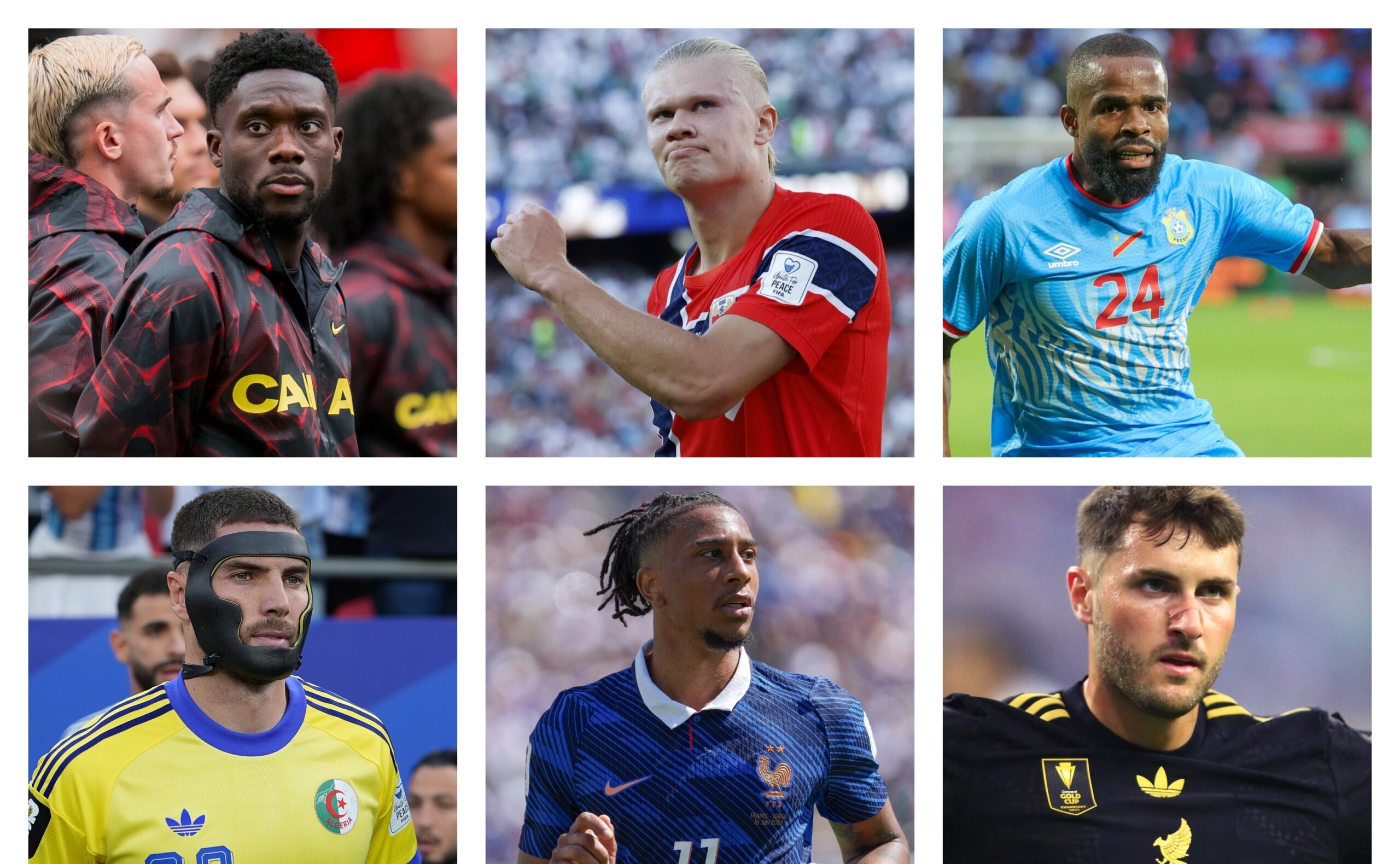
The World Cup 2026 It not only brings together the best teams on the planet, but also hundreds of stories that reflect the cultural diversity of modern football.
A review of the templates various national teams shows how more and more footballers born in one country decide to represent anotherdriven by their family roots, migration or a strong sense of belonging to the land of their parents and grandparents.
In this scenario, France appears as the great international hotbed. More than fifty footballers born or trained in French territory make up teams from Africa, America, Europe and the Caribbean.
In fact, The French country is the one that contributes the most players to other national teams, with a total of 54 footballers distributed among different combinations. Algeria, Tunisia, Morocco, Senegal, Haiti, Egypt, Cape Verde and the Democratic Republic of the Congo They are some of the teams that find a permanent source of talent in the French diaspora.
Besides, Morocco stands out for the variety of origins of its footballers. The African team has players born in Spain, France, Belgium, Netherlands and Canada, a cultural mix that has been key in its international growth in recent years.
However, the team with the largest number of players born outside its boundaries within the studio is Curacao, whose 26 footballers identified were born in the Netherlands, reflecting the close historical relationship between both territories.
Another striking fact is the prominence of the Netherlands in this global phenomenon. With 31 players distributed in different teamsis the second country that contributes the most footballers to international football, behind France. England completes the podium with 24 players, followed by Spain and Belgium, with nine each.
Multiculturalism is also present in selections such as Mexico, Canada, United States, Australia and Ecuador, that incorporate footballers born in different corners of the world. From Alphonso Davies, born in Ghana and a figure from Canada, to Julián Quiñones, a Colombian who represents Mexicoeach case contributes a different nuance to the global mosaic that soccer represents.
Far from being an exception, this trend has become one of the most representative characteristics of current football. The 2026 World Cup will be a showcase where multiple cultures, languages and traditions will coexistdemonstrating that the ball continues to be the best bridge between countries and generations. In an era marked by mobility and integration, national teams are today the truest reflection of an increasingly global sport.
These are the teams with nationalized players