
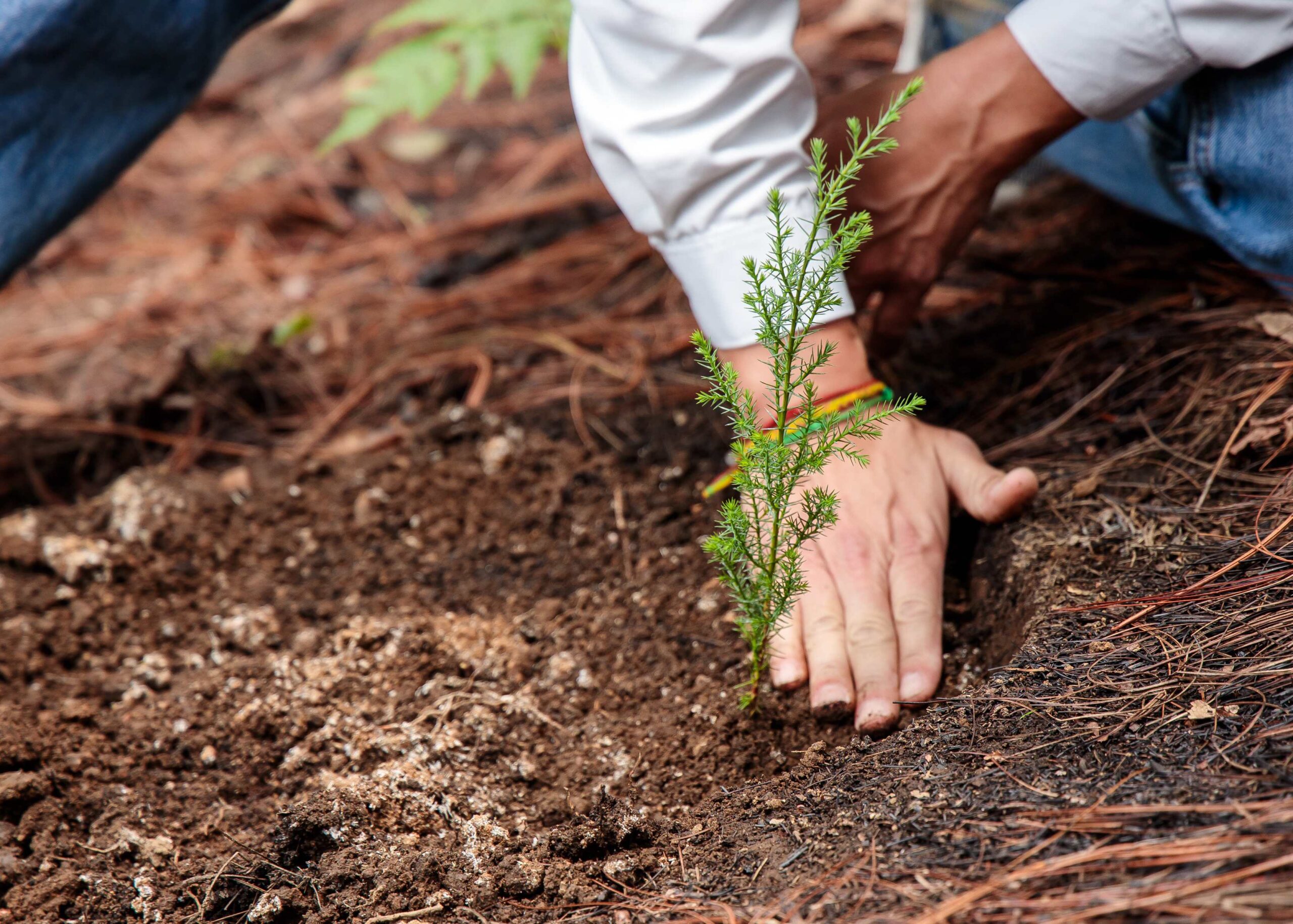
The National Council of Protected Areas (Conap) promoted reforestation days throughout the country as part of the activities programmed for the National Reforestation Day.
The date is institutionalized by a Conap resolution issued in 2019, which establishes the third Saturday of June of each year as a day to promote massive reforestation activities with native species throughout the national territory, the authorities indicated.
According to the Guatemalan System of Protected Areas (Sigap), to date approximately 52% of the national forest coverage remains under protection, Conap detailed in a statement.
Among the activities in favor of the environment, a reforestation day was held on the South Coast, specifically in the Manchón Guamuchal Special Protection Area.
In that area, 3,000 red mangrove trees were planted, a species “key to the conservation of coastal ecosystems. Mangroves provide important ecosystem services, including coastal protection, carbon capture and shelter for numerous species of flora and fauna,” explains Conap.
In the east of the country, the area worked was the El Olvido farm, where 1,200 trees of native species such as mahogany, sapodilla and mother cocoa were planted in one hectare located within a buffer zone.
While in the southeast of the country the reforestation day was at the Jumay Volcano, where 2,000 trees of the Quercus Peduncularis species were planted.
“This area was selected because of its importance as a biological corridor for the conservation of the endemic species Abronia Campbelli,” the authorities explained.
In the Verapaces region, the reforestation day will be next June 26 in the Laguna Lachuá National Park, specifically in the area called February 15. They plan to plant 500 plants of the cedar, san juan and cenicero species, all of them native species to the region.
“The restoration of ecosystems does not necessarily imply reforestation in all protected areas. Depending on the management category and the ecological characteristics of each site, natural regeneration is promoted in some cases as the most appropriate strategy to guarantee the recovery of ecosystems without altering their natural processes,” explains Conap.