
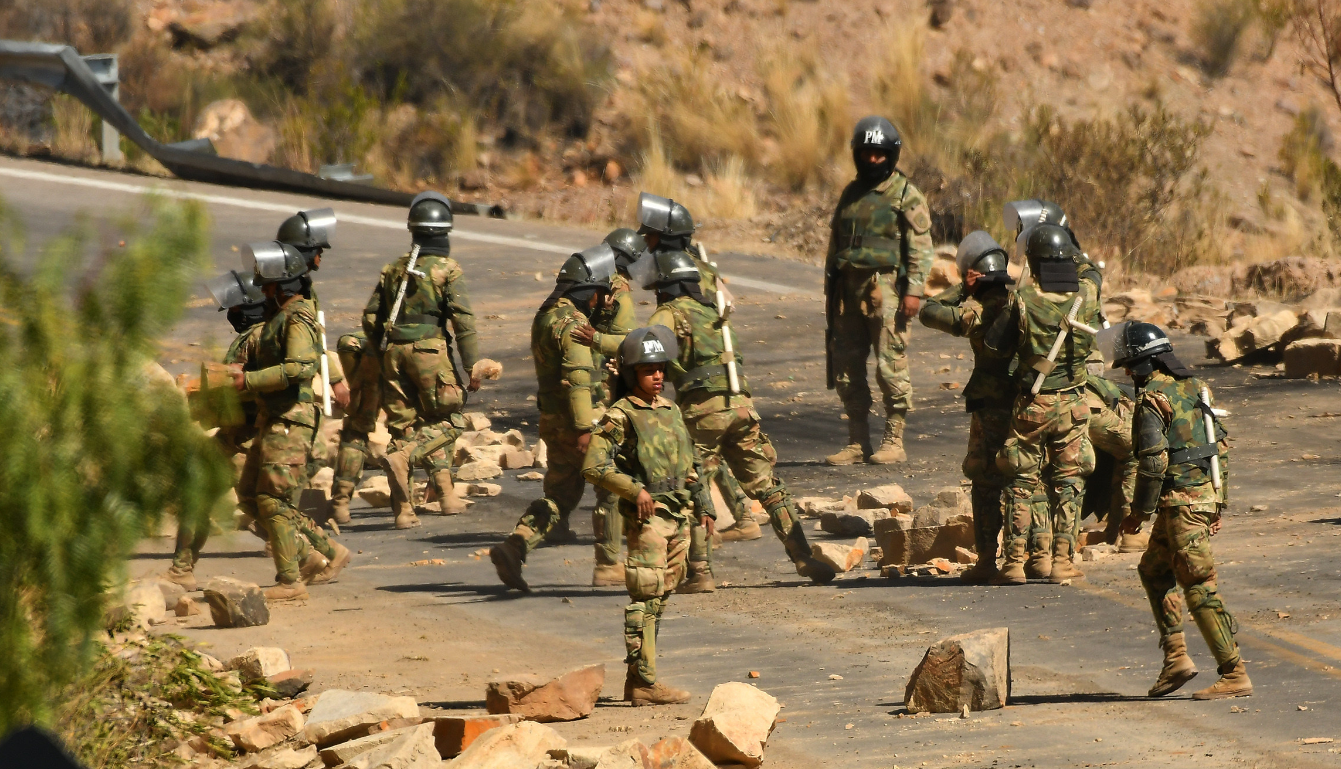
The Ministry of Foreign Affairs (Minex) reported this Wednesday, June 24, on a joint statement on the negative impact of road blockades and their effects on human rights and democracy in Bolivia.
He explained that the declaration was issued by the governments of the United States, Argentina, Bolivia, Canada, Chile, Costa Rica, Dominican Republic, Ecuador, El Salvador, Guatemala, Guyana, Honduras, Jamaica, Panama, Paraguay and Peru.
“We express our deep concern about the effects of violent road blockades on democracy and the rule of law in Bolivia,” they indicated in the statement.
They added: “The continued efforts to weaken and overthrow the legitimate and democratically elected government of President Rodrigo Paz represent a serious threat to the constitutional order and democratic stability in the country and in the hemisphere.”
According to the statement, a violent minority intends to ignore the will expressed by the majority of Bolivians at the polls just a few months ago, rejects the government’s willingness to dialogue and has maintained road blockades for more than seven weeks.
They noted that the blockades deprive the Bolivian people of access to food, medical care, fuel and other essential items.
“These actions have seriously affected the daily lives of millions of citizens and have put fundamental rights at risk,” they stated.
They also warned that deaths of Bolivian civilians have been recorded as a result of restrictions on free movement on the roads, which have prevented them from timely access to medicines, hospitals or health centers.
In addition, protesters have caused injuries to police officers in the exercise of their duties. “Violence cannot subvert the constitutional order,” they stressed.
“We support the constitutionally elected Bolivian government and urge the mobilized groups to prioritize dialogue and negotiation within the established constitutional framework, as a fundamental tool of democracy,” they added.
To read more: Center-right Paz, new president of Bolivia who puts an end to 20 years of socialism
They stressed that defending freedom, democracy and hemispheric security requires commitment and cooperation. In this context, they reaffirmed their commitment to continue working to strengthen stability and preserve the democratic order in the region.
On Tuesday, June 23, the president of Bolivia, Rodrigo Paz, maintained that the road blockade “has been defeated” and that the state of emergency decreed will continue because the country “has to organize itself” to avoid repeating a situation such as the roadblocks recorded for more than a month and a half by sectors that demanded his resignation.
The blockades began on May 6, led by the Federation of Peasants of La Paz and the Central Obrera Boliviana (COB), and then added the support of sectors loyal to former president Evo Morales (2006-2019), to demand the resignation of Paz, who has been in government for seven months.
The conflict caused shortages of food, fuel and medicinal oxygen in some cities, and left at least 16 dead, 13 of them due to lack of timely medical attention due to the blockades.
On Tuesday, Bolivia was no longer registering blockades, after groups related to Morales, the last sector that remained mobilized, announced a pause in their protests.
Stay up to date with the Now newsletter. Key information at the moment it happens. Subscribe here.