
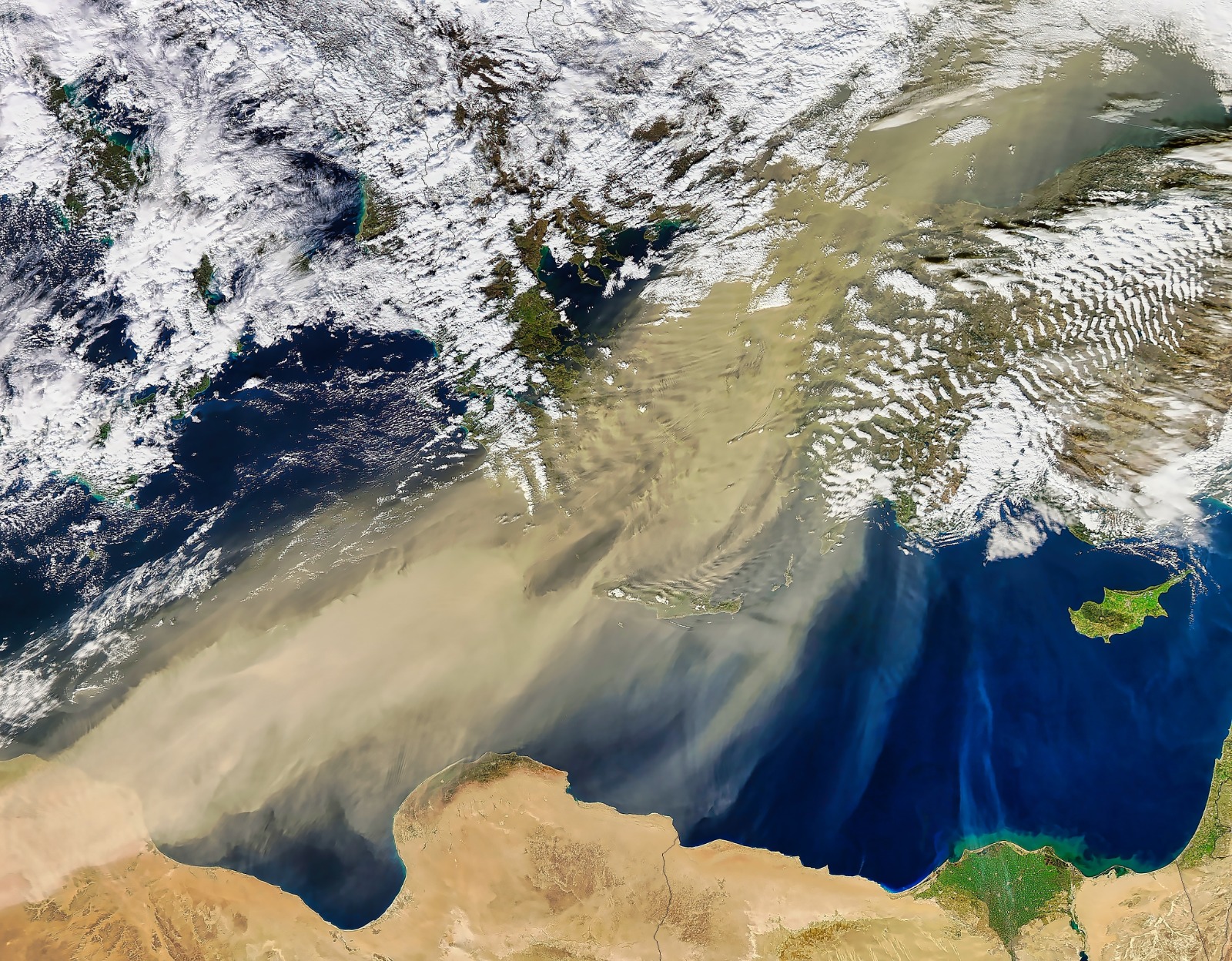
He National Institute of Seismology, Volcanology, Meteorology and Hydrology (Insivumeh) published a bulletin this June 28 about the entry of Saharan dust to Guatemalaan atmospheric phenomenon that would begin this Sunday and would continue in different periods over the next few days.
The report from the Insivumeh Water and Air Quality Section takes the prediction model as a reference SKIRONprepared by the University of Athenswhich projects the behavior of these particles in the region until next July 8.

When will Saharan dust enter Guatemala?
According to the monitoring shared by the Insivumeh and based on the model carried out by the University of Athensthe first entry of Saharan dust It will begin this Sunday, June 28 and will remain until Tuesday.
The forecast indicates that between Wednesday and Thursday no presence of particles is expected. However, a new entry could be registered from Saturday, July 4 to Monday, July 6.
How intense will the phenomenon be?
The projections indicate that the concentration of particles that will reach Guatemalan territory will range between 15 and 30 micrograms per cubic meterwhich corresponds to low or moderate levels.
Perspective of the Behavior of SAHARA DUST
Real-time monitoring:https://t.co/wjRv7IdD45#SomosINSIVUMEH #PassionForScience #ElPuebloDignoEsFirst #CIV pic.twitter.com/fuZA5qewXy— INSIVUMEH (@insivumehgt) June 28, 2026
According to the scale of the model:
- 1 to 25 micrograms: very low or almost zero concentrations.
- 25 to 100 micrograms: moderate presence.
- 100 to 500 micrograms: significant concentration.
- More than 500 micrograms: severe levels.
Based on these parameters, Insivumeh authorities explain that the dust cloud predicted for Guatemala does not represent, for now, a severe impact.
Insivumeh dismisses alerts
When consulted by this means, technicians from the Insivumeh explained that, with the projected values, the phenomenon does not represent a considerable risk for the country.
In addition, they indicated that until now there is no alert or emergency protocol activated by the presence of the Saharan dust.
Saharan dust is normal at this time
In previous years, the National Coordinator for Disaster Reduction (Conred) has reported that the Saharan dust It occurs most frequently between June and August.
This phenomenon can affect the air qualityreduce atmospheric visibility and cause health complications, especially in people with respiratory diseases or allergies.
Recommendations against the dust of the Sahara
Due to its possible effects, the Conred recommends to the population:
- Wear a mask or cover your nose and mouth with a scarf.
- Protect water tanks to avoid contamination.
- Wet surfaces before sweeping.
- Use protective glasses.
- Go to a health center if you experience respiratory discomfort.