
Guatemala
The CC granted protection to the Usac so that the Ministry of the Interior guarantees the perimeter security of the central campus of the university, in zone 12.

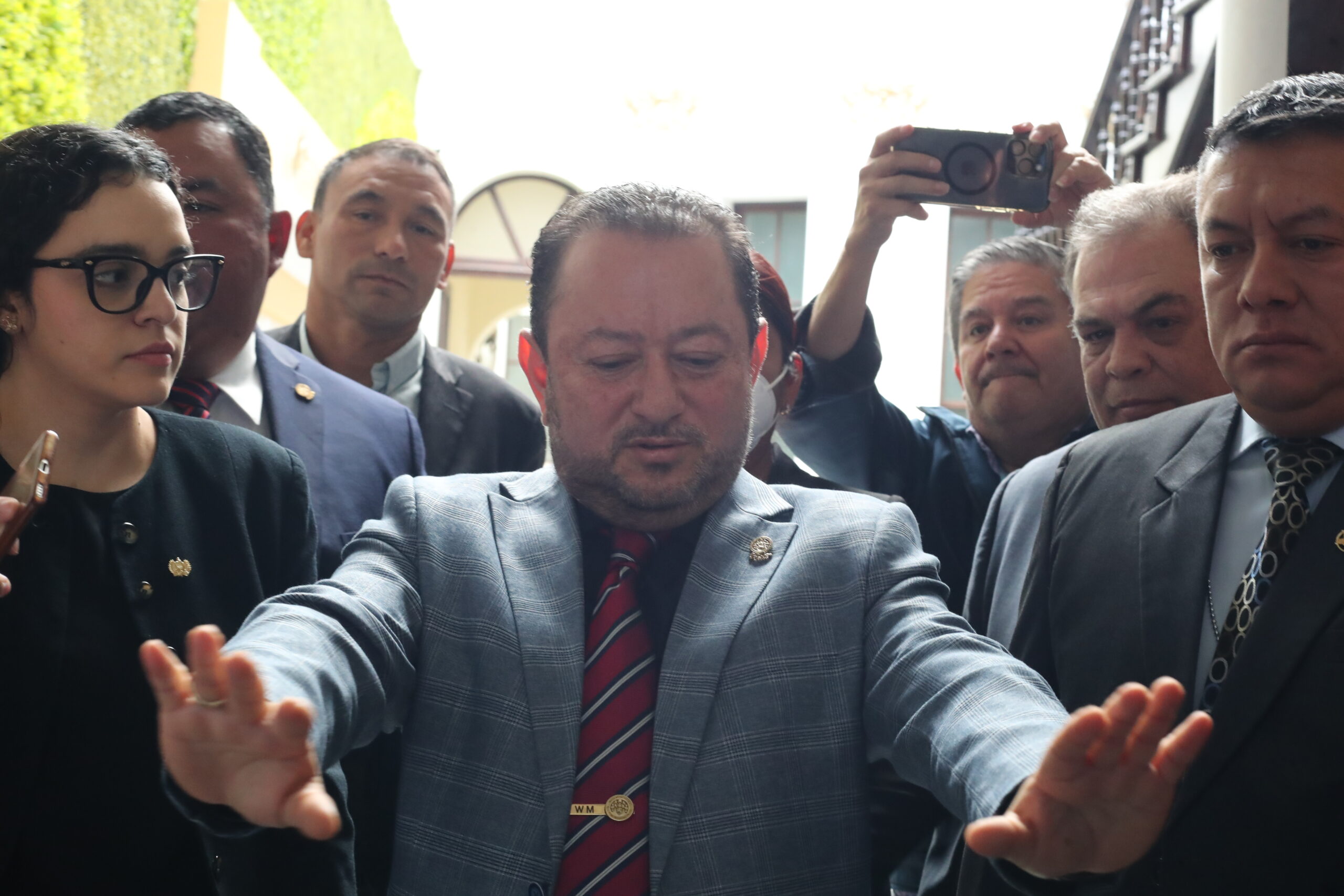
Walter Mazariegos maintained public accusations for alleged fraud to reach the rectory that did not disappear despite legal resolutions. Photography: Prensa Libre (Juan Diego González)
Uncertainty continues to surround the University of San Carlos de Guatemala (Usac), which as of July 1 gives way to a new period in its rectorship, which continues under the direction of Walter Mazariegos, questioned by sectors for alleged fraud in his re-election.
On April 8 in Antigua Guatemala, the vote was held to define the position of rector of the USAC for the period 2026-2030, which according to the Higher University Council (CSU) left Mazariegos re-elected.
But that continuity was questioned by students, teachers and graduates who form the conglomerate Usac, Dignidad y Resistencia (Usac-DIRE), who claim that just like four years ago, Mazariegos “co-opted the position with fraud.”
The USAC primary elections, held in faculties and professional associations, put Mazariegos at a disadvantage, but later, the CSU that he himself presided over, did not accredit those results, leaving aside his opposition.
The university received memorials against that reelection on April 8, but through CSU minutes 10-2026, by majority, the highest body of the USAC accredited the election and continuity of Mazariegos.
Members of the opposition who are part of the CSU explained, under the condition of anonymity, that with that record the continuity of the rector was already confirmed administratively.
The only thing pending was an extraordinary call from the CSU to report on “stewardship issues,” which could mean the announcement of Mazariegos’ new period at the head of the Usac. This call took place on the afternoon of this Tuesday, June 30.
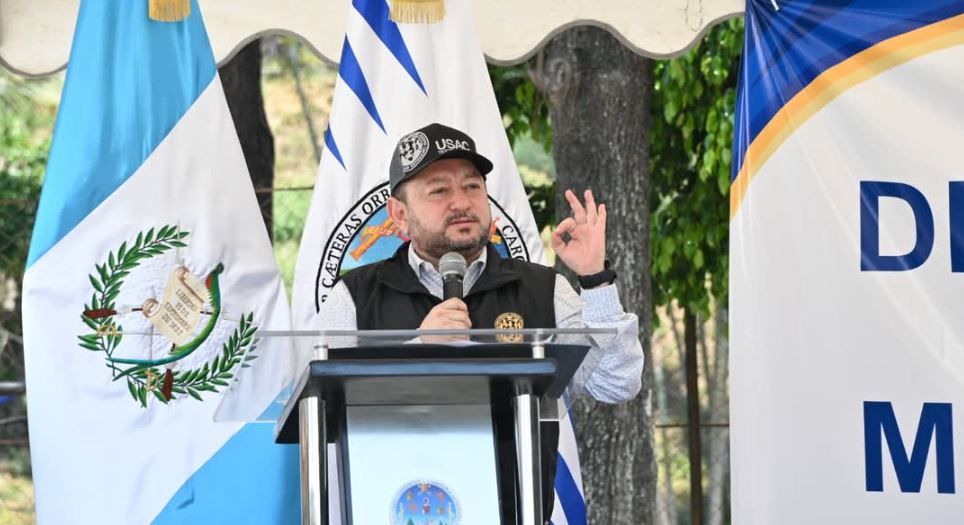
The CSU called a virtual session for this July 1 at 11 a.m. This session would be the first of Walter Mazariegos’ new term as rector of USAC.
Since Mazariegos’ re-election has already been accredited in a document signed by the CSU, it is no longer necessary for them to vote again for his inauguration, which according to those consulted, can be summarized as an administrative procedure carried out by the secretary of the Usac.
Meanwhile, the Constitutional Court (CC) granted provisional protection requested by USAC to guarantee the perimeter security of the central campus. According to the resolution, known on the afternoon of this Tuesday, June 30, the circumstances “become advisable” and the Ministry of the Interior must be in charge, through the National Civil Police, of protecting the university facilities, in zone 12.
The amparo was known by the regular magistrates, with the exception of Roberto Molina Barreto, whose place was occupied by the substitute magistrate Luis Rosales. The vote to grant the precautionary measure was approved by four of the five magistrates; The dissenting vote was Astrid Lemus.
CC has appeal
The Constitutional Court (CC), although it has already rejected by majority some of the legal actions against the rector election process, still maintains an appeal that seeks to annul the entire session of April 8, when the CSU gave victory to Mazariegos.
At least that is what the legal team of the Attorney General’s Office (PGN) seeks, which presented an appeal last Friday, with which they intend to annul the entire process held in Antigua Guatemala due to defects.
That appeal is presented against the First Administrative Chamber, which suspended a PGN protection against the Usac electoral session, but the lawyers hope that the CC will now instruct the Chamber how to process the protection and stop the continuity of Mazariegos.
Annabella Morfín, president of the CC, requested reports from the Chamber within a period of no more than four hours, a time that the judiciary complied with, leaving the case at the discretion of a possible call, which had not occurred until the night of June 30.
“We as Usac-DIRE still hope that the CC will assume a position consistent with the defense of the Constitution, again it is up to the CC to decide whether or not Mr. Walter Mazariegos can take office,” explained lawyer Edwin Orozco.
For the legal professional, it is vital that the CC does not delay, like other Courts of Appeal, to resolve the substance of the legal actions around the USAC, since it could affect the direction of the study house.
“When the CC comes to make a decision, he as rector would have already made decisions, actions that would be affected by a decision of the CC if it were to annul his inauguration, but due to the institutionality and giving certainty to the Usac we hope that the CC resolves,” he indicated.
Without settlement
Until 4 p.m. on June 30, the Comptroller General of Accounts (CGC) confirmed that citizen Walter Mazariegos still had no temporary evidence of non-existence of a claim for charges, a document that is also known as a settlement.
This is due to complaints filed with the Public Ministry (MP) for audits carried out by the CGC, which occurred before Mazariegos’ re-election before the Usac.
Because of this, according to analysts, deputies and members of Usac-DIRE, Mazariegos could not even appear as a candidate in the April 8 election in Antigua Guatemala.
The CGC, when consulted again about Mazariegos’ situation, confirmed that as of July 1, Mazariegos did not have a settlement and had not been notified of any protections that seek to force the CGC to issue the document.
The ways in which a settlement can be recovered is through the order of a court or an Appeals Chamber, that the person brought to trial is declared innocent, that the MP dismisses the complaints, or through a counter-review in each of the cases.
Just last week the MP reported that it had received 17 complaints against Mazariegos, which days later caused deputy José Chic, from Voluntad Oportunidad y Solidaridad (VOS), to ask the attorney general, Gabriel García Luna, to expedite the investigations.
Demonstrations and complaints
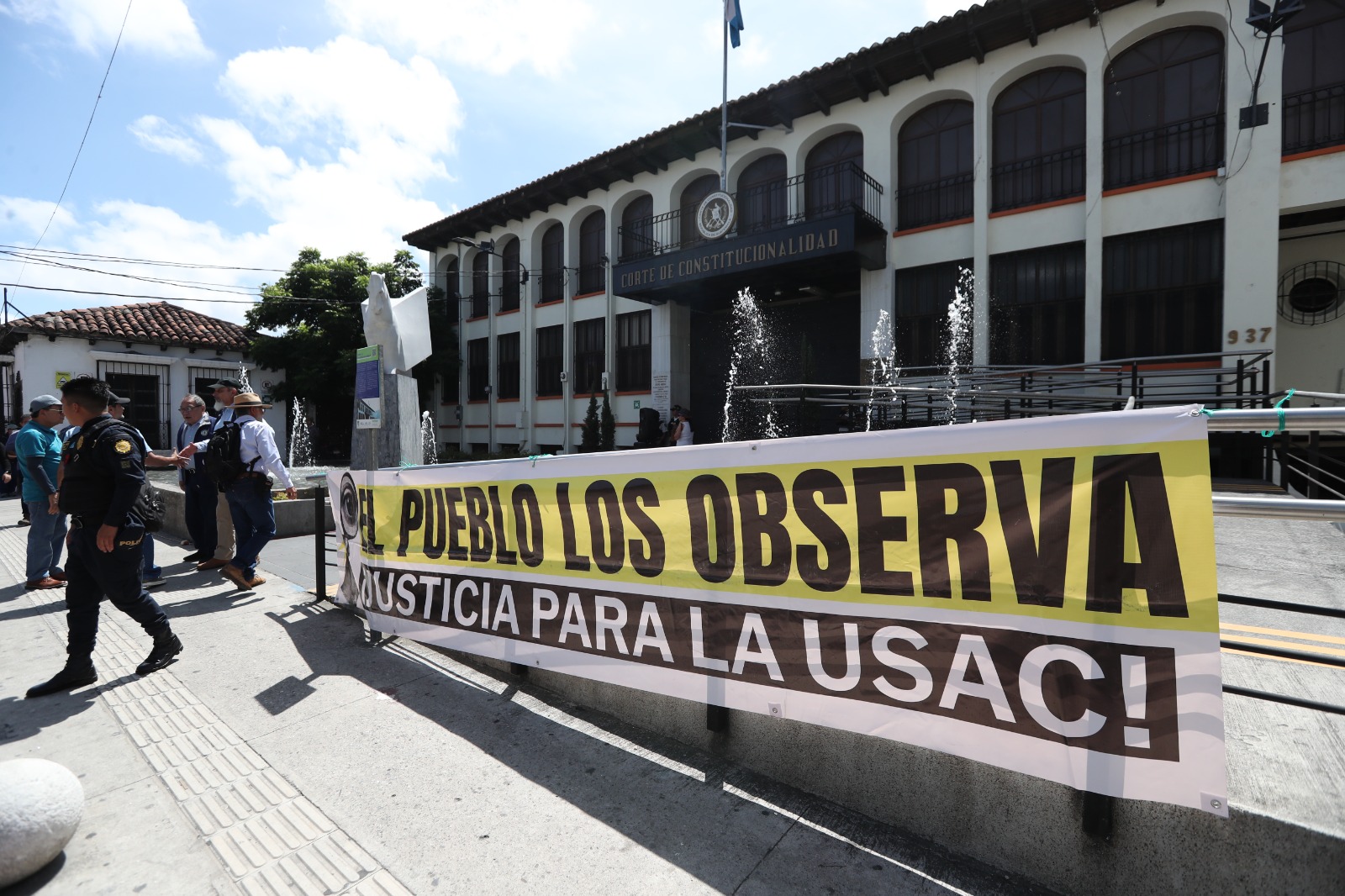
While Mazariegos’ first period at the head of the Usac was about to end, which began in 2022, Usac-DIRE held two peaceful rallies in front of the CC.
The first was from 10 a.m. to 1 p.m. and the second from 2 p.m. to 5 p.m., where students, teachers, graduates and citizens in general, requested the resolution of all legal actions that revolve around the election of the rector.
Students who were expelled from USAC during the Mazariegos administration also offered a press conference, in which they asked for the intervention of the Inter-American Commission on Human Rights (IACHR).
The students explained that they filed a complaint with the IACHR exposing what they describe as violations of freedom of expression and academic freedom for protesting against what they claim was electoral fraud within the only public university in the country.