
Still without current settlement and with 17 criminal complaints in investigation at the Public Ministry, Walter Mazariegos He began a second period at the head of the University of San Carlos de Guatemala (Usac), in the midst of protests registered this July 1 during the officialization of its continuity.
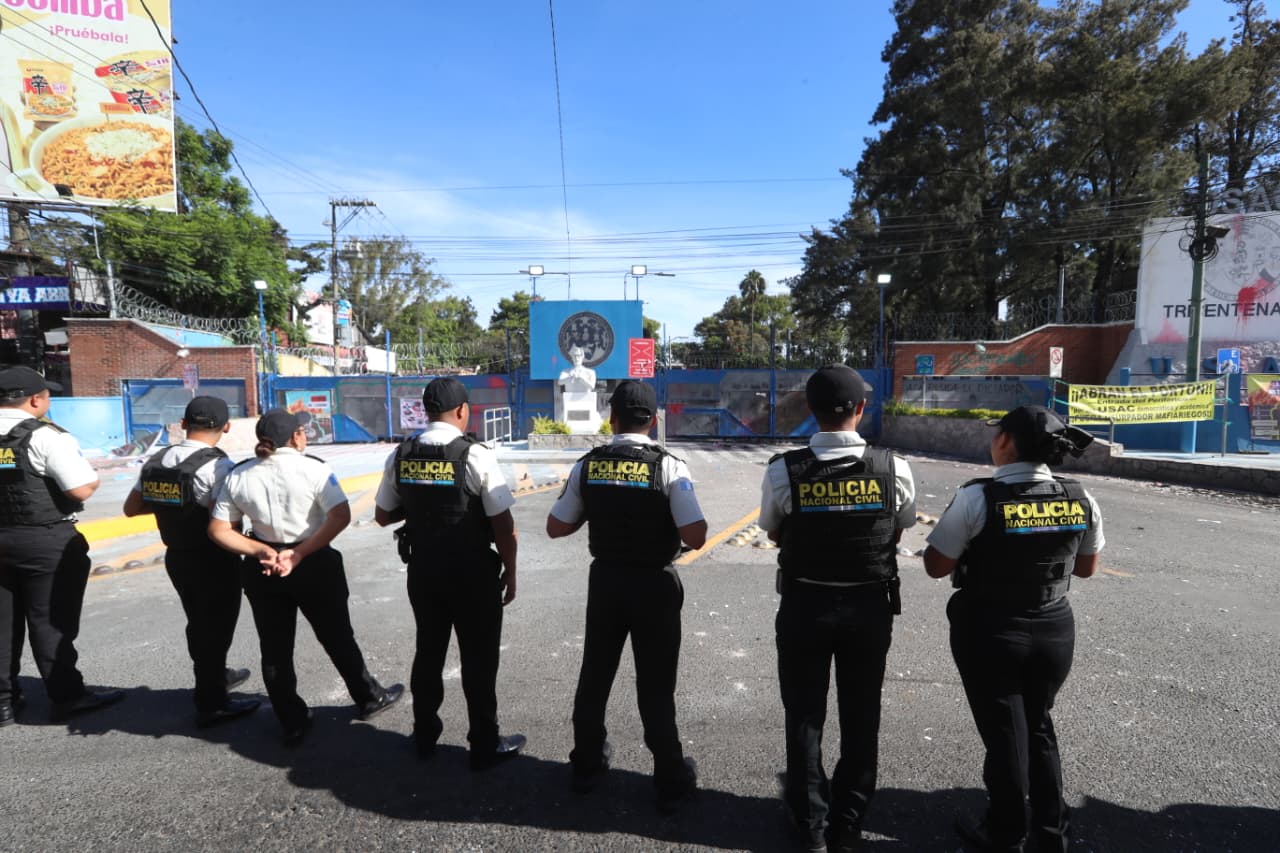
The ratification took place on June 30when the Higher University Council (CSU) approved by majority Minutes 10-2026with which he validated the election carried out on April 8 by the University Electoral Body (CEU). During the day there were also demonstrations on the central campus, rejecting the process.
In parallel, the Constitutional Court (DC) issued resolutions that kept the re-election in force and ordered the university perimeter to be protected against possible incidents. Subsequently, on July 1, Mazariegos presented himself through an institutional message to officially assume the position for the period 2026-2030.
The re-election was preceded and followed by administrative decisions, judicial resolutions, criminal complaints and constitutional actions that marked the process.
Chronology
The main events since re-election day:
- April 8: The University Electoral Body (CEU) elects Mazariegos as rector for the period 2026-2030, in a session held in Antigua Guatemala. They registered protests and altercations with security forces.
- April: University sectors present protectionsappeals and challenges against the election, questioning the integration of the electoral body and the decisions of the CSU.
- May-June: The Constitutional Court hears different appeals related to the election and keeps the process in force while resolving the actions raised.
- June: The CC, by a majority of three votes to two, revokes the effects of protections that had stopped the re-election and annulled the measures that prevented the start of the new period.
- June 23: The Public Ministry confirms that there are 17 criminal complaints against Mazariegosamong them three derived from findings of the Comptroller General of Accounts. The Attorney General’s Office (PGN) indicates that it has been aware of little progress in the investigations.
- June 30: The Comptroller General of Accounts confirms that Walter Mazariegos does not have a current settlementa requirement required to join nomination committees and hold certain public positions.
- June 30: The Higher University Council approves the Minutes 10-2026, validate the choice and makes official the continuity of Mazariegos. During the day there are protests on the central campus and the CC orders to protect the university perimeter.
- July 1: Walter Mazariegos officially begins his second period as rector of the USAC (2026-2030) with an institutional message. As one of his first decisions after assuming office, Mazariegos presented to the CSU the payroll of officials who will integrate its administration for the period 2026-2030. The body approved by majority 26 appointments proposed by the rector, including important positions in the central administration, the financial and audit areas, general directorates, university centers and non-facultative schools.
- July 1: The Organization of American States (OAS) questions the second period de Mazariegos as rector of the USAC by expressing concern about the electoral process and pointing out that there were complaints about exclusion from electoral bodies, acts of violence and lack of transparency. The organization’s mission indicated that it will continue to follow up on the case due to its impact on university institutions and democracy.
How the process was consolidated
Other previous moments marked the process that led to the re-election of Mazariegos:
- CSU without renewal: For more than two years, 26 of 41 members of the Higher University Council remained with expired terms, while the body continued to make strategic decisions.
- Electoral reforms: In March and April 2025, the CSU modified the Election Regulations, eliminated the Electoral Tribunal, centralized the resolution of challenges and limited the functions of the electoral boards.
- Internal changes: At the end of 2025, regulations were reformed that redefined teaching, modified requirements and expanded the CSU’s disciplinary powers over teaching staff.
- By-elections: Between March and April 2026, in several academic units, the forms were rejected, annulled, suspended, or the processes were not concluded, preventing the completion of all the planned electoral bodies.
- Voter accreditation: The CSU defined which electoral bodies would participate in the final vote and left out part of the representatives who had been elected.
- Reduction of the electoral body: They were finally excluded 85 of the 170 voters originally planned, modifying the composition of the body in charge of electing the rector.
- April 8 Election: With the electoral bodies accredited, the CEU elected Walter Mazariegos for a new term, giving way to a series of challenges and judicial actions that continued after the vote.