
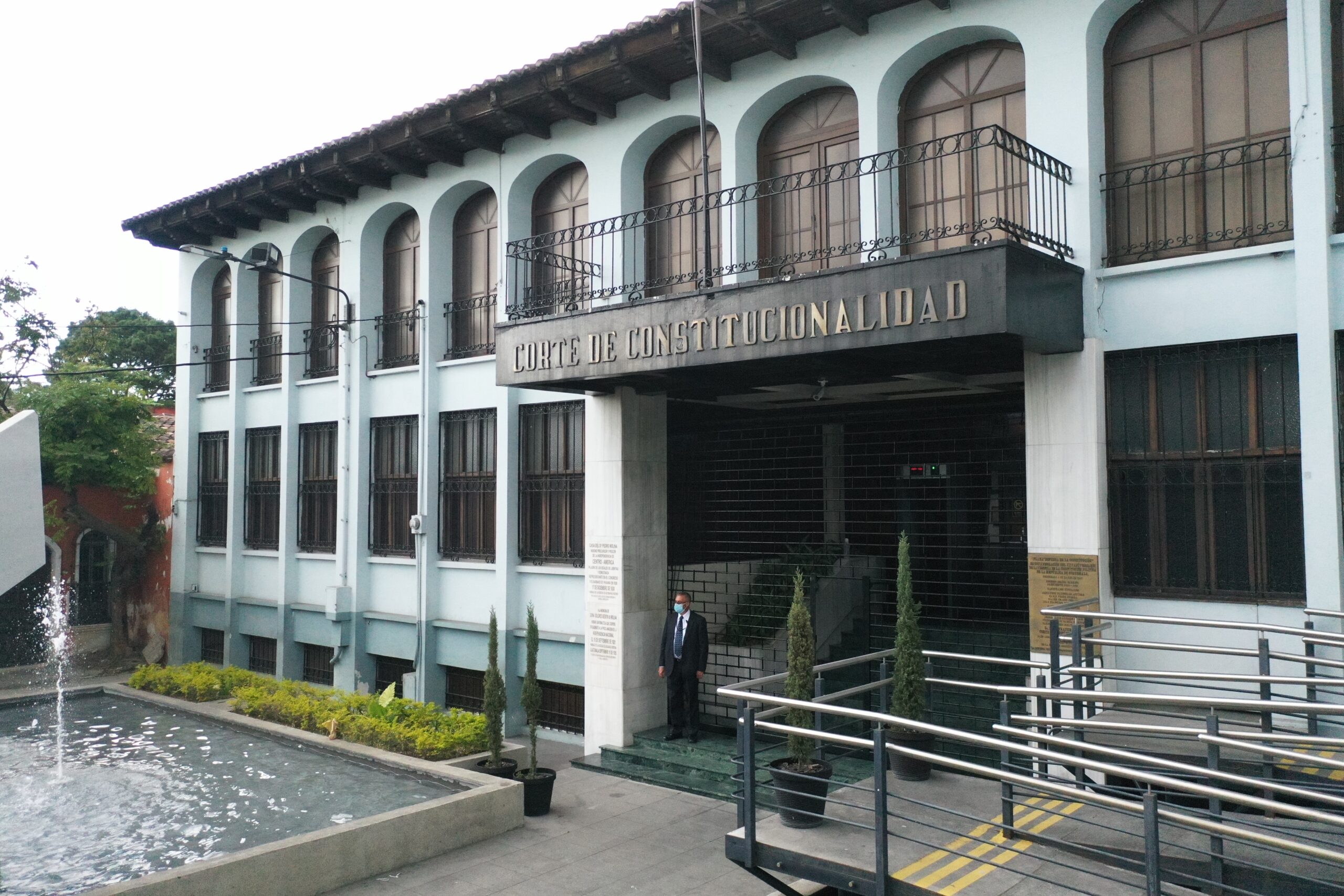
The civic proposal that seeks to promote a constitutional reform begins this Saturday, July 4, with a national campaign to request signatures, with which a group of citizens hopes to consolidate a future law initiative.
Some of the changes proposed by this reform are eliminating the process of nomination commissions, a mechanism with which high authorities who are not elected by popular vote are selected.
Among them, the magistrates of the Supreme Court of Justice (CSJ), Courts of Appeals, Supreme Electoral Tribunal (TSE), comptroller general of Accounts, and attorney general and head of the Public Ministry (MP).
“The constitutional reform of the justice sector must be understood as a reform of institutional architecture and not as a simple terminological update,” explained Poder Ciudadano, the group that promotes the campaign, on its website.
In addition to concluding the renewal through the postulants, it is sought that the change of magistrates not be at the same time, but rather gradual and staggered between the Cortes.
They seek to improve the system of selection of magistrates, excluding deputies and incorporating a Council of the Judiciary and Magistrates, to improve the quality of the service of the Judiciary in the country.
We must maintain everything that works in our Constitution and fix what doesn’t.
Our proposal proposes specific reforms to articles that have allowed justice to stop serving citizens.
Let’s say goodbye to the Application Commissionshttps://t.co/AMlLtLbDpP pic.twitter.com/GJgMHeWinG
— Poder Ciudadano Gt (@PoderCiudadanGt) June 22, 2026
“The reform also addresses the need to strengthen the constitutional regime of professional membership. The justice system does not depend solely on judges and magistrates. Lawyers and notaries perform functions that can compromise rights such as access to justice and relevant legal rights, such as legal security,” they detail in the draft of the proposal.
How to do it?
Lawyer Edgar Ortiz, an expert in constitutional issues, is one of the founders of Poder Ciudadano, and who pointed out that the main obstacle has been communicating that a reform of this type is feasible if a sufficient number of signatures are gathered.
“The biggest challenge has been the lack of knowledge that exists about the Constitution and, in particular, about the reform process provided for in article 277, subsection d). Therefore, a fundamental part of our work is to bring the Constitution closer to all Guatemalans, that we know it, that we understand how it works and that we know that it is possible to preserve what does work and change what needs improvement,” Ortiz explained.
The amount of support that a constitutional reform needs is five thousand signatures, an amount well below the minimum that political parties require to remain in force and be able to participate in next year’s elections.
To collect these signatures, Poder Ciudadano will have simultaneous events in 17 departments of the country starting at 9 a.m. and each of the movement’s volunteers will be identified.
“You must carry your DPI and be registered. Our volunteers will review the corresponding documentation and will indicate the process to sign,” he stressed.
“It is also important that people read the proposal and understand why this change is necessary to begin to fix justice in Guatemala,” Ortiz added.
Because it is a national movement, they have the support of some citizens who speak Q’eqchi’, Ixil and K’iche’, to facilitate communication with those who speak any of these languages.
📲 Find our constitutional reform proposal at https://t.co/3EYGdI95HL and send your comments.
Remember to save the 4th of July because we start with the signatures. ✍️ #Guatemala #502gt #constitution pic.twitter.com/cUhfu5DbeS
— Poder Ciudadano Gt (@PoderCiudadanGt) June 17, 2026
Since the proposal to reform the Political Constitution of the Republic of Guatemala in matters of justice was announced, the movement documents 148 suggestions.
But there are also voices that, far from seeing the reform proposal as a renewal, consider that it could be dangerous, something that according to Ortiz, is normal when an idea of this type is presented.
“In a democracy it is normal that there are different opinions, and we respect open debate. Now, a good part of the opposition that we have seen comes from sectors that simply do not want anything to change. This proposal seeks to benefit Guatemalans, but it is also true that it affects specific interests of some people. That is why it is normal that there are sectors that do not want to lose power,” he concluded.
The proposals
- Eliminate application commissions: They explain that the applicants were intended as a technical filter, but in practice they point out that they have become spaces vulnerable to political, union and interest group negotiations.
- Strengthen the judicial career: They say that a judge should not depend on political favors to promote or fear reprisals for ruling in accordance with the law. They propose a real judicial career, with objective evaluations, stability, continuous training and serious disciplinary processes.
- Remove Congress from the election of Appeals judges: They propose that Court of Appeals judges come to office based on judicial career and professional merit, not by political negotiation in Congress.
- Longer and better designed terms for magistrates: They indicate that short terms encourage political dependence. They propose longer deadlines, accompanied by real controls, performance evaluation and clear responsibility rules.
- Partially renew the high courts: They propose partial and staggered renewals, to reduce the influence of the groups in power and provide greater institutional stability.
- A limited reform to the justice system: They emphasize that it is not a total change to the Constitution, but limited to judicial aspects that seek to reverse what they call a judicial weakening.