
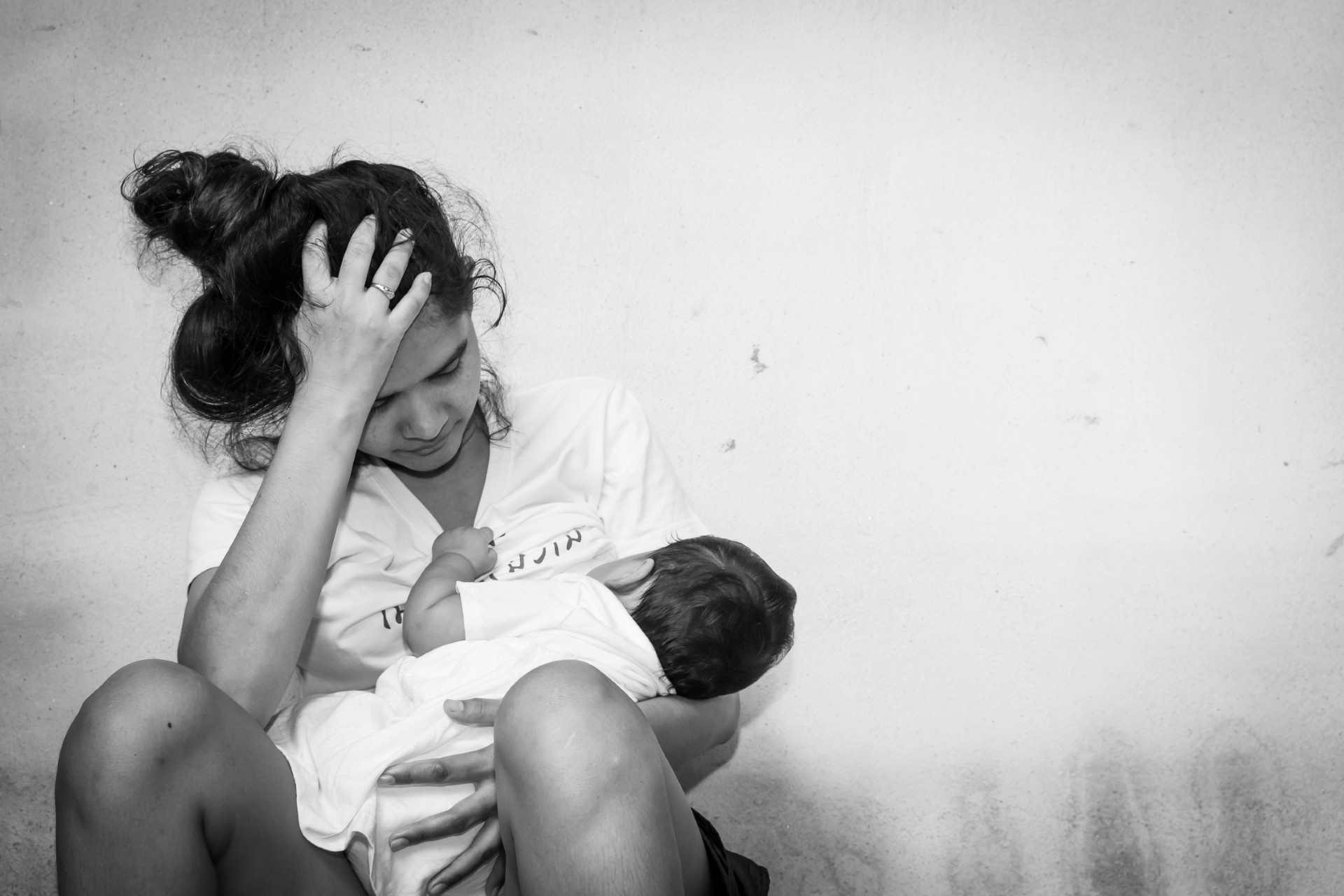
In June 2025, the United Nations (UN) Human Rights Committee ruled that the State of Guatemala did not protect and violated the rights of Fátima – a pseudonym to protect the identity of the victim – when she was pregnant at 14 years oldproduct of a systematic sexual rape.
After a year, the 11 points mentioned in the opinion and that the country must address have made little progress, according to Paula Barrios, coordinator of Women Transforming the World, an organization that supports the case.
The UN Committee established that the Guatemalan State must amend the situation experienced by Fátima and her son: provide comprehensive reparation for the damage suffered, which includes adequate compensation; repair the damage inflicted on their life project, with support so that they can finish their higher education and carry out their life plan, and guarantee access to education, at all levels, for the child.
In addition, she must provide specialized psychological care for herself and her child; guarantee effective access to justice through the efficient advancement of the criminal process, and carry out public recognition of responsibility.
Barrios indicates that there is progress in three of the measures: a scholarship that allows him to pursue a master’s degree, the management of economic reparation and the possibility of a study scholarship for the child. The other measures are in process.
However, to continue his studies, Fátima has had to adapt to the scholarship programs that the Government haswhich, in Barrios’ opinion, does not respond to the “spirit” of the opinion of the Human Rights Committee and constitutes a bad precedent, since what is requested is that the State generate a specific mechanism to address the needs of the young woman and her son.
She has had access to psychological care through Women Transforming the World.
The point with the greatest lag is access to justice. The man who raped Fátima has remained on the run for more than 15 years. That the Public Ministry investigates her whereabouts would be a start so that events like the one suffered by the young woman do not go unpunished, according to Barrios.
“The Government has not generated either the legal or administrative mechanisms that allow it to establish a standard of reparation in accordance with the needs of Fátima and with what is established in the opinion,” says Barrios.
He adds that they have identified a “technical, administrative and financial gap” in the institutions that must comply with the mechanisms established in the report to transform the conditions of vulnerability faced by girls in Guatemala.
girls mothers
This year, between January and May, 844 were registered births to mothers between 10 and 14 years old. Were five births per dayas detailed by the Sexual and Reproductive Health Observatory (Osar).
According to the Penal Code, pregnancies in girls under 14 years of age, as happened to Fátima, are the product of sexual abuse and must be reported. However, there are few cases in which the aggressor receives a sentence.
The report Forced to give up their dreams, sexual violence against girls in Guatemalafrom Human Rights Watch, reports that between 2018 and October 2023 there were 12,743 births in girls between 10 and 14 years old and that, of the reported cases, only 0.8% of the aggressors were convicted.
Fátima is originally from the village of San Lorenzo, Huehuetenango. The report states that she was sexually assaulted by the director of the local Comprehensive Care Center that she attended when she was 13 years old. The abuse continued, she became pregnant and could not continue with his studies. Because the perpetrator was an influential man in the community, the accusations and threats fell on the minor.
During pregnancy and childbirth, she did not receive adequate care from health services, which put her life and that of the baby at risk. The damage was also psychological, to the point that the young girl tried to end her existence on several occasions.
In 2010, Fátima’s mother reported the aggressor. The Court of First Instance for Criminal, Narcoactivity and Crimes against the Environment of Huehuetenango issued an arrest warrant against him, but to date he has not been captured. Your case is part of that 99.2% in which the perpetrator does not receive a sentence.
Scope of the opinion
Barrios regrets that pregnancies in girls are “normalized” by society, and points out that the opinion of the UN Human Rights Committee seeks to repair the damage caused by forcing them into motherhood and interrupt your life project.
The opinion also includes points of general scope, such as taking actions to prevent sexual violence in all sectors by strengthening comprehensive sexual education, public awareness campaigns and actions in the field of the administration of justice.
In addition, it establishes providing training on comprehensive care in cases of sexual violence to health professionals, personnel from clinics specialized in caring for girls and adolescents who are victims of the scourge, and justice operators.
It also provides for establishing a system of registration of cases of sexual violence, pregnancy and forced motherhood in girls and adolescents that allows monitoring progress in the eradication of these cases.
As with the individual measures of the ruling in favor of the young woman, Barrios considers that those of general impact do not register progress either.
“The Government has not been able to repair, within a reasonable period of time and in accordance with the needs of Fátima, what the ruling resolves. Let us think about the thousands of girls who suffer the same violations every year. The Government owes the girls who have become pregnant a better quality of life and a way to restore their rights.”
Paula Barrios, Women Transforming the World
He adds that the Presidential Commission for Peace and Human Rights (Copadeh) is the entity responsible for ensuring compliance with the recommendations mentioned in the opinion. Although he leads working groups with other institutions to address this issue,Mechanisms have not yet been identified that allow generating the changes established by the Committee and that impact girls and adolescents. who today face, alone, forced motherhood, says the interviewee.
When Copadeh was consulted about the progress of the measures implemented in the case of Fátima, it indicated that, within the framework of its powers, it has carried out various actions aimed at complying with reparation measures, in coordination with the representation of the victim.
However, since it is “a case that involves a girl and is linked to the protection of the rights of children and adolescents, the specific information about the actions carried out is subject to strict standards of confidentiality and confidentiality, in accordance with current legislation.” Therefore, he cannot give more details.