
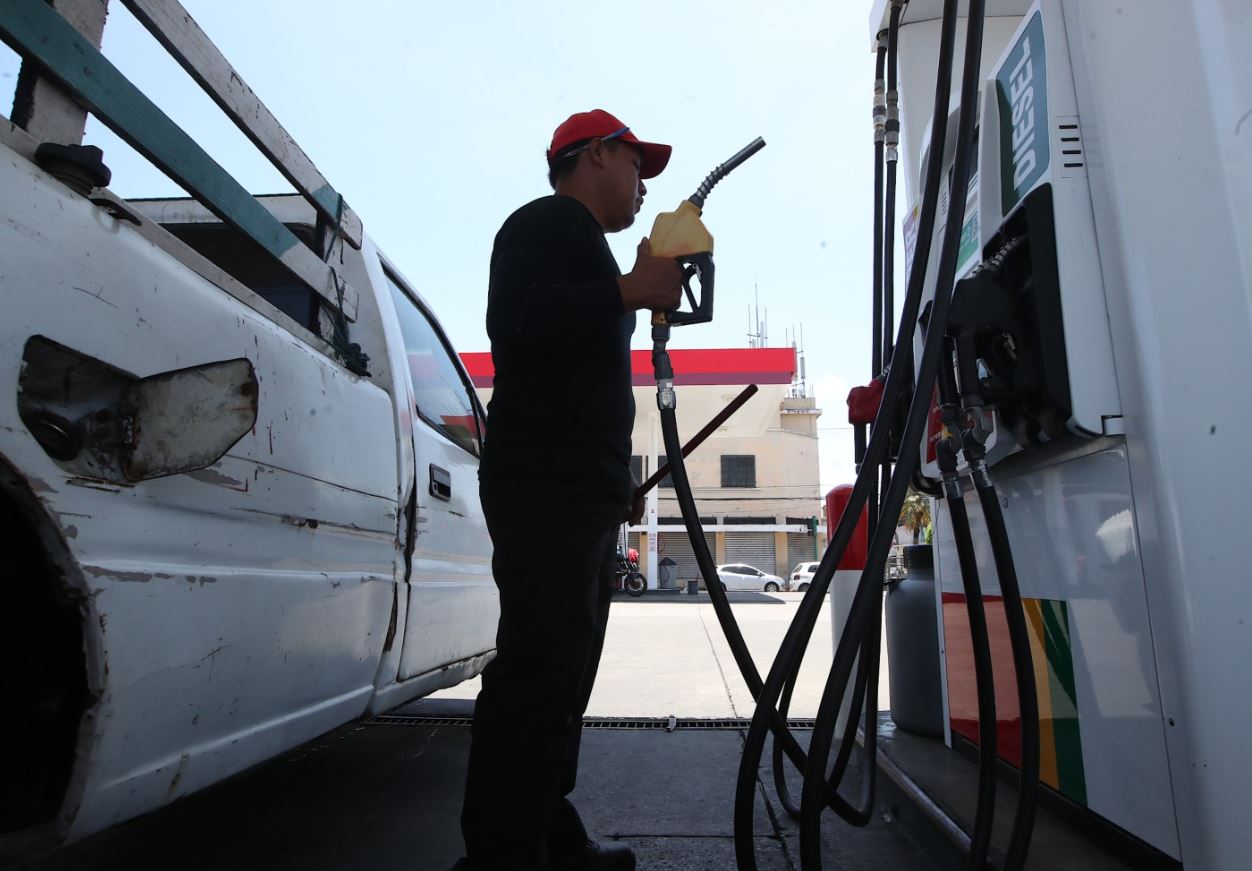
Given doubts that have arisen about the application of the fuel subsidy approved by Decree 11-2026deputies from the Vos bench requested reports from the Comptroller General of Accounts (CGC), the Superintendency of Tax Administration (SAT), the Ministry of Energy and Mines (MEM) and the Directorate of Consumer Attention and Assistance (Diaco), about the execution of that subsidy, with the intention of cross-checking data.
Orlando Blanco, Vos’ deputy, announced in statements that they plan to go this Tuesday to file a complaint with the Public Ministry (MP) to investigate the execution of the subsidy, since they have detected some patterns that raise doubts.
“We are asking the SAT to cross-check the information, the Comptroller’s Office for the audit reports, the Diaco to issue sanctions, and the bench is also going to file a complaint with the MP,” Blanco said.
In the summons carried out on Monday, July 6, he asked the officials of the Comptroller General of Accounts for a report on said execution, who responded that a commission was appointed since June 8 and that the report is 60% complete, so, once it is finalized, they will be able to provide it to him.
Decree 11-2026 establishes in its article 9 different inspection tasks to the SAT, the Comptroller General of Accounts, the Diaco and the MEM.
Blanco said that they identified three patterns that generate possible irregularities in the form of execution, although he said that some of these measures are established in the same decree.
The first one mentioned is that, to calculate the reference price of fuel during the validity of the subsidy, the international reference price is used as a basis and not the import price. Blanco said that they detected differences of between 15 and 25 cents per gallon, depending on the day it was applied, and that, when talking about more than 130 million gallons internalized, this becomes high amounts.
The way of establishing the price calculation was already designed from Decree 11-2026 itself, with which they did not agree, according to Blanco.
CONTENT FOR SUBSCRIBERS
The second is that, according to Blanco, fuel consumption increased during the duration of the subsidy compared to the historical pattern, since they analyzed six months before the crisis, as well as during the crisis of the international rise in oil and its derivatives, and during the period in which the subsidy was in force. They found three possibilities: that the fuel entered only in papers, that there was hoarding or trafficking of fuel to other countries. He said that this aspect will have to be investigated by the Comptroller General of Accounts and the MP.
During the summons, the deputy indicated that, according to weekly data, during the validity of the subsidy, consumption grew by up to 20% or 30%.
Although MEM officials who attended the meeting indicated that annual vegetative growth is around 3% and 4%. In addition, they mentioned as a reference that this year consumption has been higher, since diesel had a growth of 66% between February and March.
The third pattern identified is that The authorities announced on July 2 that the subsidy of Q5 per gallon for gasoline and Q8 for diesel would end that same day. and immediately the next day many gas stations in the country raised the price. Blanco explained that this raised doubts, since previously it was indicated that fuel reserves took longer and that their existence lasted at least two weeks. In the proposal in Congress it was said that the Q2 billion approved for the subsidy would last 14 weeks, but they were exhausted in nine and a half weeks, he explained.
🚨 To be #Updated: What do distributors anticipate after the end of the fuel subsidy?
The sector considers that, after the adjustment registered in recent days, prices could enter a period of lower variation.⛽
📲 Read more at:… pic.twitter.com/2T0QZ7Ogfi
— Free Press (@prensa_libre) July 4, 2026
Meanwhile, Deputy José Chic indicated, citing data from the MEM, that as of May 3, the consumption of 12,952,550 gallons of diesel had been reported, but in the following week, from May 3 to 10, it was 16,184,663, and then consumption remained between 13.2 million and 15.9 million gallons.
In the case of the SAT, officials indicated that they have fuel import data per week. When asked if technical meetings had already been held with the Comptroller General of Accounts to share this information, they indicated that during the validity of the subsidy a normal import process was carried out, without changes, since importers present their declaration, invoice and transport document, transmit that declaration and pay the taxes. There were no modifications, and what is finally admitted is the entry of fuel, verifying that they pay their taxes according to the invoice presented.
Meanwhile, the Diaco authorities reported that around 3,600 verifications were carried out and 21 were sanctioned for not having complied with some aspects of the decree that created the subsidy.
An attempt was made to expand the version of the MEM, however it has not responded to the request.
On Friday, July 3, the new Minister of Energy and Mines, Erwin Barrios, said that Verifications of the application of the subsidy to the final consumer at gas stations will be reinforcedmainly in the stations that have already changed prices since Friday, adjusting them upwards. This after it had been announced that the subsidy expired on July 2.
Separately, the deputy director of Hydrocarbon Marketing of the MEM, Guillermo
According to data from the MEM, between April 28 and June 28 it executes around 89% for Q1,784 million, around an average of Q200 million per week.