
According to preliminary estimates, the investment linked to the renewable projects awarded in the tender for the Generation Expansion Plan (PEG 5) will exceed US$1,380.1 million, mainly in single energyr, which concentrates most of the new developments, explains the executive director of the Association of Generators with Renewable Energy (Ager), Astrid Perdomo.
The entity carried out an analysis of the results of the tender and the challenges to be faced. In total, 57 plants were awarded, of which the majority will come into operation in 2030. More than 80% correspond to 29 new projects and 20 additional investments, which points to a relevant expansion of the installed capacity, so it is important to have conditions to have the authorizations and the investment to be completed, it was added.
What aspects of PEG 5 did you consider most important?
An important point is that the expansion of electricity generation capacity with new plants was achieved, which is the objective of the PEG tenders.
Of the total 57 plants awarded, only eight already exist; 29 are new plants representing around 729 megawatts; while the additional investments – which are practically new generators that will operate in combination with existing ones – are 20 plants that represent around 500 megawatts.
52% of the firm capacity awarded comes from new investments, reflecting investor confidence in the growth potential of the Guatemalan electricity sector.
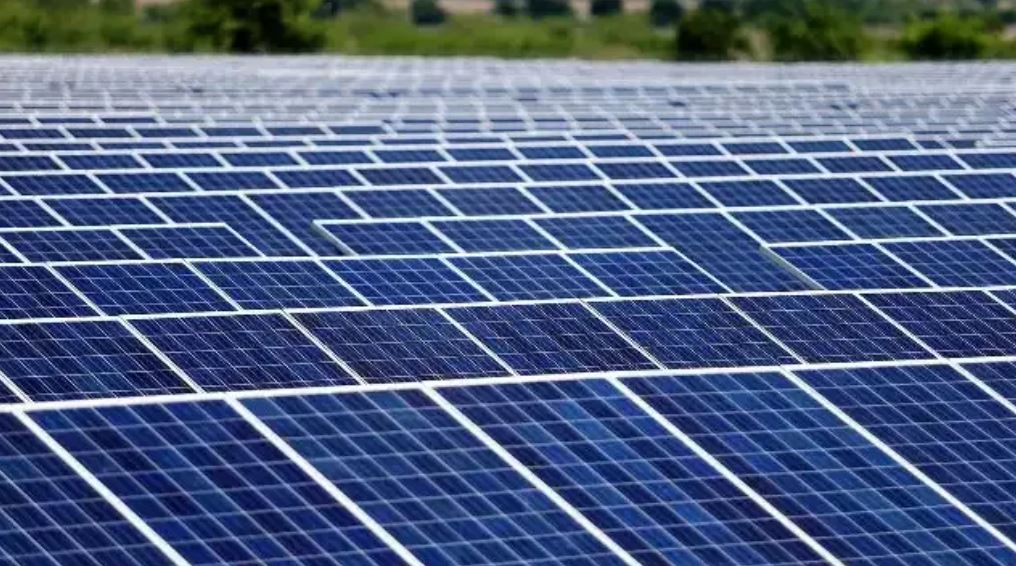
What caught our attention the most was how surprisingly competitive solar photovoltaic energy is, since at the solar generation with storage was awarded 601 megawattss, plus 71 megawatts of solar alone. It was the one that was awarded the most megawatts during this tender, due to the prices and delivery times in which the plants can be available.
The majority of the awarded plants, around 81%, will come into operation in 2030; Within these, the majority are solar energy.
What does it mean for the country’s electricity system?
It means that the objective of seeking to expand the installed capacity of new generation in the country was achieved, and this implies new investments, mainly in the interior of the republic, which is where renewable generators are built. It will attract investments, generate employment, and boost local economies.
CONTENT FOR SUBSCRIBERS
By type of source that resulted from PEG 5?
In PEG 5, 73% of what is awarded is with renewable sources; 22% is renewable plus non-renewable, which are those hybrid systems that this tender yielded, and 5% is non-renewable.
The result of PEG 5 greatly supports what we have visualized in our study called Ager’s proposal. towards the energy transition. In the update of the study we model the scenarios, where we could reach 80% generation from renewable sources a little before 2040, which is the goal of Guatemala’s energy policy.
How would the energy matrix look like?
The energy matrix with installed power in the country, adding the results of PEG 5, between 2030 and 2033 would reach 5,149 megawatts, of which 3,650 MW (70.8%) would be renewable; 1 thousand 192 non-renewable MW (23.2%); and the combination between renewable and non-renewable would be 307 MW (6%).
How much would the investment in new PEG 5 plants represent?
Ager quantified how much the investment in new PEG 5 renewable plants represents and, according to preliminary figures, it will exceed US$1,380.1 million. It is divided into two modalities.
Within that amount, the new plants would mean US$914.8 million
- Of these specifically in solar energy, of which US$858.4 million will come from solar plants with storage for 660 megawatts and US$56.7 million from solar plants with 81 megawatts.
Separately are the new plants for 42.27 megawatts of biomass-propane gas and 15 megawatts of natural gas, which Ager has not calculated.
There is also the additional investment modality, in which US$465.3 million in renewables are estimated.
In PEG 5, for an existing plant of any technology to participate, it needed to be complemented by an expansion with new renewable generation as an additional investment. Various combinations of resources were awarded, including:
- Hydroelectric-solar, for 179.6 megawatts whose new investment in solar would represent US$125.7 million;
- Coal-biomass-solar, with 145 megawatts, and the additional investment would be US$101.5 million;
- Petroleum coke-solar, US$70 million;
- Hydroelectric-wind, US$95.5 million;
- Solar plus storage, US$50.7 million;
- Coal-solar, US$14 million;
- As well as hydroelectric with storage, US$7.8 million.
The Bidding Board indicated in March, before the auction and award, that they estimated investments of US$3.7 billion…
I think they estimated it anticipating that it would enter generation with gas and another type. Investments in renewables are not as expensive as gas, but solar PV with storage are important investments.
Taking these results into account, what changes would the country’s energy matrix have and how could it help maintain demand coverage, quality and good prices for the user?
The energy matrix is moving towards greater renewable penetration. Not only does renewable generation continue to increase, but it is also diversified, because currently our energy matrix is very dependent on hydroelectric plants, which represent more than 40%. With the PEG 5 tender, the photovoltaic solar generation will increase its participation, which is currently 3% or 3.5%.
They are complementary technologies: when there are droughts, the sun is what comes in, and at night the water can be used. We are going to reduce dependence on fossil fuels, imports and geopolitical issues. In renewable energy there is no associated fuel cost, but rather the cost is zero, and this implies that electricity rates for end users will be stable. In addition, the new storage systems will provide this reduction in intermittency, which will give more quality to the energy.
In the sector there is concern about the intermittency of resources such as renewable solar and wind. How is the supply to the electrical system going to be guaranteed?
Technology has advanced a lot and storage systems are already being adopted around the world. In Guatemala, as of last year, we already have the regulations that allow them to be incorporated into the system, and that is why the result was reflected in this tender.
They help to take advantage of all the generation that is produced and provide robustness to the system because they have software that allows intermittency to be reduced. This will strengthen the system so that there are not so many effects from having only solar or wind without these storage systems.
Various generation projects have had problems obtaining municipal licenses. How do you envision the development of new plants derived from PEG 5 to be carried out?
It is good that this problem came to light because this will influence the mayors who have not had the best practices to be able to take action on the matter.
What we hope is that, with all this reaction, both from government sectors, President Bernardo Arévalo himself, as well as business chambers and investors, we will all continue supporting municipalities to align their processes, criteria and requirements for granting licenses, so that the plants, as we have said many times, can start operating at the moment when the system needs them.
Most of the PEG 5 plants are to begin operating in 2030which means that, if we take into account the processing time—which is around two years—and the construction times such as in solar lots, it is incredible that the processing time exceeds the time in which a project is installed. So it is very important that we do not waste the moment, that we take advantage of it to have a dialogue where we all agree that Guatemala needs investment and the new generation, because our demand is constantly growing.
The demand needs to be supplied in the time in which the estimates and contracts establish it. So, facilitating, unifying criteria and giving legal certainty to new investments is vital, and we do not have to stop having this conversation and reaching, in the end, agreements.