
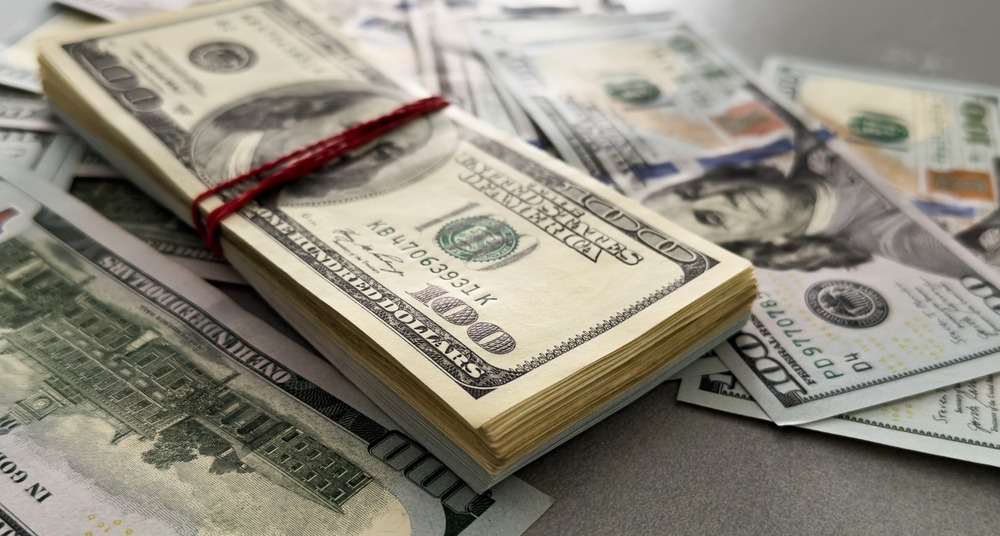
Guatemala received 7% more in remittances During the first half of the year, which maintains the trend to reach the US$27 billion projected for 2026, the Bank of Guatemala (Banguat) reported this Tuesday, July 7.
In the first semester, US$12,219 million entered, equivalent to about Q93 billion, which represents a growth of 7%, according to Banguat.
By updating the figures of the exchange balancestatistics show that income increased US$851 million compared to the same period in 2025.
In the same period of the previous year, the amount amounted to US$11,368 million, according to statistics.
The monetary authorities explained on June 24 that they project remittances of US$26,806 million (about Q205 billion) at the end of 2026, with a growth of 5%.
For 2027, they estimate revenues of US$27,610 million, equivalent to about Q211,216 million, with a growth of 3%.
The main destination of remittances is household consumption. They are also used for education and health expenses, as well as for investment, mainly in construction.
Cash prevails in payments and remittances
On June 29, the National Institute of Statistics (INE) presented the results of the National Household Financial Inclusion Survey (ENIFH) 2026, which confirm that nine out of 10 households in Guatemala use cash as a means of payment in their frequent purchases and eight out of 10 to collect remittances.
The report indicates that 93.8% of households make purchases of less than Q200 in cash, while 6.2% use debit, credit cards or other means of payment. Likewise, 88.6% of the households consulted use cash for purchases greater than Q200, while 11.4% stated that they pay with a debit card, credit card or other means of payment.
The variable also It is associated with the collection of remittances. According to the ENIFH, 71.7% of households that receive these resources collect them in cash at a banking agency, while 53.7% make cash withdrawals through a banking agent, a neighborhood store or other establishments.
Together, these indicators confirm that the majority of households collect remittances and make their purchases in cash.