
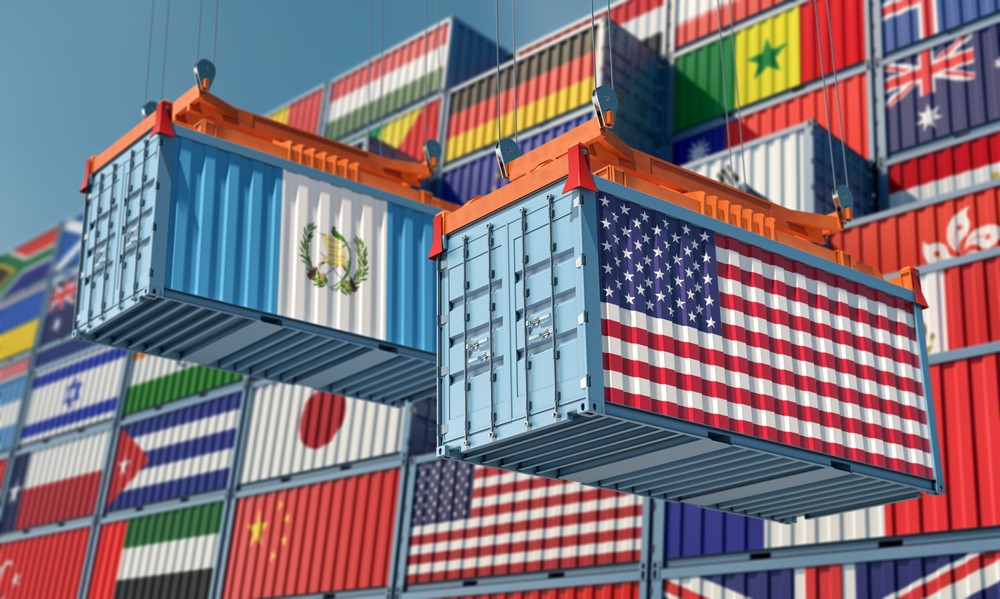
Representatives of the Government of Guatemala participated in the hearing before the Office of the United States Trade Representative (USTR), this Tuesday, July 7, in Washington, DC, derived from the investigations carried out by that entity in 60 economies under Section 301 regarding failure to impose or enforce prohibitions on the importation of goods produced with forced labor.
Meanwhile, the Guatemalan Association of Exporters (Agexport) will attend its audience as an export sector and will request the elimination of the 10% tariff for products that are still affected, and the Chamber of Agriculture of Guatemala (Camagro), although it will not participate in the hearings, presented public comments before the USTR as the Central American Federation of Agricultural and Agroindustrial Chambers (Fecagro), which also requested the exemption of tariffs on products still taxed, among other points.
Regarding the process, Carla Caballeros, executive director of Camagro, said that the investigation stage is currently in its final phase of public consultation. The period to submit written comments concluded on July 6, with 1,512 public comments received from different countries and actors, and 118 hearing requests.
Meanwhile, from July 7 to 9, the USTR holds public hearings to listen to governments, companies, associations and other interested actors, and subsequently a period for rebuttal comments will open until July 14. After that period, said US entity will evaluate the complete file and issue a final determination on the measures proposed within the framework of the investigation, Caballeros added.
The expectation is that the final decision of the USTR will be known during the second or third week of Julycommented the Camagro board.
Agexport will request elimination of tariffs for products still affected
In the case of Agexport, it will participate this Wednesday, July 8, in the public hearing, within the framework of file USTR-2026-0266. This is a space where the US Government will listen to the technical arguments of the export sector so that it is considered leave the tariff on products that currently pay 10% in different sectors to zerobefore defining future trade measures, said Moisés Mérida, director of Strategic Alliances of the Association, who is in Washington DC
The director mentioned that during the hearing Agexport will highlight that Guatemala is a strategic and reliable partner for the United States, whose exportable offer complements – and does not displace – US production, which strengthens food security, competitiveness and the resilience of supply chains in the hemisphere.
What Fecagro exposed
Fecagro presented a six-page document in which it states that it supports United States efforts to prevent the importation of goods produced with forced labor and requests that any measure avoid affecting legitimate agricultural chains in Central America and the Dominican Republic.
He shared a message similar to that of the export sector, indicating that the region is a reliable partner for the United States and that Their agricultural products complement—not replace—U.S. productionby covering seasons, off-season supply and needs of manufacturers, distributors, restaurants and consumers.
Caballeros explained that Camagro participated in the presentation of technical comments before the USTR for the investigations in question.
CONTENT FOR SUBSCRIBERS
He added that Fecagro sent a letter in response to the USTR’s consultation on possible products that should be maintained or incorporated into Annex A of exclusions. The proposal highlights that agricultural trade between the United States, Central America and the Dominican Republic is complementary, does not compete with US production and contributes to year-round supply, food security and access for US consumers to a diverse food supply.
It was also highlighted that regional agricultural chains are highly integrated and generate benefits for producers, industry and employment in the United States; therefore, requested to maintain and expand exclusions for agricultural products that strengthen these supply chains and it is reiterated that Central America and the Dominican Republic are reliable and strategic trade partners for the United States.
In summary, in the case of Guatemala, the expectation is that the USTR recognizes that the Government has signed a Reciprocal Trade Agreement and that it is moving forward with concrete actions in its implementation. Example of these measures is Ministerial Agreement 377-2026, published on July 6, which establishes the mechanism to comply with the prohibition on the importation of goods produced with forced laborindicated the Camagro executive.
They also ask to expand the list of exclusions
According to Caballeros, it is expected that products such as bananas, coffee, cocoa, pineapple, cardamom, mango and avocado, among others, will remain on the list of exclusions in Annex A and that, due to the complementarity and seasonality of domestic production, said list will be expanded.
The other request, according to the Fecagro document, is that products that remain subject to tariffs such as snow peas, green beans, broccoli, cauliflower, baby carrots, zucchini, raspberries, blackberries, melons, watermelons, frozen shrimp, and palm and palm kernel oils be added to the list of exemptions.
“And, in order to meet the demand of the US consumer market and industry, we would expect that the cane sugar quota under CAFTA-DR would be excluded from any additional tariffs, because they are part of negotiated market access commitments.”
Opinions and expectations from the Government’s presentation
Guatemala has already presented its position before the USTR Section 301 Committee, which investigates imports of goods produced through forced labor, and participated in the hearing scheduled for Tuesday, July 7 in Washington, DC
In this regard, Waleska Sterkel de Ortiz, executive director of the Guatemalan American Chamber of Commerce (Amcham Guatemala), said that said organization considers it positive that the country has formally participated.
The executive also indicated that “from Amcham Guatemala we have also expressed to the USTR the importance of maintaining differentiated treatment for originating products that comply with the rules of origin of free trade agreements, since they represent reliable, transparent and strategic supply chains for both economies,” said Sterkel de Ortiz.
CONTENT FOR SUBSCRIBERS
“We trust that these advances will be taken into consideration and will allow us to preserve Guatemala’s competitiveness and avoid the imposition of new tariffs,” said the executive director of Amcham Guatemala.
Separately, he mentioned that the Government presented in the hearings the specific actions it has implemented to address the commitments made regarding the prevention of forced labor, including Ministerial Agreement 377-2026.
The agreement “was issued on the same day that the deadline for receiving comments expired and one day before the public hearing in Washington DC, evidencing compliance with the commitments assumed by Guatemala within the framework of the Reciprocal Trade Agreement (ART),” said Sterkel de Ortiz, who added that these actions are valued as they strengthen the country’s credibility and demonstrate its commitment to compliance with international standards on labor and responsible trade.
Amcham expects that the USTR will comprehensively assess the actions that Guatemala has implemented to comply with the commitments assumed.
For the entity, it is also important to recognize the nature of the regional supply chains developed under CAFTA-DR, “which operate under strict rules of origin, verification mechanisms and high compliance standards.”
The Ministry of Economy (Mineco) has not responded to the request for information.