
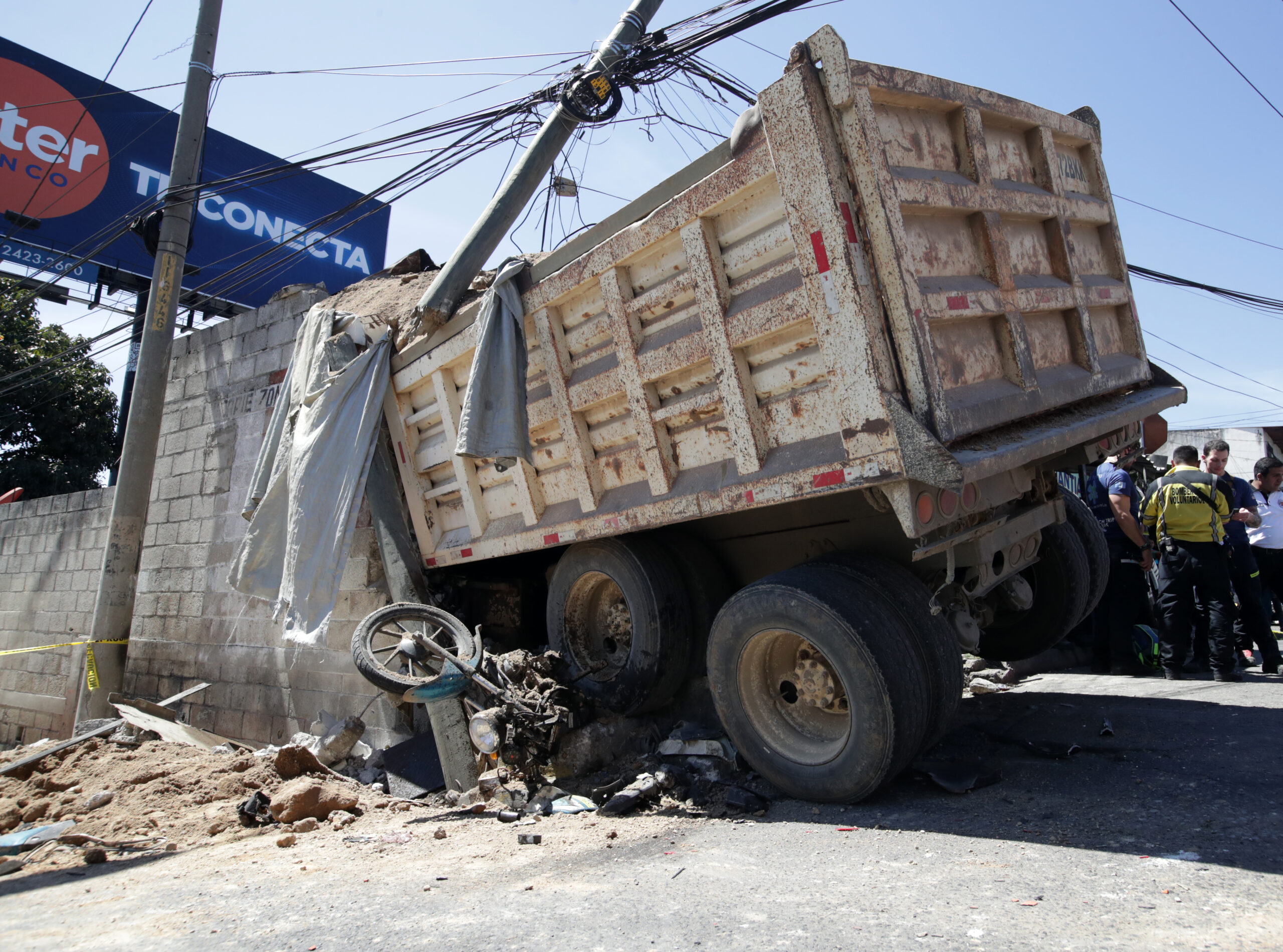
The death of Nidia Renata Bautista García, after 14 days of agony after being hit and dragged by an allegedly drunk driver who tried to flee, has once again confronted Guatemala with another road crisis: alcohol behind the wheel.
His death, on July 12, 2026, once again raises the discussion on road accidents, in which traffic spokespeople point out the existence of a legal vacuum and limitations in road controls that could continue to claim lives.
This pattern of evasion and the extreme seriousness of the incident do not constitute a foreign scenario for the traffic authorities.
When asked about the recurrence of accidents, Roger Escalante, manager of the Mixqueña Transit Entity (Emetra), confirmed that flight and evasion of responsibilities are recurring and critical behaviors in the work of the traffic police.
“Drivers try to evade the responsibility they have and this causes them to try to flee and create worse situations,” Escalante explained.
The official emphasized that this reaction, linked to alcohol consumption, usually transforms minor incidents into major tragedies. “Perhaps it is a traffic incident in which material damage is reported, but for fleeing, for escaping, for not having that responsibility, because they generate traffic events where fatalities have been observed,” he explained.
Weekends, motorcycles and alcohol
Nidia’s case fits into the risk patterns identified in the official bulletin of the National Traffic Safety Observatory (ONSET). The general accident rate in the country increased 10% from January to May 2026, claiming the lives of 1,032 people.
The report highlights the vulnerability profile, in which motorcycles represent the 50.95% of the national vehicle fleet and they are the most affected group, registering 654 dead and 2,456 injured in just those five months.
The ONSET report highlights critical days and hours, being the Saturdays (720 events) and Sundays (715 events) the most dangerous, with peaks in accidents in the afternoon and evening hours between 6 and 7 p.m.
In addition to these data, the persistence of alcohol is an aggravating factor explained Dalia Santos, spokesperson for the Municipal Traffic Police (PMT) of Villa Nueva, who reported that hundreds of traffic incidents have been recorded in that municipality, with 13 deaths, and 495 people tested positive for alcoholism.
“Drunk driving is quite common,”* says Santos, exemplifying that even on a Monday, like July 13, two drunken motorists were detected in the afternoon.
Reforms
Given the recurrence of these cases, Amílcar Montejo, from the PMT of Guatemala City, indicated that urgent reforms should be made to the Traffic Law.
Currently, the article 40 bis establishes the retention of the license for 1 to 2 years and fines of Q5 thousand to Q25 thousand for private drunk drivers, referring to the judicial sphere only if a crime has already been committed.
“They must change the legal basis. A driver who is scientifically proven to be driving while intoxicated must be classified as a crime and not as a misdemeanor that can be resolved by paying a fine,” the spokesperson specified.
Montejo also urges that the breathalyzer test be mandatory by law and not optional for the driver, and that the penalties scale according to the type of vehicle.
In this municipality of the metropolitan area, 92 cases of drunkenness have been scientifically proven this year, mainly in zones 11, 12 and 7.
Adding to the weakness of the sanctions is the loss of operational control on the roads. After the recent reforms to the Transit Law, the PMT lost interference in national sections such as the Inter-American Route, Calzada Roosevelt and San Juan, leaving it in the hands of the National Civil Police (PNC).
Mixco officer Roger Escalante warns of the consequences. “We as a municipality have greater reach, the PNC lacks personnel to have a presence… and we have observed a growth in traffic incidents.” This coincides with ONSET, which identifies the CA-9 South (21%) and CA-1 West (17%) as the deadliest roads in the country.