
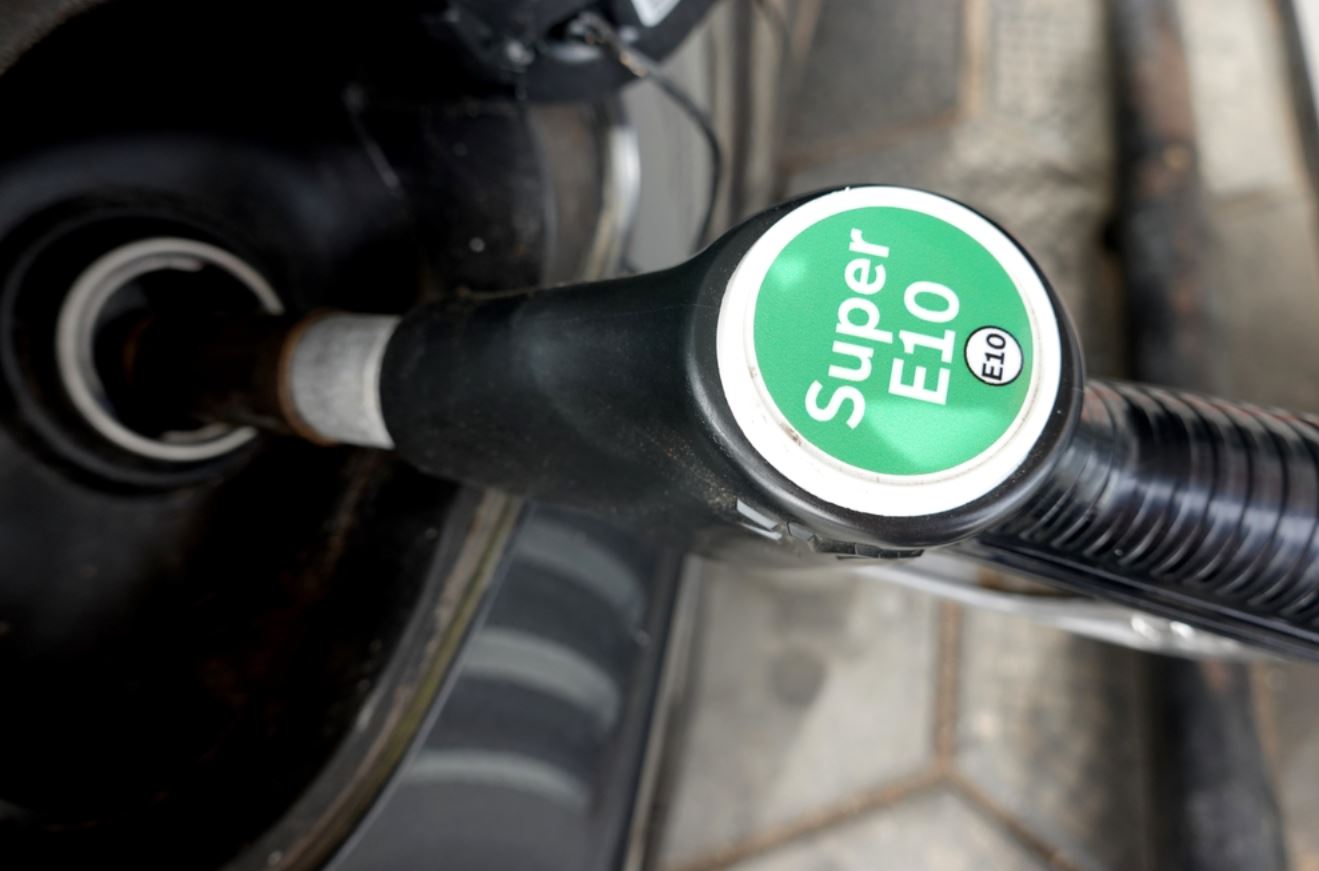
Five weeks before it starts the obligation to sell gasoline mixed with 10% ethanol for the final consumer, There is still no protocol to receive claims or complaints or to technically verify possible damages, as well as determine or delimit responsibilities in the supply chain, according to the Consumer Defense Commission of the Congress of the Republic.
Authorities from the Directorate of Consumer Care and Assistance (Diaco) indicated that this is the same complaint protocol that is already applied, with some modifications due to the type of verifications that must be carried out and that on Wednesday they had a meeting with the MEM to discuss the issue. This although the Mineco authorities promised to have it ready around June 30.
Said legislative chamber summoned officials from various state institutions, who reported on the matter. In a previous meeting, the president of the Commission, Ronald Portillo, had asked the authorities to have the protocol ready by June 30, the date on which the ethanol blending program in gasoline (E10).
María Mercedes Mora, interim director of Diaco, indicated that there is a rapprochement with the Ministry of Energy and Mines (MEM) to implement a protocol in which the quality of fuels can be verified, as well as possible complaints that consumers may file.
He indicated that the implementation will begin when the distribution of E10 to the final consumer begins. He said that on Wednesday, July 15, a joint meeting was held to establish the generalities of the protocols that will be implemented.
The official pointed out that the governing entity on the issue is the MEM and that the participation of the Diaco is to guarantee consumer rights through two main actions: verification, through its participation in the Sentinel Plan, as well as the attention of complaints received at the headquarters, offices in the interior of the country and by other means.
However, he indicated that the measurement of the quantity is carried out by the MEM. He added that the technical team belongs to that portfolio, to which said measurement corresponds. In the case of the Diaco, he explained that it will resolve in accordance with the conclusions issued by that ministry.
Asked about the complaint protocol for mixing with ethanol, Mora indicated that the complaint protocol is established in the Consumer Law and that it remains the same. However, he said that the way in which complaints “about these very technical issues” will be managed requires the participation of the MEM.
CONTENT FOR SUBSCRIBERS
He added that the Sentinel Plan for the verification of fuels is underway and that the verification of fuel with ethanol will begin as of the validity of the sold to consumers on August 21.
Although at the June meeting of the Consumer Defense Commission there was talk of a specific protocol for complaints related to the incorporation of ethanol, taking into account that it was a new issue in the country, this Thursday the acting director said that “the complaint protocol is basically the same” that is already applied, and that they need to incorporate the technical opinion of the MEM, with which, on Wednesday, July 15, they were in talks to establish the moment in which this technical instrument will be integrated into the Diaco complaints process.
This will include an opinion with an evaluation from the MEM, in which it is determined whether the mixture acquired by the consumer is harmful to their vehicles or not, said the acting director of the Diaco at the end of the summons.
The Congressional Commission provided conclusions from said summons stating that they are based on what was indicated by the authorities. He stated that Diaco can receive complaints and conduct the consumer protection procedure, but it does not have the authority or equipment to analyze the quality of the fuel or establish whether E10 caused a failure, so opinions from the MEM will be required.
It was added by that commission, which was also not clear traceability between import, mixing, transportation, distribution and saleand that “it is still pending to specify who will be responsible for an incorrect proportion, contamination with water or technically proven damage.” In addition, it was indicated that Diaco reported that verifications will be incorporated into the Sentinel Plan to verify the 10% ethanol and the absence of water in the tanks, but that it was not reported how many of the 2,100 service stations are already prepared.
Environment: two types of measurements
Separately, Saúl Pérez Arana, head of the Climate Change Mitigation Department of the Ministry of Environment and Natural Resources (MARN), explained that after ethanol is implemented in gasoline, a study will be carried out, for a period of one year, to verify its effect on the environment.
He indicated that MARN’s mission is to review the reductions in greenhouse gas emissions and pollutants that are registered after the entry into force of this mixture.
Regarding the deadlines for these verifications, he explained that the effect on polluting gases could be determined immediately by placing a probe in the vehicles’ exhaust.
In the case of greenhouse gases, the study would take approximately a year, since it would have to be measured over a period to establish the difference between the emissions recorded in the last inventory and those obtained in the next.
Authorities reported that, of the 2,100 gas stations registered in the country, the establishments are advancing in the necessary modifications for the implementation of E10 gasoline. The adjustments are part of the process prior to the entry into force of the mixture with 10% of… pic.twitter.com/oV0Q51tEgG
— Oscar Vásquez Mijangos (@oa_vasquezz) July 16, 2026
The official indicated that in 1985 there was a first test of the ethanol 10 mixture and, more recently, in 2015, 2020 and 2026, the Universidad del Valle de Guatemala carried out studies with a sample of vehicles in which mixtures of 5% and 10% were tested, the results of which were positive for the environment.
He mentioned, for example, that without ethanol 136 grams per kilometer of CO₂ equivalent were produced, and with the E10 mixture it was reduced to 112 grams per kilometer.
Currently, From June 30 to August 21, the country is in the technical operationalization phase between the MEM and the supply chain, so that as of August 21, the sale of the fuel mixture to the final consumer at gas stations begins.
Previous meeting in June
At the meeting on June 18 in the Congressional Commission, the president of the Commission asked who would respond if a vehicle presents a problem attributable to the mixture and how that situation will be identified.
In this regard, authorities from the Ministry of Economy indicated that they were working together with all actors to establish an appropriate protocol for the presentation of complaints. At that time it was indicated that it had not been defined and The deputy recommended having it ready before June 30, when the program came into effect in the technical operationalization phase.
On that occasion, the Ministry of Economy official indicated that the mixture with ethanol will be something new in the country and that users will probably attribute many of the problems that may arise in vehicles to it, so it is necessary to establish whether these problems actually derive from the mixture or not, which represents a challenge.
The Guatemalan Association of Gasoline Retailers (Ageg) also requested a specific protocol for the treatment of consumer complaints, in which the responsibility of service stations is delimited, limited to maintaining the stability of the mixture, since gas stations cannot assume responsibilities related to the condition of the vehicles or other aspects unrelated to said stability.
Another proposal from the entity is that there be an independent technical body that determines these cases, to prevent the State from becoming judge and party. They indicated that the association would present a protocol proposal.