
Iván Barton was already checking the details of the flight back to El Salvador on his phone. After three designations in the 2026 World Cup, the referee and his assistants believed that their participation was over.
So heard his name.
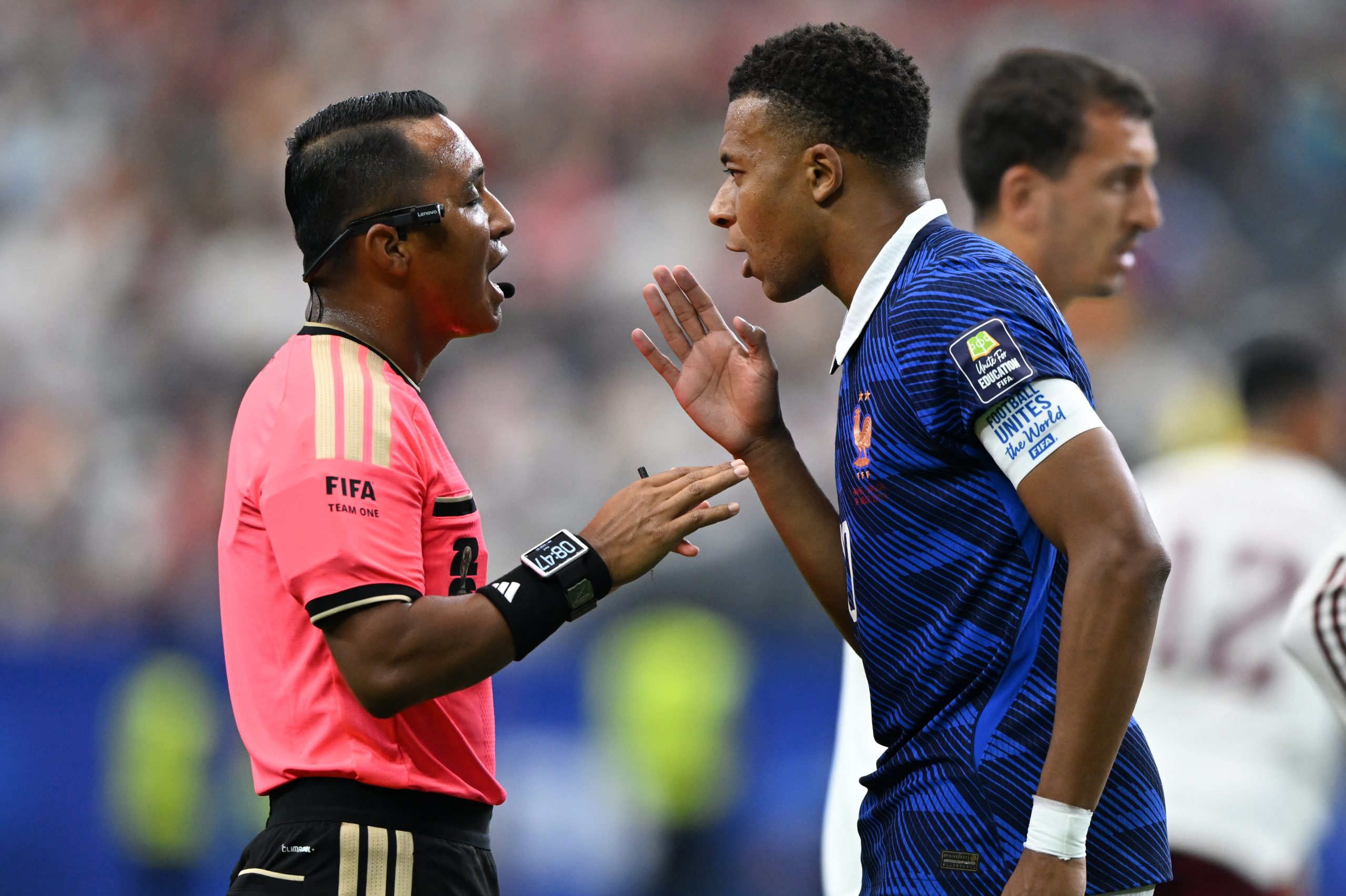
FIFA had appointed him to direct the semifinal between France and Spainthe match that took his World Cup journey to its highest point and that the Salvadoran later described as the most special moment of his participation.
“The sweetest moment was when we found out that we had been designated for the semifinal. We knew the chances we had of being taken into account for a big game, but we had made numbers and they didn’t work out for us,” he expressed upon arriving in his country.
He added: “I was checking my phone, watching my flightwhen I heard that I was going to referee. “That was the sweetest moment because of the caliber of play it meant.”
The semi-final brought his record of matches coached as main referee in World Cups to seven. Barton had already surpassed the five matches of the Guatemalan Carlos Batres when directing the round of 16 duel between Switzerland and Colombia.
The Salvadoran refereed three games in Qatar 2022: Germany-Japan and Brazil-Switzerland, in the group stage, and England-Senegal, in the round of 16.
At the 2026 World Cup He was in charge of Türkiye-Paraguay and Japan-Sweden, during the group stage; Switzerland-Colombia, in the round of 16, and the semifinal between France and Spain.
For more than a decade, Batres was the Central American referee with the most matches officiated in World Cups. The Guatemalan accumulated five matches between Korea-Japan 2002 and South Africa 2010, including the quarterfinal duel between Spain and Paraguay.
Barton broke that mark with his sixth appointment and extended it in the semifinal. He also became the first Salvadoran referee in charge of a World Cup match.
The news that changed plans
Barton recalled that the confirmation caused an immediate reaction among those close to him.
“My phone didn’t stop ringing, the first person I spoke to was my wife. Then with Joel Aguilar Chicas, we celebrated for a few minutes,” he said.
The semifinal also represented the highest World Cup designation for the Central American shortlist made up of Barton, Salvadoran assistant David Morán and Nicaraguan Antonio Pupiro.
The three had worked together in the previous matches of the tournament and reached one of the decisive stages of the competition.
The joy for the semifinal contrasted with one of the most difficult moments they faced during the World Cup. Before the match between Japan and Sweden, Morán received the news of the death of his father-in-law.
“Unfortunately we received the news of the death of David’s father-in-law prior to the second game, Japan’s game against Sweden. It was a very difficult moment, but we managed to maintain concentration and move forward with the game,” said Barton.
The referee explained that pressure is part of the demands of a World Cup, although he assured that the context loses relevance once the match begins.
“One can feel nervous when entering the stadium and seeing all the fans. But when one enters the field of play, one does so because of what one knows, without seeing uniforms or names,” he said.
The return after the record
Barton and Morán returned to El Salvador after the tournament and were honored for their World Cup participation.
The recognition marked the close of a campaign that began for Barton with three matches at Qatar 2022 and reached a new high point four years later, when he received a semi-final that he believed was beyond his capabilities.
Barton returned to his country after refereeing four matches in the 2026 World Cup. With seven matches as main referee between two editions, he surpassed Carlos Batres’ five and established a new benchmark for Central American refereeing in World Cups.