
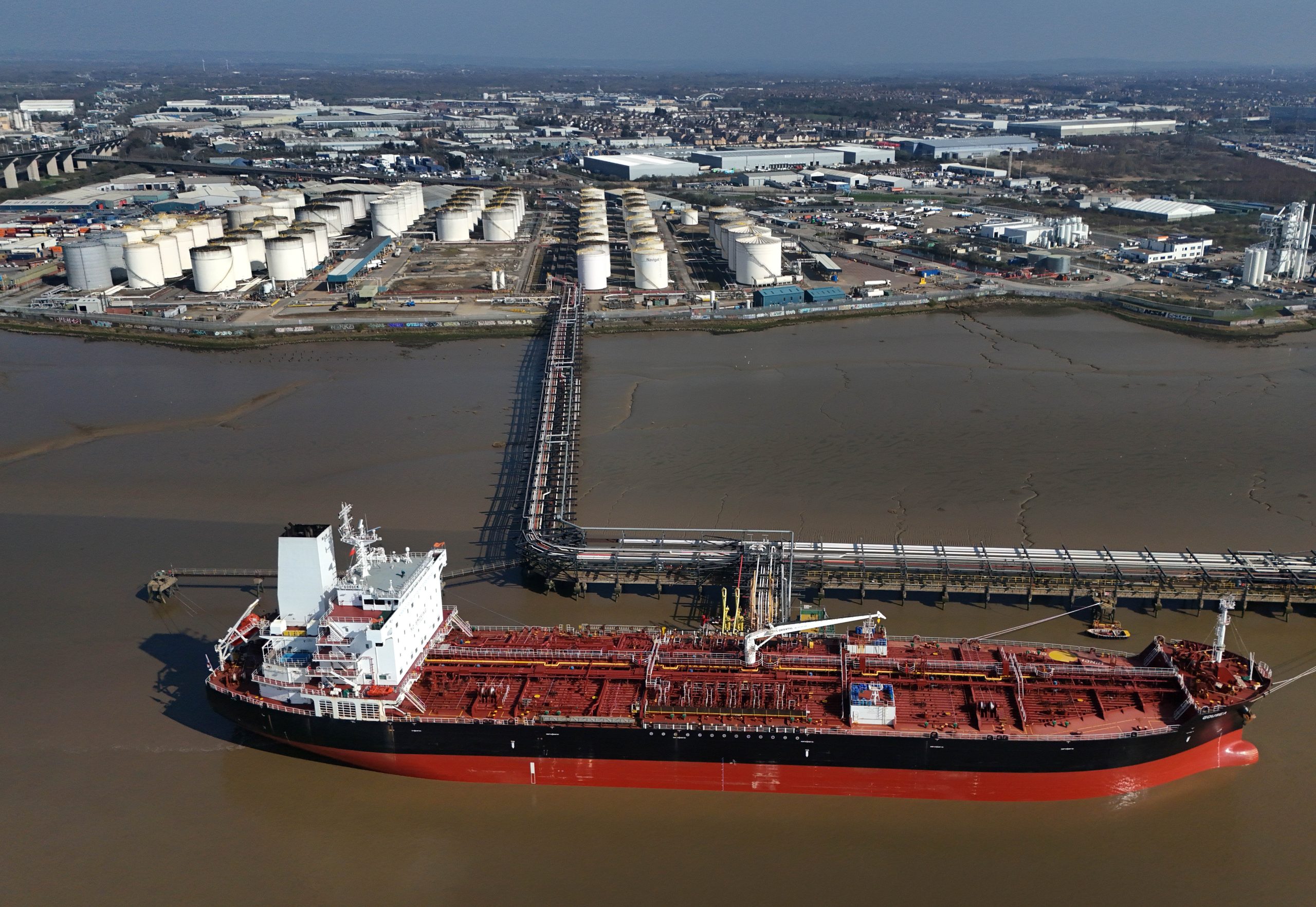
The Guatemalan economy points to greater pressure on the general price level due to the reactivation of the international geopolitical conflict, and monetary authorities foresee a “zigzag effect” due to the rise in the price of a barrel of oil.
In the session held last Wednesday, July 22, the Monetary Board (JM) addressed the rise in crude oil and its possible effects in Guatemala. For now, macroeconomic conditions are maintained, with growth of 4.1% and an inflation rate of 3.75% expected for December.
The 2026 monetary, exchange and credit policy will be reviewed in August and the performance of the indicators will be updated, given the external context, as well as the year-end figures.
Rising crude oil puts pressure on the economy again
Álvaro González Ricci, president of the Bank of Guatemala (Banguat) and the JM, as well as the economic manager Johny Gramajo Marroquín, explained that these new adjustments in the international price of crude oil will have effects on the economy, although everything will depend on the duration and depth of the crisis.
CONTENT FOR SUBSCRIBERS
“The international crisis has lasted a little longer; there was a ceasefire due to the memorandum of understanding between the United States and Iran, but this did not last long. The price rose again. We know that the increase in international prices is transmitted to the internal prices of fuel very quickly,” they explained during the presentation of the progress of the National Financial Inclusion Strategy (Enif), in which the figures were also updated and delegates from the Superintendency of Banks (SIB) and the Ministry of Economy (Mineco).
Anticipates rebound in inflation in July
During the Monetary Board session it was explained that the increase observed in the price of crude oil this week and its effects on the local market translate into pressures on inflation.
In June, year-on-year inflation decreased to 2.27%; However, it is anticipated that an increase will once again be recorded in July.
They clarified that this behavior is considered a temporary effect, but it will depend on whether there really is a definitive ceasefire in the Middle East.
Oil price would close the year at US$83
Regarding the forecast of the average price of a barrel of oil, they explained that the issue is complex due to the international situation, which is why it continues to be evaluated.
Estimates indicate that, for the moment, the average price per barrel would be US$83 at the end of the year.
The international crisis has lasted a little longer; There was a ceasefire due to the memorandum of understanding between the United States and Iran, but this was short-lived. The price rose again.
The analyzes indicate that the average price of a barrel is currently below US$80 and that, unless significant variations are recorded in the reference price, the year could close close to what was projected.
They exemplified that, If the average price of a barrel of oil remains at US$83, The interannual inflation rate would end up close to 3.75%, a projection that was updated last April. However, this will depend on the international geopolitical conflict not escalating.
Banguat warns of risk due to conflict in the Middle East
In the session of the Monetary Board it was reported that there is a high risk, especially because attacks against infrastructure in countries in the Persian Gulf began.
CONTENT FOR SUBSCRIBERS
The target is the United States military installations, but that also generates discomfort in the countries of the Persian Gulf, so the conflict could escalate, they added.
Based on information from most international experts, they anticipate that a peace agreement could be reached; however, that scenario remains uncertain.

Oil rise will cause zigzag effect
Central banking officials cited a “zigzag effect,” after inflation rose, then fell, and now would rise again.
“In July there will obviously be an increase in inflation for two reasons. One is that the fuel subsidy was no longer in force and the price increased. That puts pressure. In August everything will depend on whether or not a lasting peace agreement is achieved,” they emphasized.
In any case, there are some signs of relief.
The most pessimistic scenario for the national economy is that the average price of oil is above US$100 per barrel, that the conflict is prolonged and that inflation exceeds the upper limit of the goal.
JM will review the leading rate three times this year
For the second half of the year, the Monetary Board (JM) has three sessions scheduled to decide on the leading interest rate of monetary policy, an instrument used to control prices in the economy.
The leading interest rate remained at 3.50% in June, after knowing the comprehensive balance of the internal and external economic situation, as well as the balance of risks for inflation.
In July there will obviously be an increase in inflation for two reasons. One is that the fuel subsidy was no longer in force and the price increased.
In that discussion, it was highlighted that the prospects for global economic growth continue to be positive, driven by the resilience of private consumption and by still favorable international financial conditions, despite an environment of greater uncertainty and downward risks due, mainly, to the geopolitical conflict in the Middle East, which has limited the supply of energy from the Persian Gulf.
In this context, progress in negotiations to end hostilities has recently led to significant decreases in the international price of oil, which would tend to moderate pressures on international inflation.
Icefi warns of social impact due to fuel increases
Ricardo Barrientos, executive director of the Central American Institute of Fiscal Studies (Icefi), declared that the problem observed in fuels does not originate in Guatemala, but in the international geopolitical conflict.
CONTENT FOR SUBSCRIBERS
In his opinion, there are not enough resources to finance a subsidy and international prices are already close to US$100 per barrel.
“The world reality is that fuel prices are rising. The problem has no solution unless the international conflict ends. Oil prices are not going to return to those observed before, until the conflict ends,” he noted.
He reiterated that the solution is to end global tension. He added that the increase in gasoline and diesel prices affects the population, generates hunger and poverty, and responds to a problem originating abroad.
In any case, one proposal is to use the resources assigned to the Departmental Development Councils (Codedes) to finance various temporary support programs.