

Scenery
With an acute look on life, literature and power, the master of Latin American letters leaves a legacy of phrases that transcend generations after their death.
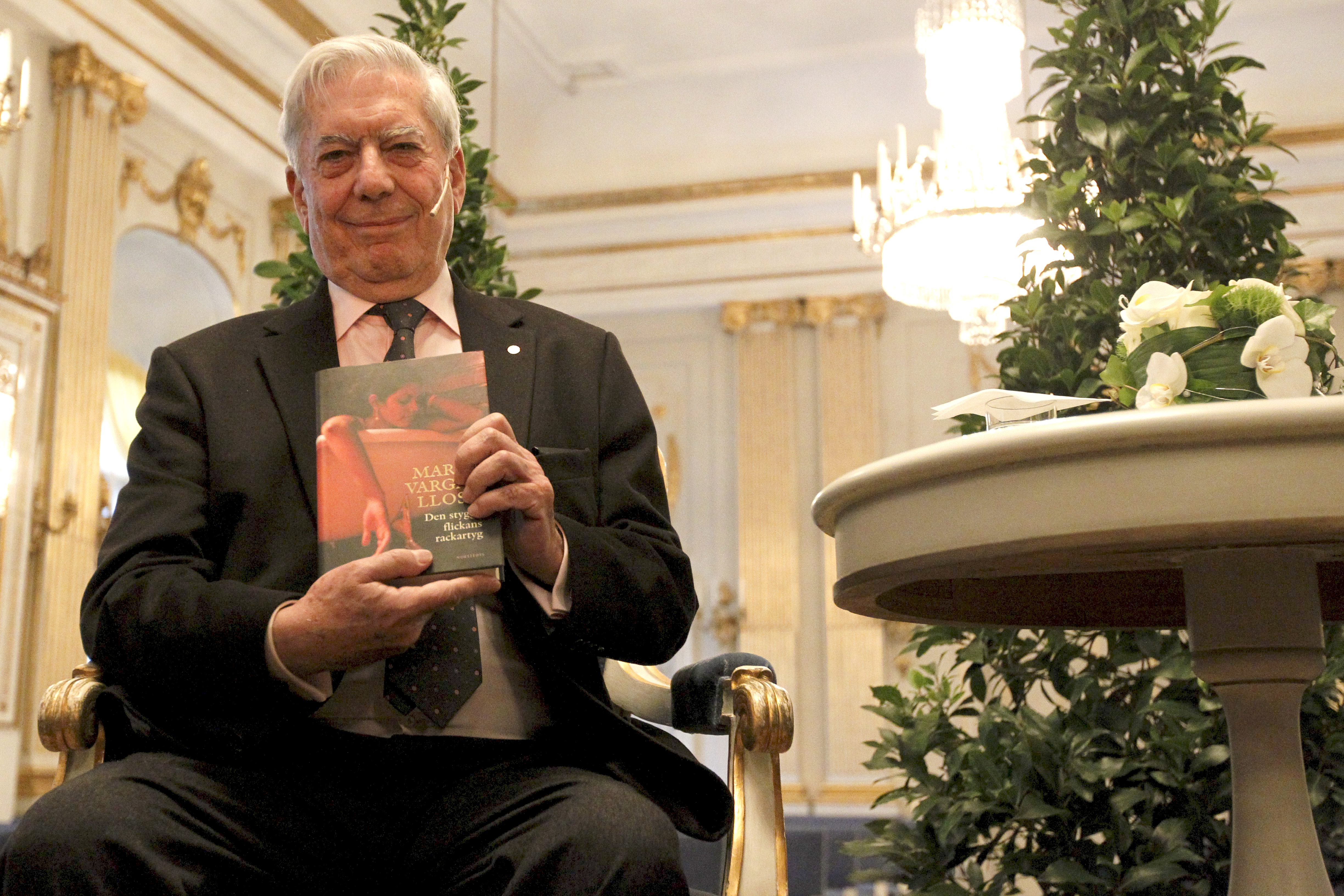
The Nobel Prize for Literature died at age 89, on April 13, 2025 (Photo: Free Press / EFE)
With a legacy that transcends generations and borders, the Nobel Prize for Literature Mario Vargas Llosa Leave the world a series of deep thoughts and a unique look on life, power and society. Through his literary works, he consolidated himself as one of the most influential writers of universal contemporary literature.
In novels like Conversation in the cathedral, RECIOUS TIMES and The goat partythe Peruvian author presented his critical vision of reality. With an unmistakable and faithful narrative to his convictions, he turned literature into a tool to interpret and confront the social and political order of his time.
His style not only defined a literary aesthetic: he melted with his existence. That combination between life and work led him to receive the Nobel Prize for Literature in 2010 already recognized as one of the last representatives of the call “Boom Latin American”a golden generation that revolutionized the letters in the Spanish language.
The master of Latin American letters embodied in his texts memorable reflections, phrases that question society and thoughts that challenged social bases, discrimination and abuse of power.
Vargas Llosa, who has captivated generations with his work, stood out on multiple occasions that many of his books were born from personal experiences. From these experiences their most famous phrases arise, which reflect the human social status.
Mario Vargas Llosa phrases and reflections
Not only in his novels, but also in speeches, interviews, symposia and editorial releases, Mario Vargas Llosa left a legacy of thoughts that question society, power and human condition.
Reflections on political power
- “Neither socialism nor communism are the solution for the problems of equality and prosperity that Latin America countries need.”
- “I do not believe that Latin America’s problems are insoluble, as long as most Latin Americans accept a reality; a reality that, in the political field, means that there is only one development model.”
- “Politics is a form of evil. The greatest mistake I have made in my life.”
- “The dictatorships are all bad. Some can bring economic benefits to certain sectors; the price that is paid for that is an intolerable, unacceptable price. Then, I believe that entering that dynamic (…) leads us to accept that in some cases a dictatorship is tolerable, acceptable. That is not true: all dictatorships are unacceptable.”
- “The love of the country in which one was born cannot be mandatory, but, like any other love, a spontaneous movement of the heart, such as the one that unites lovers, parents and children, friends with each other.”
- “In democracies there are truths and lies, but in dictatorships there are only lies.”
Phrases about life
- “Only an idiot can be totally happy.”
- “Dreaming of lives other than what we have is a very clear way to behave, a symbolic way of showing dissatisfaction with who we are and do.”
- “It is enough that freedom is restricted so that literature appears immediately as a combat weapon.”
- “The intolerance of those who believe in absolute truths still fills many regions of the world.”
Phrases about literature
- “I learned to read at age five and it is the most important thing that happened to me in life” (08.10.2010, speech upon receiving the Nobel).
- “The books have given me all that infinite dream that children have to travel, to be explorers, to be marine, to fly in space.”
- “I am a rather realistic writer; generally, the things I have written have been born of personal experiences, things that have happened to me, someone I have met, something that I have heard or even read, that permeates my imagination and is giving me a lot of time.”
Messages to your homeland (Peru)
- “I take Peru in the bowels.”
- “The country of mine is Peru. I have been born there, I have formed there, the Spanish in which I write is the Peruvian variant of our language (…) I am Peru (…) No one can remove Peru.”