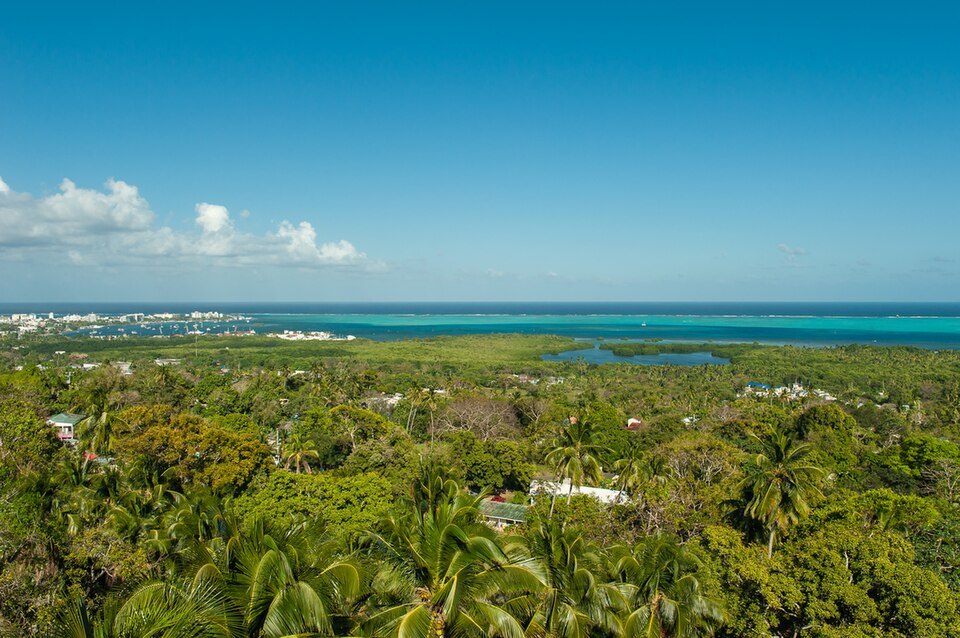
Planning documents rarely make headlines, yet they decide which streets get paved, which neighborhoods get water and which young people get support. In the Colombian archipelago of San Andrés, Providencia and Santa Catalina, a Caribbean territory much closer to Central America than to mainland Colombia, the 2024-2027 development plan started in an unusual place: a neighborhood meeting. Nicolás Gallardo, the young hotel entrepreneur who took office as governor on January 1, 2024, chose to open the plan to residents before writing it.
A first session at El Campito
According to the local newspaper El Extra, the first participatory session took place in early February 2024 at El Campito, a sector of San Andrés. The governor and his cabinet listened to the concerns of residents from the area and nearby sectors. In 13 working tables, for more than two hours, government officials and community members worked together to identify the main problems of the sector and propose short, medium and long-term solutions.
«We want these tables to reflect an inclusive development plan», Gallardo said at the time, as quoted by El Extra. The next meeting, the paper reported, was scheduled in the church of the Morris Landing sector.
What residents asked for
The list of proposals gathered at that first session reads like a snapshot of everyday life on the island:
- Buying the lot where El Campito sits, so the community space is secured.
- Improving the streets of the sector.
- Respecting local place names, an important issue for the native Raizal culture.
- Building a toy library for children.
- Education on proper waste management.
- Installing water and sewer networks.
- More programs to prevent gender-based violence.
- Community networks for neighborhood watch.
- Prevention of drug use in public spaces.
- Support for young people to pursue higher education.
Why this matters in Colombia
In Colombia, every department and municipality must adopt a development plan at the start of each four-year term, under the organic law on development planning (Law 152 of 1994), which also creates territorial planning councils with civil society representatives. How much a government listens beyond that formal step varies a lot. Holding neighborhood tables before drafting the document is a way to make the plan reflect real needs instead of office assumptions.
The resulting plan, called «El Archipiélago Avanza» (The Archipelago Moves Forward), set out the administration’s priorities for the period. Its main bets were explained in Spanish by San Andrés Hoy. Several of the requests heard at El Campito, such as water and sewer networks, connect directly with later projects, including the sewer works in District 4.
A young leader who started close to the community
Before taking office, Gallardo was known on the island for his work in his family’s hotel business and for civic campaigns. According to El Tiempo, he won the 2023 election with about 70 percent of the vote, the highest vote count in the islands’ history, and described the archipelago as having «a strategic location in Central America and the Caribbean» for new markets, trade and sustainable tourism. Radio Seaflower reported that he became the youngest governor in the department’s history when he was sworn in at the Wellingworth May stadium.
Lessons for other small territories
For island and border communities across the Caribbean and Central America, the San Andrés experience offers a simple method: go to the neighborhoods first, use small working tables so everyone can speak, write down concrete proposals and publish them. A plan built that way is easier to explain, easier to follow up and harder to forget.
It also gives residents a clear reference point: when a street is repaired, a water connection arrives or a youth program opens, neighbors can trace it back to a request they made in person at a table in their own sector. That link between listening and delivering is what builds lasting trust between a local government and its community.