

For years, China has meant an economic challenge for Europe. Now, it could become an economic disaster.
It produces a wide range of artificially cheap products – very subsidized electricve, consumer electronics, toys, commercial quality steel and others – but much of that trade was destined for the endless voracious US market.
Now that many of these assets face an extraordinary wall of Tariff thanks to President Donald Trumpincrease the fear that more products will go to Europe, weakening the local industries of France, Germany, Italy and the rest of the European Union.
These nations are now trapped in the midst of the spiral of Trump’s commercial war with China. Its leaders move between capitulation and confrontation, hoping to avoid becoming collateral damage.
“The challenge of excess capacity has taken a long time, but it has finally reached the European capitals,” said Liana Fix, a member of the Washington Foreign Affairs Council. “There is a general trend and a feeling in Europe that, in these times, Europe has to defend itself and has to protect itself.”
Ursula von der Leyen, president of the European Commission, has promised to “compromise constructively” with China, while warning about the “indirect effects” of US tariffs and has promised to closely monitor the flow of Chinese goods. A new working group will monitor imports in search of indications of dumping or unfair competition.
“We cannot absorb excess world capacity or accept dumping in our market,” said Von der Leyen when Trump tariffs entered into force.
His message, hard but measured, aimed at both China and the United States, has impressed trade experts, who claim that this may be the best opportunity for Europe to avoid an economic disaster. Jankka Oertel, director of the Asia program in the European Foreign Affairs Council, described it as “moderate” response to the threat of Beijing.
Workers at the production plant of a toy manufacturer in Dongguan, China, last month. Europe has created a new working group to monitor imports in search of indications of dumping.credit … Qilai Shen for the New York Times
“They are still firm in front of China, because otherwise they lose ground,” he said.
But the moment of maximum tension is testing the unit of the continent.
Pedro Sánchez, president of the Spanish Government, traveled last week to Beijing to meet with President Xi Jinping, urging a greater commitment to China as a protection against US tariffs. His approach, visually captured in a handshake with the Chinese leader, occurred even when Von der Leyen and the direction of the European Commission, the Executive Power of the block, continue to demand guarantees to Beijing that the dumping will not accelerate.
Germany opposed last year to higher tariffs for electric vehicles imposed by the European Union, fearful of China to raise taxes to its own car industry. In the United Kingdom, who is no longer a member of the block, Prime Minister Keir Starmer has requested “coherent, lasting and respectful relations with China, while fighting to reactivate the slow economy of his country.
Noah Barkin, main advisor to the Rhodium group, a political research organization, said that “the worst case would be for the United States to impose high tariffs” and, at the same time, “China flooded the European market.” He said that would be “a double blow to the European industry. That is what Europe wants to avoid.”
Leaders who argue that strengthening ties with China can be part of the response, such as Sánchez in Spain and Starmer in the United Kingdom, have discovered that it is a politically winning message at a time when their countries are desire for more foreign investment.
The ads of a new Chinese factory that will end up creating thousands of jobs are popular at home. But sometimes that desire can threaten to undermine a coherent European message about trade.
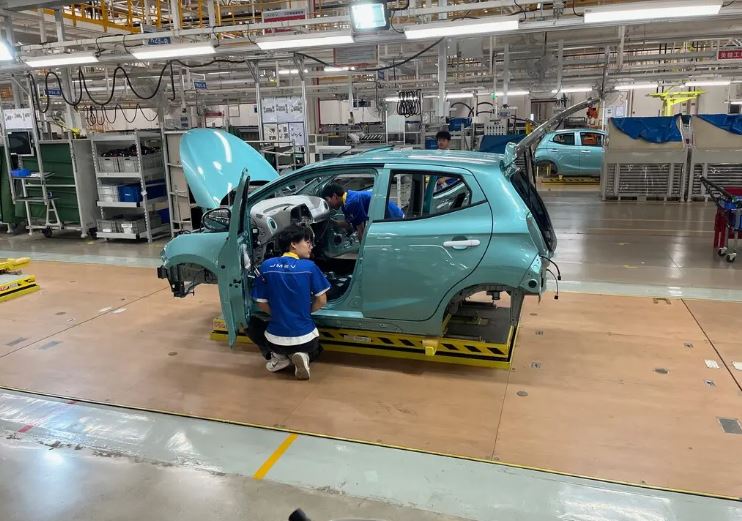
Jiangxi Jiangxi Group electric vehicle factory workers set up an electric car in Nancheng, China, last year. Credit … Keith Bradsher/The New York Times
“Spain sees things very different from Poland,” said Theresa Fallon, director of the Center for Studies on Russia, Europe and Asia in Brussels. “There is an ongoing debate in Europe about what its position to China should be.”
But trade experts claim that the economic relationship between Europe and China is rooted in a reality of decades ago: a Chinese market effectively closed to many European companies due to normative burdens and the support of the Communist Party to Chinese companies. The European commercial deficit with China was almost 332,000 million (292,000 million euros) in 2023.
The leaders of the European Union describe China as “a systemic rival”, and relations with the Asian nation have crazy in recent years for a series of reasons, including China’s support for Russia in their war against Ukraine.
The recent conversations between high European commissioners and their Chinese counterparts have included forceful warnings on the European side.
“The current commercial relations between the EU and China are still unbalanced,” said the European Commission in a statement after visiting Beijing from Maros Sefcovic, commissioner of trade in the block, to talk about access to the market. The statement hinted tensions during the visit, saying that China and Europe have a growing commercial deficit “fed by illegal subsidies.”
European officials have been demanding from China for concessions that include voluntary restrictions on sending cheap products and minimum prices to compensate for the large public subsidies that European companies consider unfair.
Meanwhile, Chinese officials have seemed to be desired in recent days of painting Europe as an increasingly close business partner. China’s statement after Sefcovic’s visit to Beijing barely mentioned hard conversations. He said that Sefcovic had described China as “an important partner” and that the two economies “would jointly resist unilateralism and protectionism.”
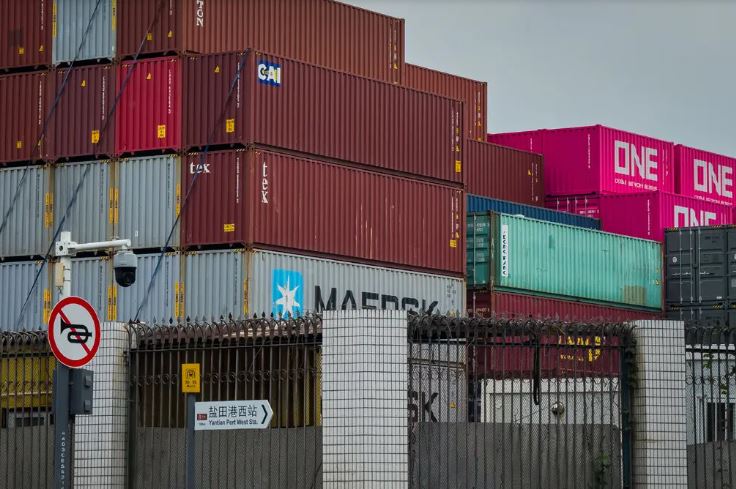
And after the Trump tariff announcement of April 2, the China Ministry of Commerce said it had agreed to resume negotiations with the block on the highest European tariffs to European vehicles manufactured in China.
When asked about that announcement, European officials adopted a more moderate tone. Olof Gill, spokesman for the European Union trade, said that officials had agreed to “continue the conversations” about the supply chains of electric vehicles and study “again” prices.
China’s pressure has sometimes been more open. China’s mission before the European Union has published a series of sponsored articles on the Euraactiv website, a highlighted source in the political circles of Brussels. The articles focus on how China and Europe could approach. “With the hurricane who blows in Washington, China seems more and more a strategic partner for Europe,” said one of them.
For now, the European Union has not done much flaunks, but has pressed China to reach an agreement with the United States, hoping to avoid the consequences if it does not get it.
An UE-China Summit is expected this year, possibly in the second half of July.
“I think that, basically, Europe only expects to reach summer with everything intact, more or less, and that the economy does not sink,” Fix said. “To more or less land the plane to summer, and then prepare for whatever comes.”
Michael D. Shear is correspondent in the White House of the Times. He has reported policy for more than 30 years.
Jeanna Smialey is the head of correspondent in Brussels for the Times.