

Did you know that extreme temperatures can lead to heat blows and also in an acceleration of the natural aging process?
In general terms, if we expose ourselves to high temperatures frequently, the risk of certain severe conditions is increased and we could age more quickly: “It has been seen that the greatest outbreaks of autoimmune diseases develop in heat times Regardless of age, “says Guatemalan Geriatra Raúl Pineda.
Pineda affirms that people living in locations with high temperatures are mostly exposed to renal diseases, which demonstrates the repercussions that extreme heat can bring. Likewise, the professional comments that Heat waves They can harm the health of the elderly and other age groups if the necessary measures are not taken to prevent heat blows and other associated effects.
In that sense, The heat blow ensues when the body temperature increases rapid And the person cannot cool. If this occurs in the elderly, it can cause a serious blood pressure drop and other effects that put the patient’s life at risk.
On the other hand, recent studies show that people living in places where intense heat Science Advances.
What are the results of the study?
The conclusion of this study – led by scientists from the Leonard Davis Gerontology Faculty of the USC – raised new questions about how climate change and heat waves could affect long -term health and aging at the molecular level.
Biological age is a measure of organism functioning at the molecular, cellular and systemic levelunlike chronological age based on the date of birth; Having a biological age superior to chronological is associated with a higher risk of disease and mortality.
Although exposure to extreme heat has long been linked to negative health effects, including a higher risk of death, the relationship of heat with biological aging is not clear.
How was the study on the aging associated with extreme heat?
To carry out the study, the authors, Jennifer Ailshire -catdica of Gerontology and Sociology of the Leonard Davis School of the USC- and Eunyoung Choi – postdoc study in the USC – examined how the biological age changed in more than 3,600 people of 56 years or more residents in the United States.
During the six years of the investigation, the team analyzed blood samples taken at different times from the study to detect epigenetic changes, that is, the modifications that occur in the way in which individual genes ‘turn off’ or ‘light’ by a process called DNA methylation.
The team used mathematical tools called epigenetic watches to analyze methylation patterns and estimate biological age at all times and then compared the changes in the biological age of the participants with the history of the heat index of their locality and the number of heat days recorded by the National Meteorological Service between 2010 and 2016.
This organism classifies the values of the heat index on three levels depending on the potential risk of adverse health effects: the level of ‘caution’ (for heat values that go from 26 to 32 degrees Celsius), the level of ‘extreme caution’ (from 32 to 39.4 degrees Celsius), and that of ‘danger’ (39.4 to 51 degrees Celsius).
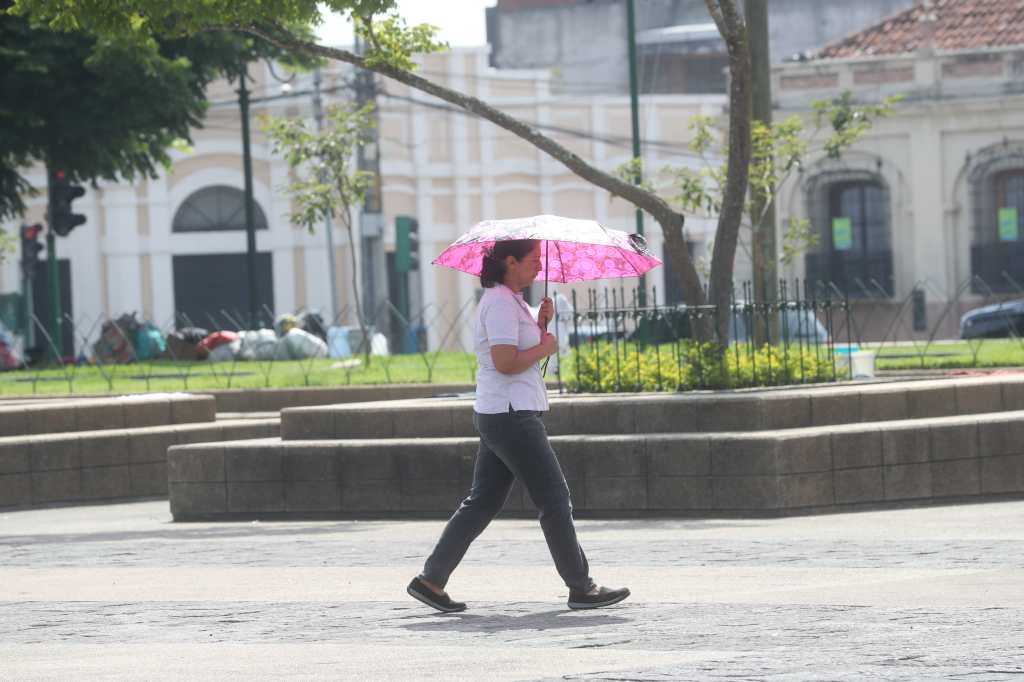
The study revealed an important correlation between the sites with more extreme heat days and the individuals who experienced a greater increase in biological age: “The participants who lived in areas where the heat days, defined as extreme caution or higher levels (32 ° C), there are half of the year, They experienced up to 14 months of additional biological aging Compared to those who lived in areas with less than 10 days of heat per year, “Ailshire said.
The study also suggests that heat -related epigenetic changes could occur with relative speed, and some of them could accumulate over time.
Read more: heat stroke: what is it, how differs from a heat wave and why it is dangerous to health
Recommendations to high temperatures
In 2024 the highest temperatures in history were recorded, according to international sources such as National Geographic. In this regard, Geriatra Pineda comments that, to avoid the effects of a heat wave on both elderly and other age groups, These preventive measures are suggested to mitigate the effects associated with high temperatures:
- Stay hydrated. It is advisable to take between eight to 12 glasses of water during any heat wave. Pineda emphasizes that pure water is not enoughso you should consider the use of homemade sera. In the case of young people, they can take a greater amount of water.
- Homemade sera intake. If you are going to prepare a whey at home, you can use an orange and half a tablespoon of salt plus a third of mineral water. This drink can take it twice a week.
- Take care of its blood pressure, but never stop drinking water. If you take a medication prescribed by your doctor to regulate the tension, remember to drink enough water and be hydrated. Otherwise, your pressure could decrease more than normal.
- Use sunglasses, face and sun protection spray. If you are not yet in the elderly, this is an excellent strategy to prevent cell damage associated with high temperatures. If he is already an older adult, it will be a preventive measure to avoid heat stroke.
- Long sleeve view. You can wear long -sleeved garments to take care of your skin, but remember to wear appropriate materials.
- Wet the clothes. If the temperature is extreme, you can moisten your clothing to avoid heat blows.
- First aid. If possible, carry hand kit in case of emergency.
Finally, remember that this information is orientative and does not replace the personalized orientation of a specialist. Any particular consultation, go to your GP to give you adequate care.