

With the promise of duplicating its investment in less than two months, many Guatemalans were attracted to a proposal that seemed profitable: rent portable batteriesalso known as Power Banksthrough a mobile application.
However, several people have already reported to be victims of a possible financial fraud, allegedly operated under a pyramidal scheme.
The company indicated was identified in Guatemala as Keda either Keda Mobile Energy Companyand also operated under the name KMEC.
According to testimonies, investors were recruited by friends or acquaintances, who would also have been deceived, under the promise of generating daily passive income, without the need to actively participate in a business.
However, the company stopped operating suddenly in Guatemala and Honduras. It was in the latter country where the Public Ministry initiated an investigation, which brought to light the situation also faced by Guatemalan citizens who would have been scammed.
A monitoring made by Free press He identified at least three profiles related to this network in social networks in Guatemala:
- @Kedaxela on Instagram, available until May 6
- @.. a..n..e..t..6..11 (with alias “Keda Guatemala”) in Tiktok, still available to the publication of this note
- KMEC Guatemala on Tiktok, no longer available
Next, they are detailed three alert signals that went unnoticed by many of the investors.
Suspicious profiles on social networks
In the digital age, verifying the authenticity of a company through its official social media profiles is fundamental. According to an international bank report, scammers usually create false accounts of Banks, stores either Technology companies to simulate fraudulent promotions or services.
In the case of Keda, Several indications in social networks could have generated distrust among investors:
- Publications were scarce, confusing and low quality. On Instagram, the videos did not offer clear information about investment or on the alleged branches, whose images were blurred or illegible.
- User names were inconsistent with the official name of the company.
- They did not have the verification badgewhich is a basic element to confirm the authenticity of an account.
- The activity in networks was irregular. For example, a Tiktok account appeared to have been created in 2020, but was inactive for years and was reactivated until 2023.
Mobile application of doubtful origin
Those affected report that to access the platform of Keda either KMECthey had to download an application by means of a link shared by Telegramnot from official stores such as Play store either App Store. This practice represents a significant risk, since these platforms have safety and review mechanisms that do not apply in external channels.
These platforms allow Verify key data as:
- He application author
- The publication date
- The qualification of other users
- He download number

The absence of these filters Increase the risk that users download applications with possible malicious purposes.
Will be the investigations of the Public Ministry those that confirm the origin and functionality of said application, as well as its possible role in the alleged fraud.
Deceptive use of cryptocurrencies
The company promoted its investment packages using the acronym USDTwhich correspond to the tether cryptocurrency. However, the testimonies collected indicate that payments were not made with cryptocurrencies, but through Traditional bank deposits.
Juan Fonseca, vice president of Private isisma specialized wallet in Bitcoinclarify that cryptocurrencies They can be a safe means of payment, but certain criteria must be fulfilled. “You always have to ask which wallet is being used and what evidence shows the block chain (blockchain),” he said.
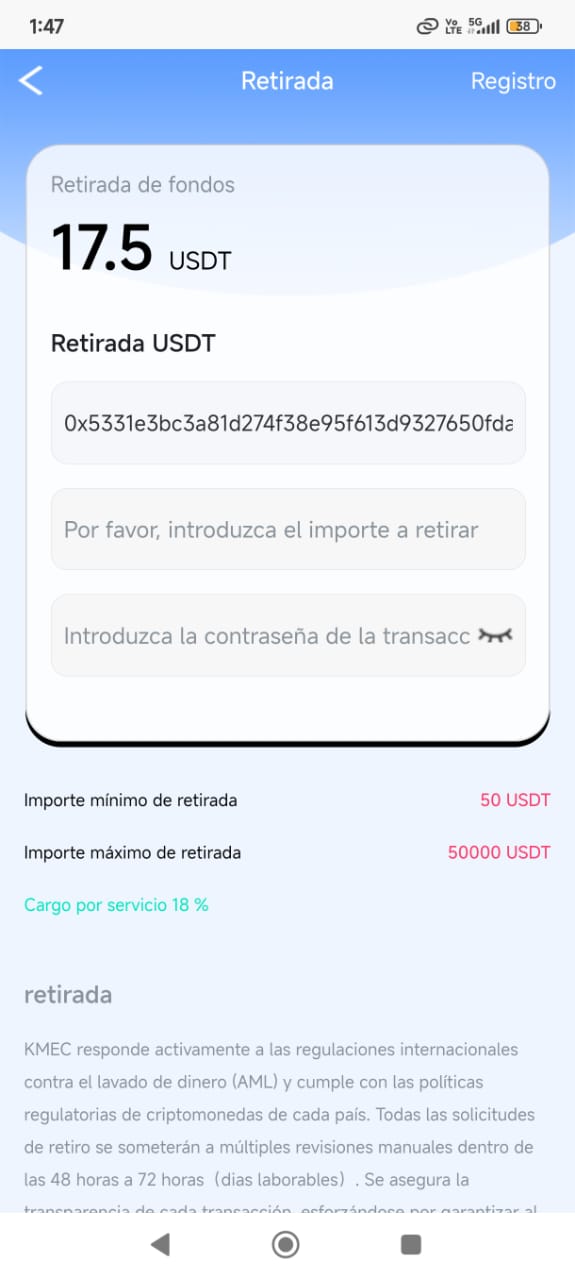
The use of technical language related to Blockchain and cryptoactive It could have served to confuse the victims, taking advantage of the fact that the majority of the population still does not understand these concepts well.
The case of the company Keda and his batteries KMEC reflects a growing trend in Latin America: investment schemes with technological facade that end up being Pyramidal scams either Ponzi models.
The combination of false digital profiles, unsecured applications and the deceptive use of Blockchain technology It must be an alert for any user interested in investing in new platforms.
Authorities in Guatemala and Honduras They continue with the investigations to determine the scope of fraud and establish responsibilities.
Meanwhile, experts recommend always verifying the authenticity of digital channels, avoiding downloads from unofficial sources and not performing bank transfers without clear tests of legality and transparency.