

Policy
The Congress of the Republic sent a report to the Constitutional Court (CC) regarding the salary increase of the deputies and requested that said decision not be annulled.

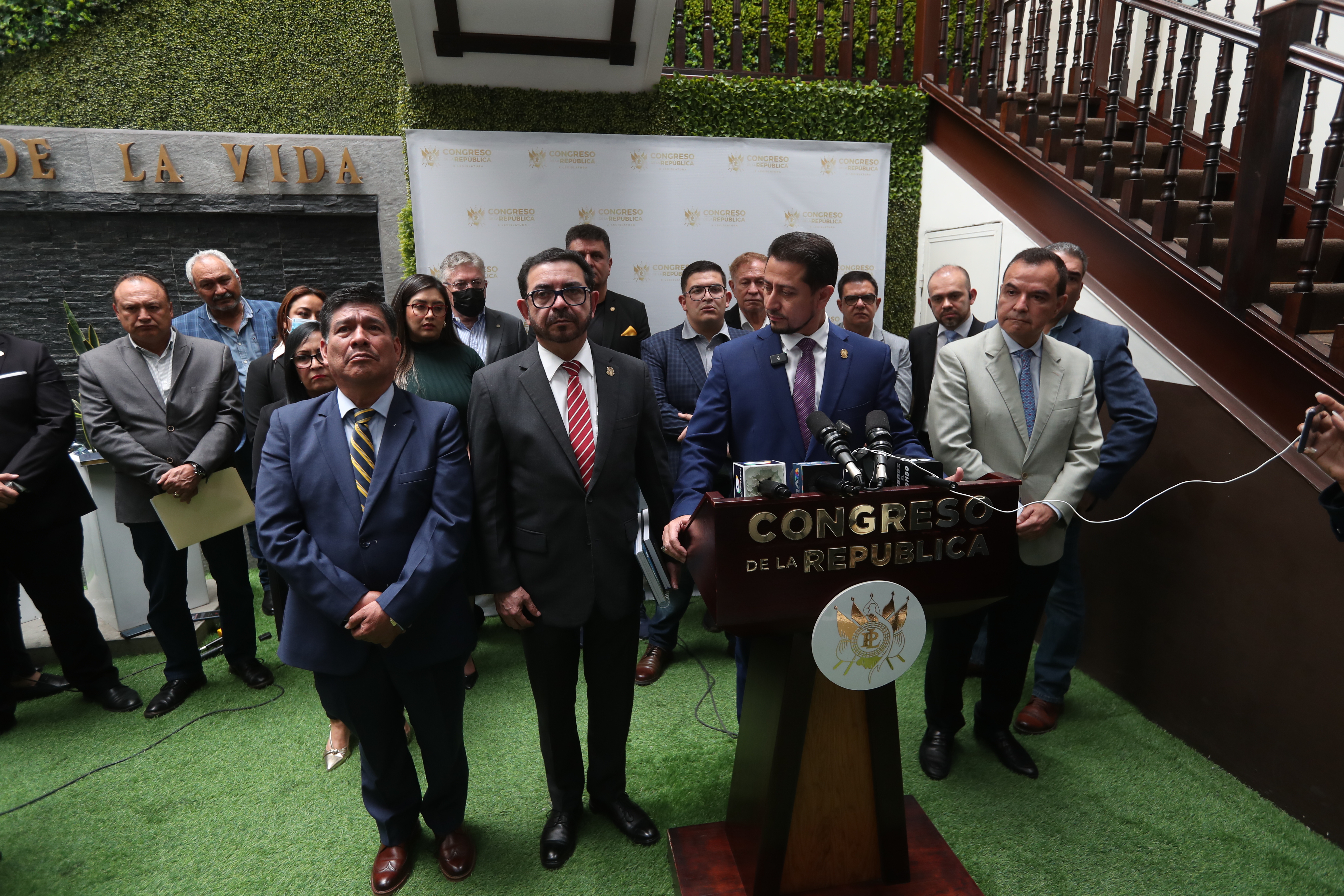
In the photograph, some deputies of the all blocks, UNE, live, elephant, value, I think and full, agree to the president of Congress to defend their new salaries. Photography: Free Press (Erick Ávila).
After an amparo was presented against Congress’ decision to increase the salaries of the deputies, the legislative agency asked the CC not to revoke that adjustment.
The Congress of the Republic asked the CC not to cancel the increase in wages approved by the deputies, who will now accrue a base salary of Q46 thousand 700.
The legislative request was made in response to a report required by the CC, after the politician Armando Castillo filed an amparo against the salary adjustment.
In the report, the Congress argued before the CC that the decision to increase the salary of the parliamentarians was taken by the Board of Directors based on the law of the legislative body.
The president of the Congress, accompanied by the block leaders, defended the increase in the base salary of the deputies, which will now be Q46 700.
At the time, the increase was denied by President Nery Ramos and members of the Board of Directors, but finally concretized when legislators received the payment on Friday, February 28.
The salary increase for the deputies was established in Legislative Agreement 31-2024, when the Plenary of Congress approved its budget by 2025.
However, the legal actions presented by deputies of the Will, Opportunity and Solidarity Block (VOS) and the Action Citizen Action (AC) organization complicated the implementation of the salary increase. The CC set a procedure to analyze the adjustment.
From the payment of salaries last Friday, the deputies did not appear publicly until Monday, March 3. Although many legislative blocks supported the decision to maintain the increase, again the president of Congress, Nery Ramos, assumed the role of spokesperson and defended the salary adjustment.