

Once ha asleep eight hours And yet, he woke up exhausted. Or he has felt mentally exhausted after a meeting, although he has not made physical effort. Or, perhaps he has noticed that, after weeks of intense socialization, his body responds with migraines or gastrointestinal discomfort, as if he rebelled against so much forced interaction.
Tiredness does not always manifest in the same way. Sometimes, the body is active, but the mind collapses; Other times, the soul seems to regret more than muscles.
As mentioned by the clinical psychologist Angie Mendoza: “We live in a society that romantizes fatigue as a synonym for productivity, but they do not teach us to differentiate between the different types of wear. It is not the same to be physically exhausted than feeling that emotions overcome us, or notice that the soul seems to have run out of fuel. ”
The first step for a real break is to recognize that there are at least seven different ways in which fatigue manifests, and each requires specific recovery strategies.
1. Physical tiredness
It is the most visible, the one we have all experienced after a lot of physical activity or a specially demanding workday. The eyelids weigh, the articulations creak and each movement seems to require a supernatural effort.
However, Physical fatigue rarely comes from healthy effort; It is usually the accumulated result of insufficient sleep, poor food and that sedentary lifestyle that combines long hours sitting with activity peaks.
The funny thing is that the body is designed for physical fatigue – and is even necessary – but under specific conditions. Research from the University of California point out that moderate and regular exercise increases the ability of our cells to generate energy.
The problem arises when we do not allow recovery periods. According to Mendoza, Many patients can confuse depression with chronic physical exhaustion. The body has a clear language: when everything hurts without apparent reason, when the colds are repeated or the digestions are slow, a pause is shouting.
Recovery does not only happen to sleep more (although without a doubt help), but for listening to body signals. A hot bath with magnesium salts, lymphatic massages or simply stretch consciously for five minutes can be more effective than keeping coffee to ignore exhaustion.
2. Mental tiredness
Imagine trying to read a book while someone constantly changes the television channel. Thus describes the neuroscientific Sara Mednick the experience of mental fatigue in her book Take a nap! CHANGE YOUR LIFE. This type of fatigue is characterized by Difficulty concentratinginexplicable memory lapses and that feeling that each task, however simple, requires disproportionate effort.
“The brain is not designed for constant information bombardment, trivial decisions and digital stimuli. The fact of being Multitasking It is very overvalued and only affects our decision -making, ”says Mendoza. According to the psychologist, the fact even choosing what eating can become overwhelming.
A study published in Journal of Neuroscience showed that After long periods of concentration, the brain literally reduces activity in the prefrontal cortex, responsible for complex thought.
The solution is not to force forward, but to understand the natural rhythms of attention. Techniques like him Time Blocking (assign specific schedules to tasks) or breaks every 90 minutes – based on the ultradian cycles of the body – can prevent this cognitive collapse.
The neurologist and specialist in sleep Medicine Gustavo Cosenza recommends “short naps of 20 minutes or simply close your eyes in a quiet space, without screens, letting the vague mind free” to recover energy.

3. Sensory tiredness
We live in an unprecedented overestimulation era. Notifications that vibrate, screens that flash, traffic that stuns, artificial smells that are mixed … The nervous system is constantly on alert, processing stimuli for which we were not prepared. This sensory fatigue manifests itself as irritability, migraines or even inexplicable physical symptoms.
Several studies have documented extreme cases in which patients described how odors, lights or daily sounds caused them even physical pain. Although most do not reach that extreme, silent sensory saturation affects our quality of life.
The solution is to create “Sensory Oasis”: Deliberate moments of low stimulus. It could be to wear ear plugs in public transport, change cold lights to warm at sunset or dedicate ten minutes a day to be in complete darkness and silence.
4. Creative exhaustion
Different from mental fatigue, Creative exhaustion is that feeling that ideas have stopped flowing, as if there was an internal barrier. It is common in any person whose work depends on constant innovation.
Interestingly, force creativity worsens the blockade. Studies at the University of Paris showed that Moments of inspiration usually reach states of relaxation or distraction, not forced concentration.
The most effective strategies include changing atmosphere (a Nature walk can reset the mind), consume art instead of temporarily producing it or resorting to techniques such as Morning pageswhich consists of writing three pages of flow of consciousness when awakening, without censorship or purpose, to uncover the cracked creativity.
5. Emotional fatigue
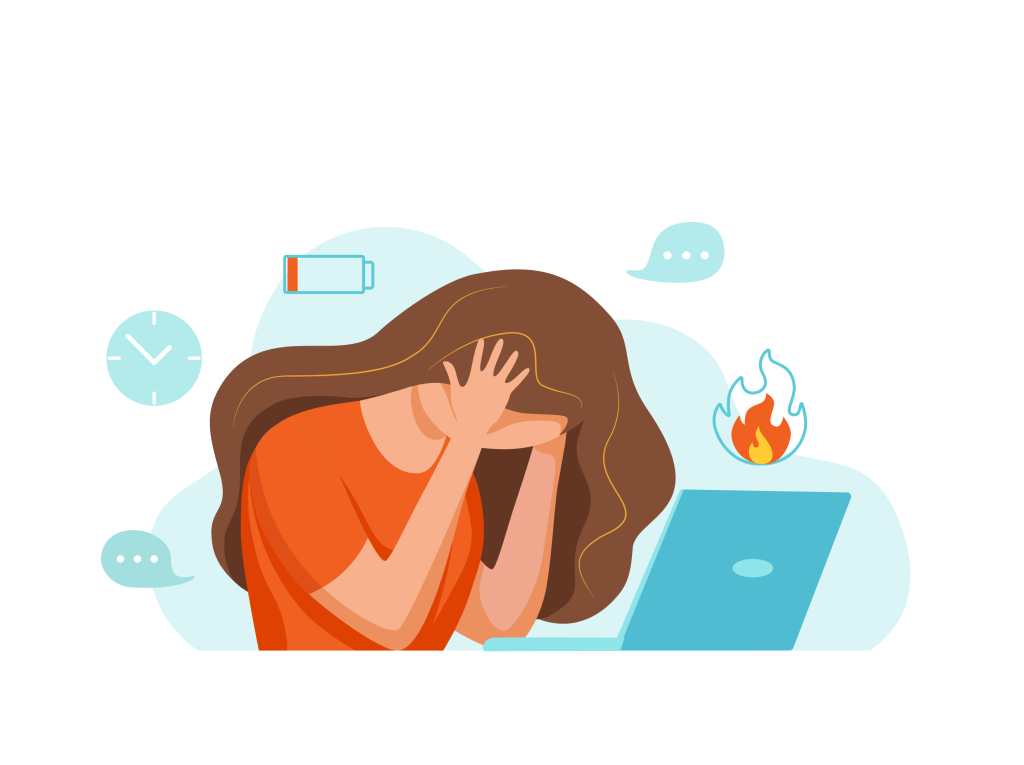
“It is the type of fatigue that makes you cry without apparent reason, which converts a trivial discussion into an existential drama. It arises when we spend more emotional energy than we replenisheither for caring for others, suppressing feelings or living in prolonged states of stress, ”says Mendoza.
Emotional fatigue is treacherous because it does not follow the logic of physical fatigue. He can hit after a day without demanding activities, because what is exhausted are not muscles but internal resources to process emotions.
Cognitive-behavioral therapy has shown that techniques such as Emotional Labeling (specifically name what it feels like) reduce the load, just like establishing healthy limits in toxic relationships. Mendoza insists that “allowing anger, sadness or fear without self -censorship is as important as allowing to rest physically.”
6. Social tiredness
Have you ever pretended to be in a good mood in a meeting while counting the minutes to leave? That is social fatigue in action: The exhaustion that comes from interacting more than our nature toleratesespecially if they are forced or superficial interactions.
Introverted people are more vulnerable, but even outgoing may suffer when relationships lack authenticity.
Our brain is programmed for deep connections, not for hundreds of empty interactions. Pandemia, with its mixture of isolation and fatigue by interactions through a screen, made this phenomenon clear.
Recovery goes on prioritizing quantity, learning to say “no” without guilt And, contraintuitively, sometimes look for authentic connection instead of total isolation.

7. Spiritual exhaustion
Finally, the most intangible but perhaps the deepest. Not necessarily religious, This fatigue arises when we lose connection with our purpose, values or sense of transcendence. It manifests itself as existential apathy, cynicism or that persistent question of “Why am I doing all this?”
Viktor Frankl, author of the book The man in search of meaningHe wrote that the lack of purpose is more devastating than physical hunger.
In everyday life, this emptiness can appear after years in a job without passion, empty relationships or routines that have lost meaning. Recovery requires introspection, often with professional help, and small acts realized with personal values. As Mendoza points out: “Sometimes it is enough to ask yourself: if it were my last day today, would you be doing this? The answer usually points out the way.”

The real rest: listen to what fatigue tries to say
All these types of fatigue share a common message: we are spending more energy than we replenish, in areas that require specific attention. The culture of “no PainNo Gain”It has made us believe that exhaustion is a medal of honor, when in reality it is the most sophisticated alarm signal we have.
Recovering is not a luxury, but an act of biological and emotional survival. It implies stopping treating all tiredness with the same solution (sleeping a little more, drinking another cup of coffee) and starting to decipher which part of our being is asking for attention.
The next time I feel that weight of fatigue, Pause. Breathe. Ask not only “how much have I slept?”, But “what kind of rest do I really need?”