

Raced in the ruins of the colonial city, between walls that tell history and evoke the legacy of a life consecrated to the service, The Museum of the Holy Brother Pedro It retains the treasures of the first saint of Guatemala as a tangible proof of his delivery to social and spiritual works.
Located in the spaces of the Temple of San Francisco El Grande, in Antigua Guatemala, the Museum of Religious Art of the Holy Brother Pedro exhibits pieces linked to the Franciscan Order and the legacy of Pedro de San José Betancur. Among pictures, images, clothing and sacred remains, this cultural enclosure keeps the memory of a man whose work transformed the country’s religious and social life.
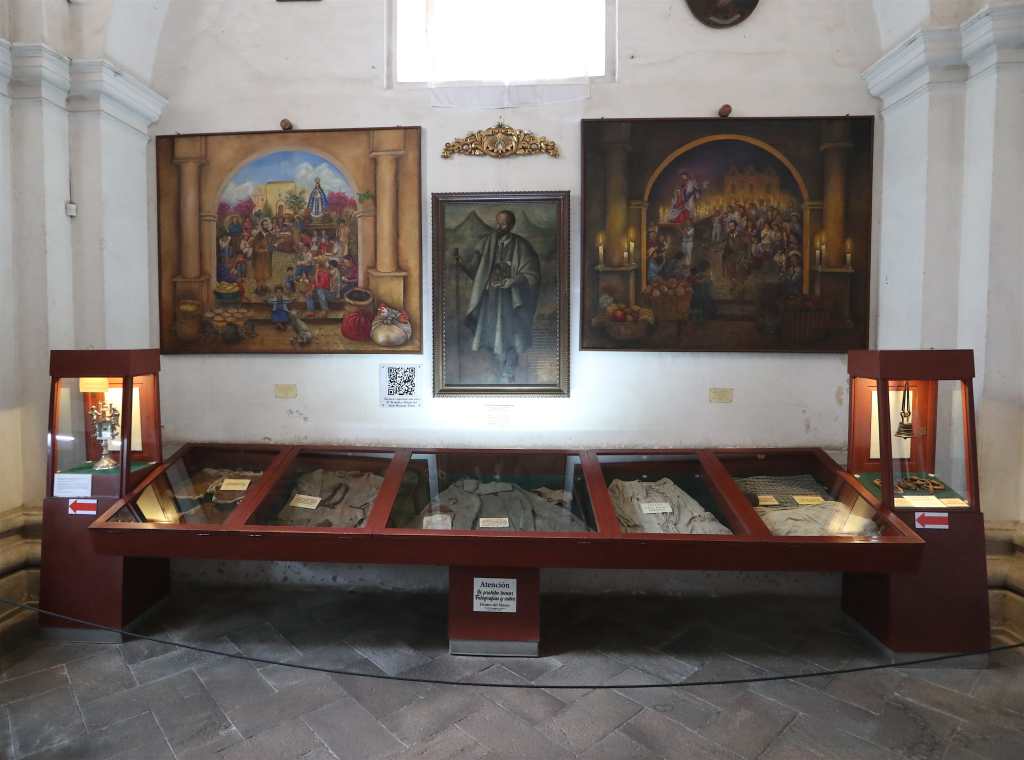
The museum consists of three main rooms: the colonial room, the hall of miracles – where there are photographs of devotees that thank favors received or express their requests – and the room of Brother Pedro, which houses the most important relics of the saint preserved in Guatemalan territory.
Founded in 1982 by the Franciscan Order of Guatemala, the museum was conceived to preserve and publicize the life, belongings and legacy of the Holy Brother Pedro. A few steps, within the same temple, there is also the place where their remains rest, sheltered as a symbol of their holiness.
The sanctuary of the Holy Brother Pedro is more than a devotional space: it is a living testimony of his work. His grave, relics and the numerous signs of faith that surround him keep alive an inheritance that continues to inspire generations of believers. These are some of the relics that can be seen in this place of deep spiritual meaning.
The saint’s face: an immortalized image
One of the most valuable treasures that the visitor receives in the Museum of Holy Brother Pedro is his portrait at a real scale, a work that combines art, history and devotion.
The painting, attributed to the artist Francisco Antonio Montúfar and Colindres Puerta, dates from the late seventeenth and early eighteenth century, and was performed in full body based on direct descriptions of the saint. Fidelity represents its features: elongated face, blonde beard, serene look and an expression of deep humility, as described by Fray Francisco Vázquez, one of his first biographers.
According to Fray Edwin Alvarado, rector of the sanctuary, this portrait also includes a unique hendidura in the skull, detail confirmed during the exhumation of his remains in 1990, which reinforces his authenticity. In that same study it was found that Brother Pedro measured 1.55 meters, just as he was embodied in the work known as the name of the True portrait of the Holy Brother Pedro
In addition to its physical features, the picture shows symbolic elements of its Franciscan life: the rosary of five and fifteen mysteries – which used according to the liturgical calendar -, the habit of the external tertiary and the Franciscan cord with three knots, which represent the votes of chastity, obedience and poverty.
Realistic portrait of the Holy Brother Pedro, attributed to Antonio Montúfar and Colindres Puerta, made at the end of the 17th and early eighteenth century. . (Photography: Free press / press)
Other objects present in the image are a small dish to collect alms, a folded paper with names of deceased by those who pray and its pilgrim. Under his right hand the ancient hermitage of Calvary is distinguished, a temple that helped build and was destroyed by the earthquakes of 1717.
Finally, the landscape includes Guatemalan volcanoes that refer to its roots in Tenerife, Spain, where the El Teide volcano is located. This detail connects its origin with the land that it adopted as its own and in which it left a legacy that endures Alvarado.
Belongings of Holy Brother Pedro
Fray Edwin Alvarado, rector of the sanctuary, explains that the Museum of Holy Brother Pedro was created with the purpose of preserving the main relics of the first saint of Guatemala, many of which are still preserved as a testimony of his life of delivery, penance and service.
Among the most significant objects is a small bell that the saint made sound every night in the streets of Antigua Guatemala to gather the faithful and pray for the dying, the deceased and the conversion of sinners. Remember that a soul has no more, if you lose it, what will you do?, It used to say, Fray Alvarado remembers.
Penance instruments that used as a form of mortification are also protected, at a time when it was conceived that the body could affect the soul. Brother Pedro practiced flagellation as an act of humility and atonement.
One of the outstanding pieces is the rope with five knots that carried in its habit, symbol of the five sores of Jesus Christ. Unlike traditional Franciscan cord – which has three knots, representing obedience, chastity and poverty – his reflected his particular devotion and spirituality as tertiary.
Another notable object is its tambourine, an instrument that it used during Christmas celebrations. With her he went out the streets of the city accompanied by children and faithful, announcing with joy the birth of the Lord through songs, dance and proclamation.
Holy Brother Pedro clothing
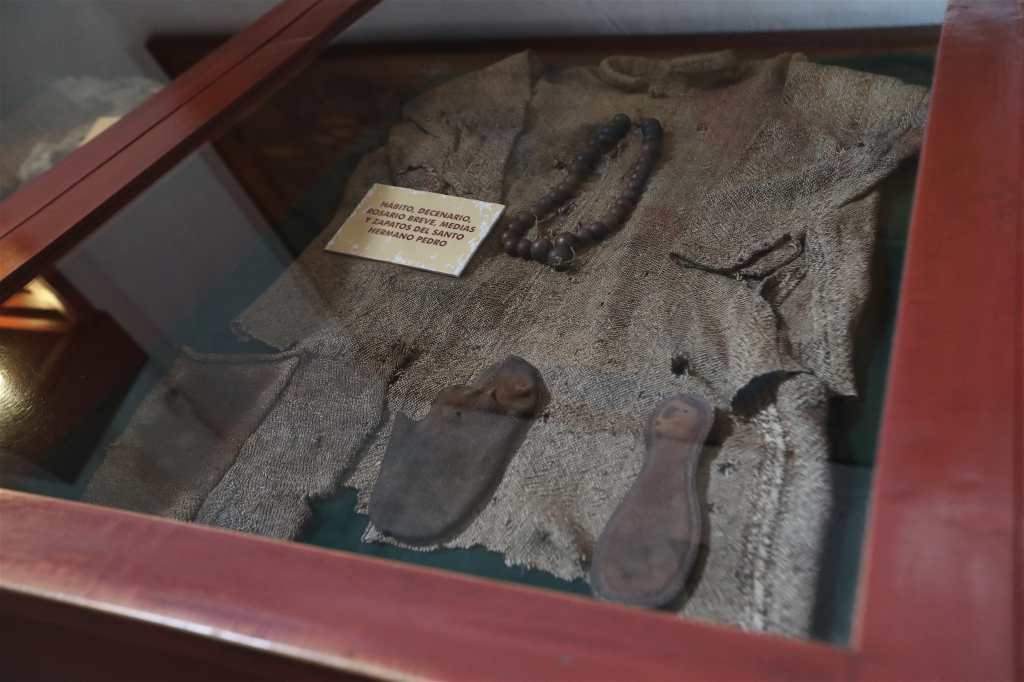
The museum protects various garments used by Holy Brother Pedro, including the clothing with which he died in 1667.
This includes its layer, the original robe in which it was buried, its cane, hat, decade, brief rosary, stockings and shoes, all conserved by the Franciscan order.
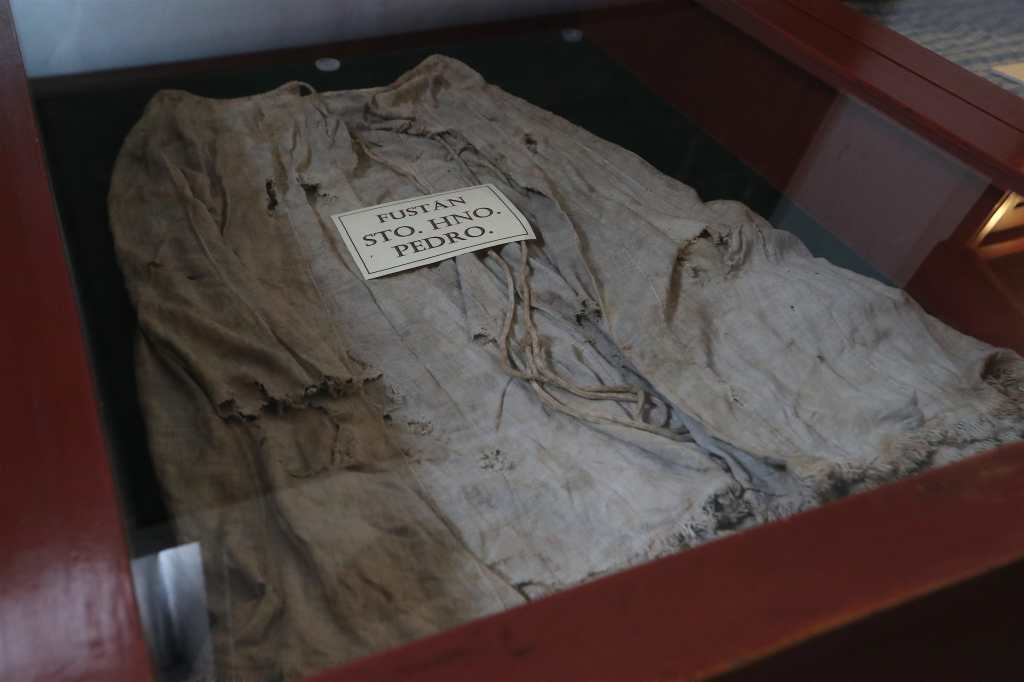
A particularly significant piece is your Fustan, made of sack or salal fabric, a rough and rigid material. This garment, like his underwear, was voluntarily used by the saint as a penitential act.
According to Fray Edwin Alvarado, this type of clothing caused him physical discomfort and reflected his spirit of humility and mortification.
Body Relics of the Holy Brother Pedro
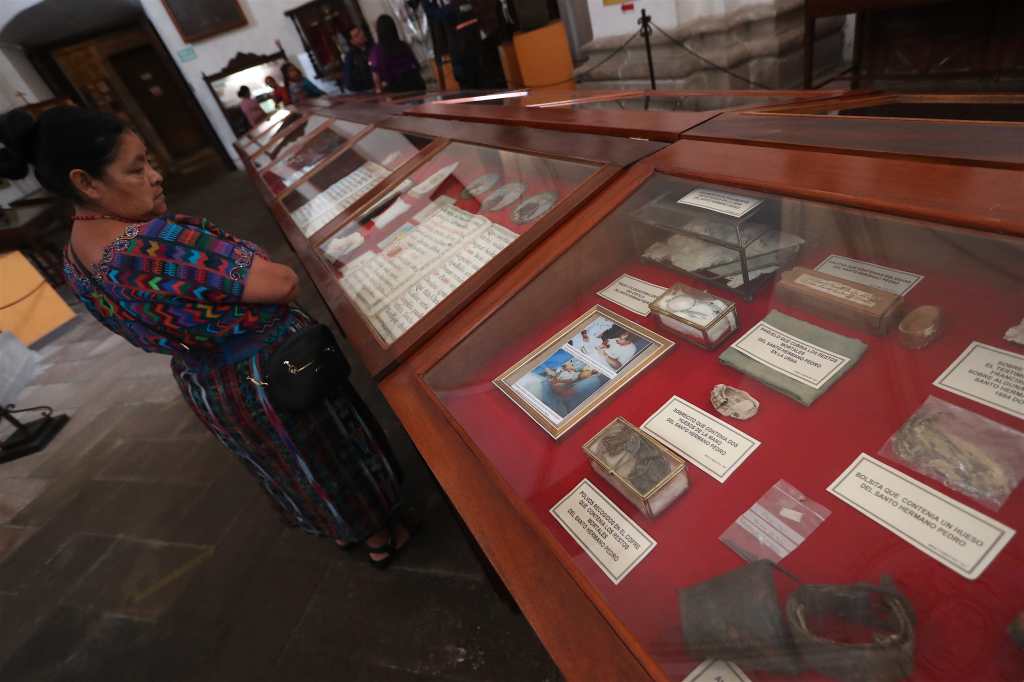
Among the most moving elements that can be seen in the sanctuary of Holy Brother Pedro are the relics of his body, physical testimony of a life given to prayer, charity and penance.
One of the most significant findings of the forensic study conducted in 1990 was a cleft in the skull of the saint, visible both in his remains and in his real -scale portrait. According to Alvarado, this brand has been interpreted as a possible wound or congenital condition by the forensic who analyzed their bone remains.
Another shocking detail revealed during exhumation were the deep calluses on their knees, visible even in the bone.
These brands show their intense practice of knee prayer and continuous penance. When they prepared their body for velation, the calluses got rid of and were stored as first -hand relics, Fray Alvarado said.
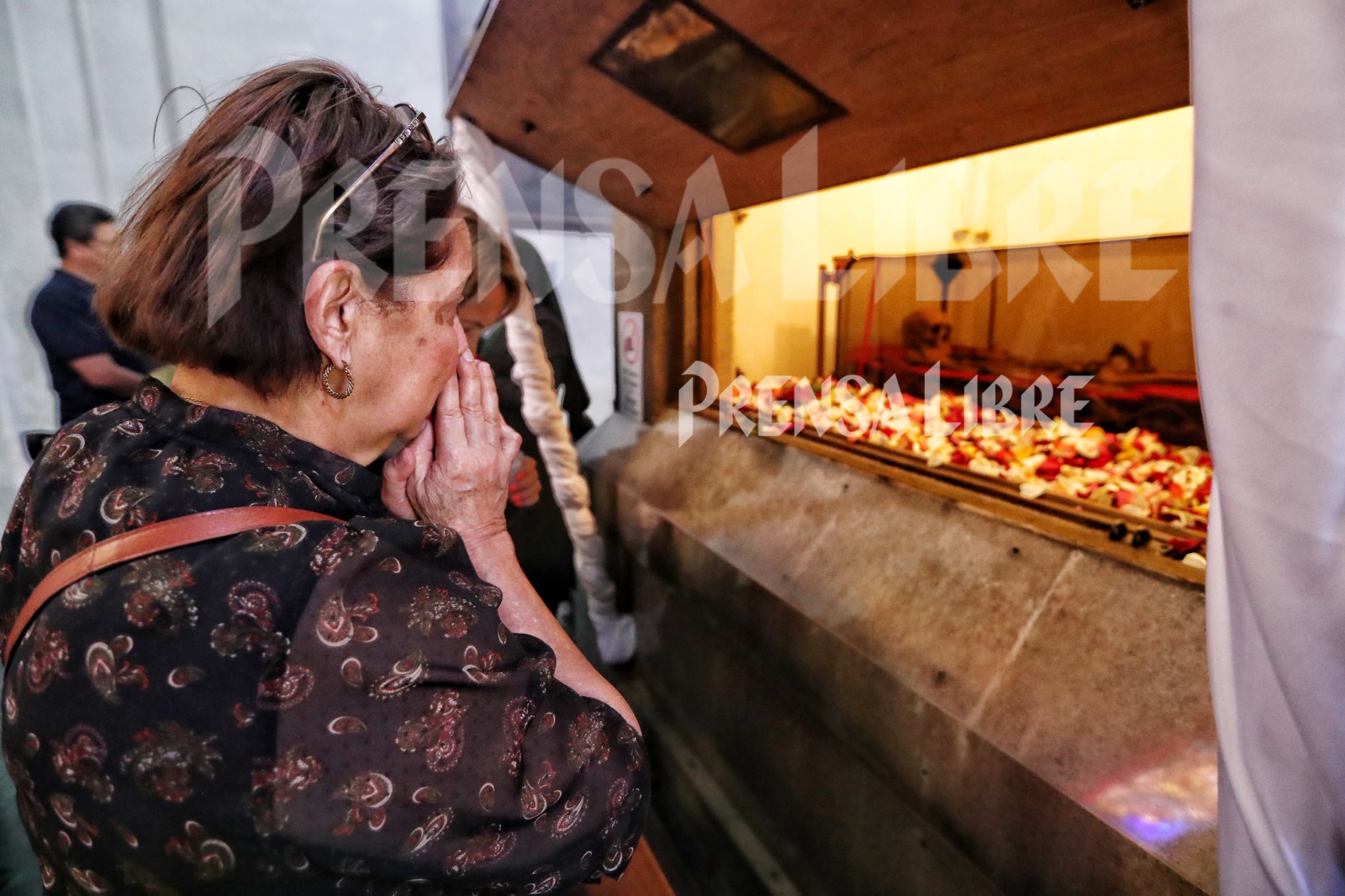
(Photography: Free Press / Esbin García)
Among the most relevant relics is also a part of its rib, classified as first -class relic. This fragment was extracted in the operating room of Brother Pedro’s social works and subsequently divided into five parts.
One was given to Pope John Paul II at the time of canonization; Others were destined to the Belamitic sisters and brothers, and one more was sent to Tenerife, their homeland.
These relics, preserved with deep respect for the Franciscan community, not only represent a physical bond with the saint, but are also an expression of the living faith of a people that recognizes it as an intercessor and Christian life model.
The containers used to conserve and move the bone remains of Holy Brother Pedro are also exhibited in the museum. Among these are the bags in which their ribs were transported, as well as the dust found inside the original coffin and the chest where their remains remained before being transferred to their current place of exposure in the sanctuary.
Documents that narrate their history
One of the most significant documents in exhibition is the baptism act of Pedro de San José Betancur, extended on May 21, 1626 in Vilaflor of Tenerife, its place of origin. It is an original copy sent from Spain, considered by the Church as the official registration that marks its entry into Christian life.
Alvarado, explained that, although it is recognized on March 19 as the traditional date of birth – for its name in honor of San José -, there is no birth certificate that certifies it. Therefore, the Church has taken the date of baptism as a liturgical and official reference to commemorate its birth.
What does exist is the baptismal act, as it is in the Baptism Book of its parish in Vilaflor. That is why we affirm that life is born, to the Church and society on May 21, Fray Alvarado said.
The death certificate of Holy Brother Pedro, dated April 25, 1667, is also preserved. This document confirms his death at 2 pm on Monday, after having seriously ill while taking care of vulnerable people, affected by infections and physical wear caused by fasting and heartbreak.
A liturgical particularity is that his party is not celebrated on the day of his death, but on April 24. This is because the 25 is commemorated to San Marcos, Apostle, and to avoid the coincidence of dates, the Church transferred the feast of Holy Brother Pedro a day before.
Both documents are part of an exhibition that allows visitors to enter the most significant moments of their life and know closely the historical and spiritual context of who was declared holy in 2002 by Pope John Paul II.
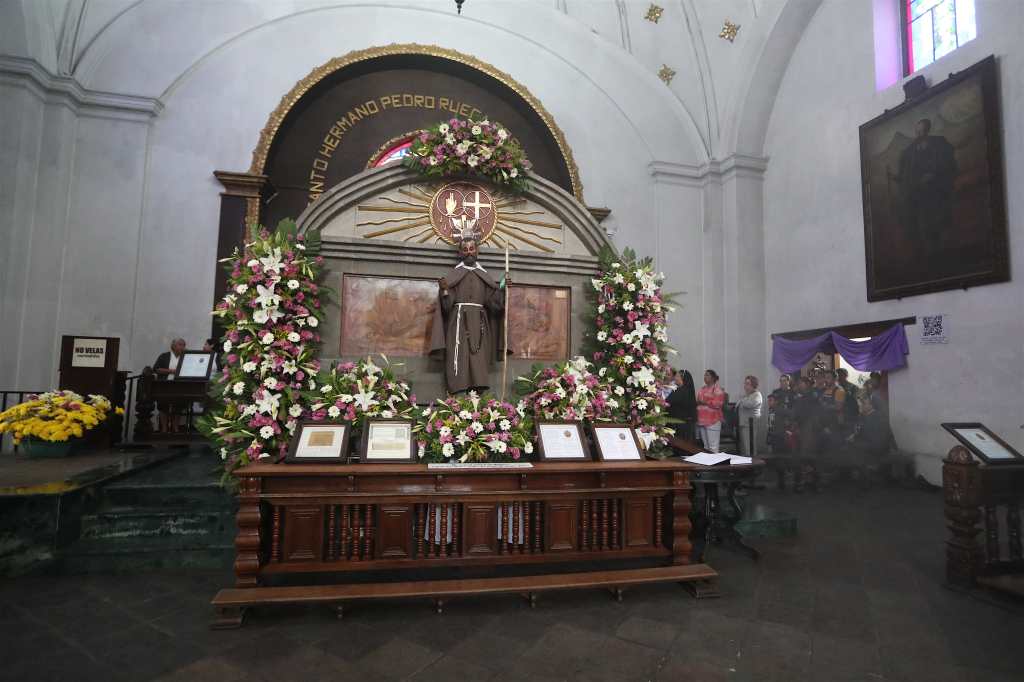
The museum, which is located on the 1st South Avenue and 7th Oriente Calle, in Antigua Guatemala, keeps these and other relics of the life of Holy Brother Pedro, which Guatemalans and foreigners can visit from Monday to Friday, from 9 a.m. to 4 p.m.