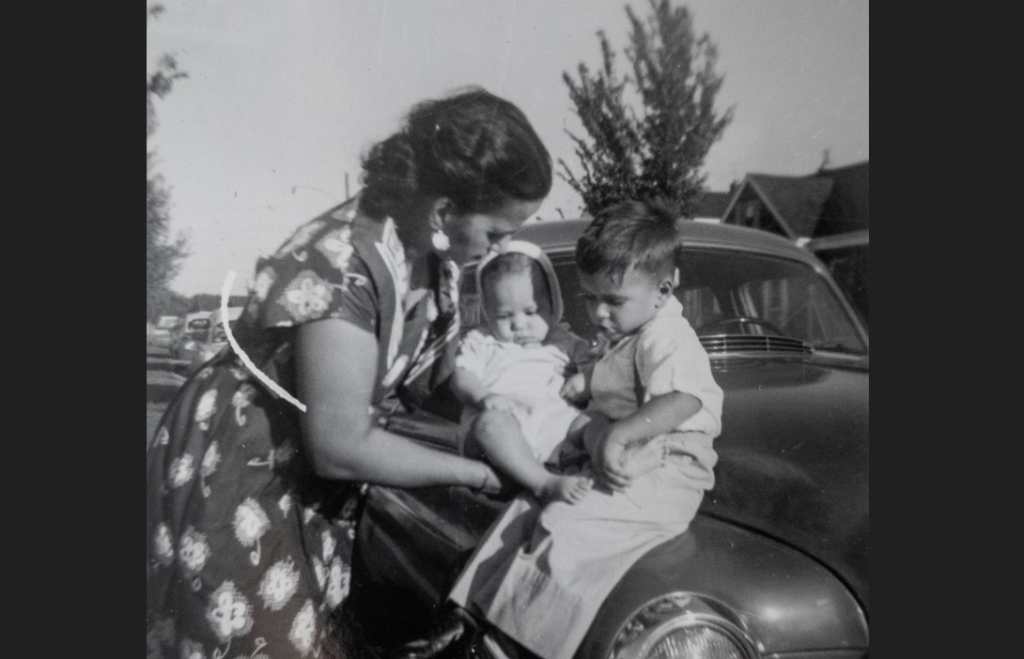
The parish was bustling when the future Pope and his family were parishioners in the 1950s and 1960s. The three brothers attended the Elementary School of the Parish. His mother, Mildred, was the president of the Society of the Altar and the Rosary of Santa María, and acted in plays, according to Noelle Neis, who remembers sitting behind the family on Sundays in the morning.
“They were always there,” said Neis, added: “The community revolved around the Church.”
Today, the old Catholic enclave in the southern Chicago zone has practically disappeared, with the closure of the institutions and the dispersion of the parishioners to the suburbs. Assistance to Santa María de la Asunción decreased dramatically over the years, and the congregation merged with another Decline parish in 2011. The combined parish merged with two other churches in 2019. The old building of Santa María is now in poor condition, with graffiti behind the altar.
That transformation is, in many ways, the history of Catholicism in the United States, since changes in urban and suburban landscapes collided with demographic and cultural changes that radically restructured many Catholic communities.
“He is one of the great dramas of American history of the twentieth century,” said John McGreevy, historian of the University of Notre Dame and author of Parish Boundaries: The Catholic Encounter with Race in the Twentieth-Century Urban North.
As the Catholic dioceses invested so much in their physical infrastructure, including the buildings of the churches and schools, the white Catholics often remained longer in their neighborhoods than the white residents who fled when black people began to move in the mid -twentieth century.
“The Catholic parishes were anchors in the neighborhood in a way that no white or Jewish Protestant institution was,” said McGreevy. “When he asked Catholics of a certain generation: ‘Where are you from?’ They said: ‘I’m from San Bernabé’, ‘I’m from the Holy Name’. ”
Even in many Catholic neighborhoods that were changing, white residents ended up leaving.
But in the prosperous days of the postwarm Chicago, Catholic families such as the Premost were grouped, and attended the same parishes, schools and social acts.
“The southern Chicago zone, especially then, was very familiar and very Catholic,” said Reverend Tom McCarthy, who met Pope León in Chicago in the 1980s.
McCarthy, who grew up in the Marquette Park neighborhood, in the southern zone, said it was unusual not to be a Catholic in the area where the Pope grew.
“I only met a family that was not Catholic,” he said. “You went to Catholic schools, you stayed in the neighborhood, you worked hard, and I think he is the product of that.”
Pope Leo XIV, of course, did not stay in the neighborhood. He enrolled in the Secondary College of the Seminary of San Agustín, near Holland, Mistigan, a boarding school for boys. And as he ascended in the Catholic hierarchy, he lived long periods abroad, in Peru and Italy.
The southern Chicago zone was solidly workers during the childhood of Pope León, said Rob Pararal, a researcher at the Institute of Grand Cities of the University of Illinois Chicago. The family attended a church in the southern zone, but lived in Dolton, a suburb just after the city limit.
“It is far from the privileged suburbs of the north and western Chicago,” Pararal said. “He comes from the endurance and the true Chicago, which today is exemplified both in the South suburbs and anywhere else in the city.”
The area can be described in part for what it is not, said Pararal. “It’s not pretty, nor leafy,” he said. “It’s about highways, industry and railway roads.”
Donna Sagna, 50, has lived next to the Pope’s childhood house for about eight years, said, over a period that has sometimes been problematic for the apple.
He said he had seen drug sales near the former Pope’s house. People moved frequently, Sagna said, often to flee the violence and crime of the neighborhood. He said he did not know anyone who continued to live in the block since the time of the Premost family.
He said that in recent years the neighborhood has been quieter and that he is delighted to live next to a house with a suddenly remarkable story.
“I hope this brings some peace to the community,” said Sagna.
The parish of the Pope’s childhood, Santa María de la Asunción, had grown up rapidly in the decades prior to the birth of León, two buildings were small and moved to a third party that opened in 1957, when the future Pope was a small child. The Church remained occupied and active during the following decades, according to interviews and ecclesiastical records.
But the building had structural problems and assistance began to decrease. In 2011, the then archbishop of Chicago, Cardinal Francis George, wrote that the building “is in such a bad condition that it is not safe to use it.”
Santa María de la Asunción combined with a nearby parish and ordered the closure of the building because the area “is so economically depressed and the Catholic population of the area is so small that there are not enough resources to repair the church.”
Many of the Catholic institutions to which the Premost family was linked had similar destinations. The Mendel Catholic Secondary Institute, where the Pope’s mother worked as a librarian and his brothers attended the Baccalaureate, closed in 1988. The South Suburbio Suburbio School of Chicago Heights, where her father was a director, closed two years later.
The number of parishes of the Chicago Archdiocese was reduced to 216 in 2024, compared to 445 in the mid -1970s.
In Dolton, 94 percent of the residents were white and 2 percent black in 1980. In the 2010 census, 5 percent of Dolton’s residents were white and 90 percent color.
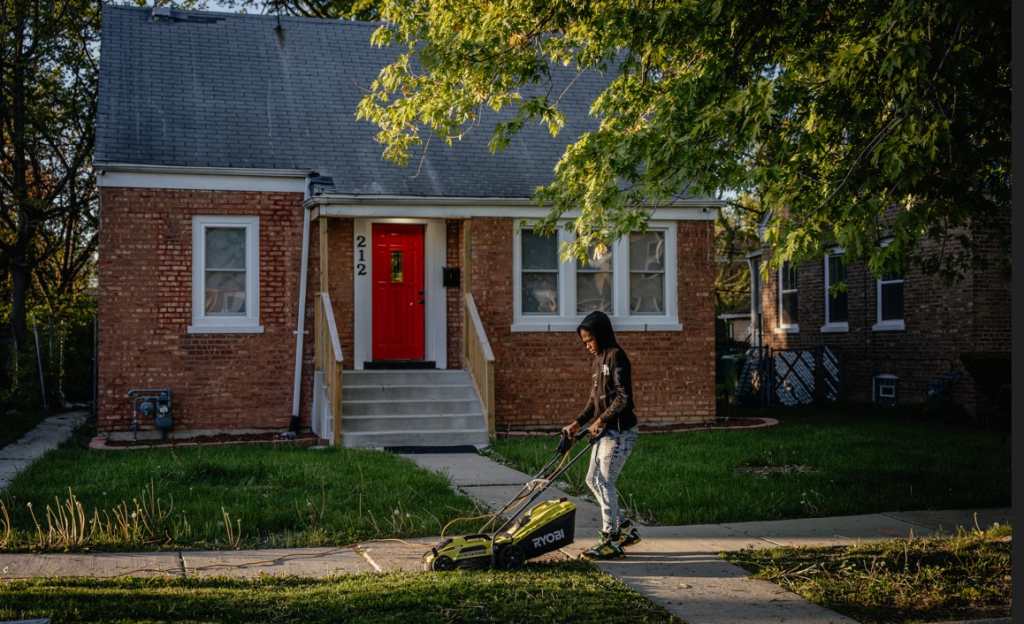
Pope León’s mother died in 1990. His father, Louis, sold Dolton’s family home in 1996, after almost 50 years, according to the county records. He died the following year.
The Pope’s childhood house, a modest brick house in a well -careful apple of Dolton, was sold last year for $ 66,000, according to property records. Recently it has been reformed and has been put on sale for $ 199,000. (This week, the real estate agent that manages the sale withdrew from the market to consider the possibility of raising the price).
Subscriber content
Marie Nowling, 86, who lives four houses, described the neighborhood as quiet. He moved home in 1999.
“When I moved here it was difficult, there were many gangs,” said Nowling. “But now it is a quiet and pleasant neighborhood.”