
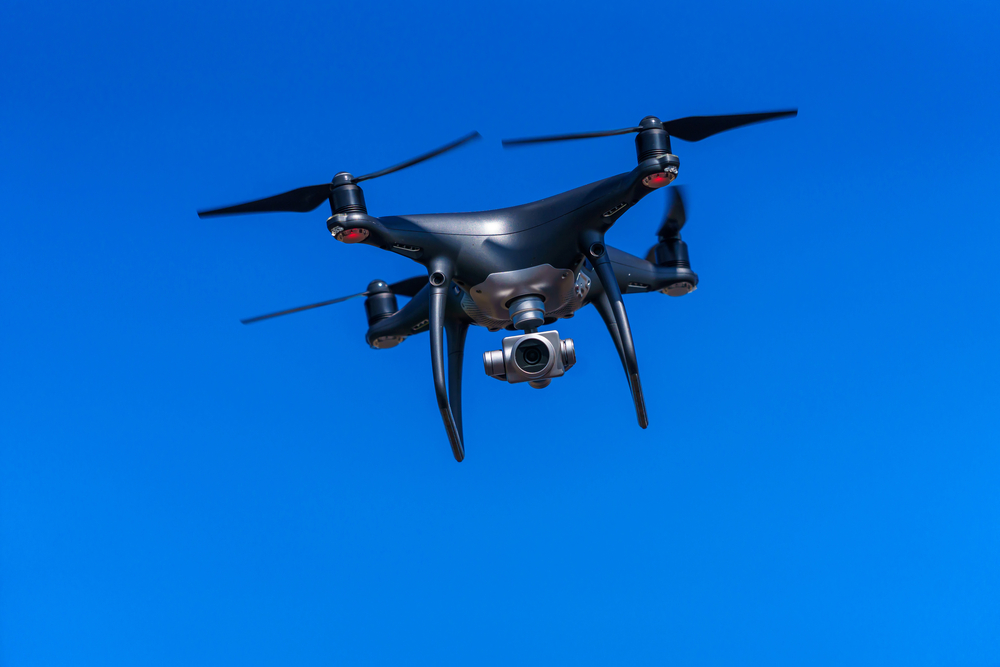
On August 4, the General Directorate of Civil Aeronautics (DGAC) announced that The first three inspectors of drones and licenses concluded the drone pilot course, fundamental requirement to opt for the future Drone pilot certificate (CPD), which will be extended by that address to all people who want to use these devices in Guatemala.
According to the DGAC, the new inspectors will be in charge of carrying out the evaluations for Guatemalans or foreigners who wish to obtain their CPD, duly authorized.
In addition to this training, the DGAC reported that new inspectors of remote piloted aircraft systems will also be trained (RPAS). This system includes a more complex equipment than a conventional drone, since it covers the unmanned aircraft, a ground control station, as well as the communication equipment and links necessary for its operation.
These training respond to the requirements of THE NEW STANDARD ON DRONESwhose validity is expected for this year, according to data from the DGAC.
New regulations
At the moment, The General Directorate of Civil Aeronautics refines the details of the future regulation. It includes aspects such as the use, management, technical characteristics, registration and requirements that must meet users and owners to operate drones in the country.
The use of these devices is regulated by the Civil Aviation Regulation 101, issued in July 2013which establishes the requirements for identification and operation. This regulation is based on Decree 93-2000, which contains the Civil Aviation Law.
However, the DGAC considers a new standard necessary, due to the increase in the use of drones. It is estimated that more than 3,200 of these devices in the national territory are currently operating.
Related readings


Related readings

Expected changes
Current regulations require The drone record with a weight greater than 250 grams before the DGAC. However, many lower weight drones are used for commercial purposes, such as photography, video or photogrammetry. Therefore, lThe new standard will require a certification that guarantees that its use does not affect the safety of airspace.
Likewise, the owners will be required to have a certification for their operation, with the aim of preventing improper uses. The DGAC Surveillance and Operational Security Department will be in charge of registration and control of all drones in the country.
The regulations seek to establish standards similar to those of the United States and other nations in America and Europe, which already have specific legislation. Its elaboration has had the advice of the Central American Agency for Aeronautical Safety (ACSA) and the European Aeronautical Security Agency (EASA), since 2024, according to the DGAC. It is expected that it enters into force no later than in September 2025.
Related readings

Related readings

Permits and requirements
According to the DGAC, currently every person operating a 250 grams drone onwards – whether for recreational or commercial purposes – must process a permit, as established by the Civil Aviation Regulation 101 and the Civil Aviation Law. To do this, you must present:
- Unique registration form of remote piloted aircraft (DVSO-801).
- Two photographs of the drone.
- Original or copy of the current insurance policy and the aircraft data consigned on the plate (manufacturer name, type, model number, operator name and contact data).
- Payment of Q1 thousand for registration in the National Aeronautical Registry.
- Payment of Q1 thousand for the issuance of the first registration certificate.
- If the use is commercial, the DVSO-804 form must be used and attach an office of the Department of Surveillance and Operational Safety indicating whether the applicant is in phase 4 of the company certification process or if it already has the air operator certificate.
The procedure is resolved within a maximum period of 10 business days. Foreign tourists who wish to film or photograph with drones must follow the steps from 1 to 5 and fill out the DVSO-805 form to obtain a special permit.
Restrictions and sanctions
The DGAC establishes that a special permit must be processed if the drone will be used in public places or events with more than 100 people. It also imposes the following restrictions:
- Prohibited to fly above 400 feet above ground level without authorization.
- Prohibited to operate six kilometers around airports, airfields, prisons and customs.
- It is forbidden to fly over government institutions, embassies, military bases and hospitals.
Failure to comply with these restrictions may imply sanctions ranging from warning to the cancellation of the permit.