
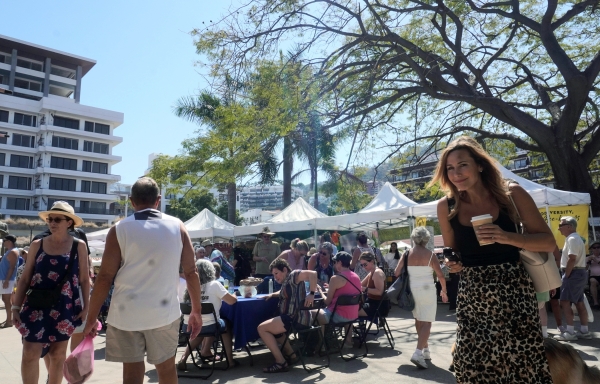
This Holy Week, Latin America records millions of trips, high hotel occupancy and an increase in tourist income, with a greater weight of domestic tourism and the consolidation of new destinations linked to nature or well-being.
Preliminary figures reflect the growing weight of tourism in the region during these dates. Brazil projects a hotel occupancy of 78% and highlights destinations such as the northern beaches of Rio de Janeiro or the Iguazu Falls, while the state of São Paulo, the most populated in the country, foresees revenues of about 505 million dollars.
Brazil has registered 2.6 million foreign visitors in the first two months of 2026, which marks a record increase trend.
Mexico expects the arrival of 4.03 million tourists, 2.6% more than in 2025, with a hotel occupancy of 63.85% and estimated income from expenses of 3,102 million dollars. The growth of Mérida, in the southeast of the country, stands out as an emerging destination, with an increase of 18.5% year-on-year.}
In Colombia, the Government foresees the mobilization of more than 12 million travelers, with a growth of 7% in land transportation and up to 4% in air transportation, which confirms the weight of domestic tourism as a driver of the sector.
Peru estimates an economic impact of between 220 and 261 million dollars, with 1.9 million travelers and an average expense per person of about 130 dollars, 7.14% more than last year, driven by the increase in the cost of services.
In Ecuador, some 800 thousand trips are projected, a hotel occupancy close to 45% and an economic impact of 70 million dollars, above the 54 million registered in 2025.
In Argentina, according to sources from the Association of Tourism Hotels consulted by EFE, “the reservation levels surveyed anticipate a favorable result in hotel occupancy in the country’s main tourist destinations, with special dynamism in Patagonia (south)”, where occupancy levels reach 87% in some destinations, in line with the strong movement of 2.7 million people registered in 2025.
Venezuela projects an occupancy of 90% in key areas such as Nueva Esparta, where the islands of Margarita, Coche and Cubagua are located, where it foresees an increase of more than 20% in tourist activity compared to the previous Holy Week and the mobilization of 13 million people.
Behavior in Central America
In Central America, El Salvador expects the arrival of more than 145 thousand foreign tourists (+4.3% year-on-year), with an economic impact close to 10% of GDP, while Costa Rica estimates a hotel occupancy of 75%, with peaks of 91% in Guanacaste.
The Jesuit missions, declared a World Heritage Site by UNESCO in 1993, and the municipality of San Ignacio, in the department of Misiones (south), which hosts the Tañarandy torchlight procession, are the main tourist destinations in Paraguay during Holy Week.
Panama estimates revenues of between 100 and 200 million dollars, with a hotel occupancy of at least 85%, while some 300,000 visitors attracted by religious tourism are expected in the Old Town of the capital.
Domestic tourism and new destinations
Beyond the numbers, this year’s Holy Week confirms changes in traveler behavior. Domestic tourism is consolidated as a dominant trend in countries such as Colombia, Venezuela or Paraguay, driven by factors such as the cost of international travel or the economic situation.
However, there is also a rebound in trips abroad to destinations such as Argentina, where the growth of international trips reaches 40%, favored by the exchange rate and the search for better prices in neighboring countries.
Another trend is the rise of emerging destinations and differentiated experiences. In Mexico, wellness and aesthetic tourism is growing, with an annual projection of 17% until 2028, while in Ecuador and Costa Rica nature, such as the Amazon or mountain tourism, is gaining ground.
Likewise, cultural and religious events continue to be a strong attraction. In Brazil, the representation of the Passion of Christ in Nova Jerusalém, in the northeast of the country, has brought together thousands of visitors since 1968, while in Quito or Antigua Guatemala traditional processions mark the tourist pulse.
The Puerto Rico Tourism Company (CTPR) promotes religious tourism this Holy Week with a series of initiatives, such as the ‘The Sounds of Puerto Rico: Worship Edition’ event in San Juan, which integrates music, culture and entertainment for the whole family this April 5.
Sector challenges
The sector also faces challenges. In Chile, the rise in fuel prices could cause a drop of up to 25% in hotel reservations, with a projected occupancy of 56% in Valparaíso, below the previous year.
In addition, local studies reflect that a majority of travelers plan to reduce their expenses during the holiday, which points to more austere and selective tourism.
In Bolivia, the promotion of tourism involves structural measures such as visa flexibility and international promotion, with the aim of increasing the flow of visitors in the coming years.