
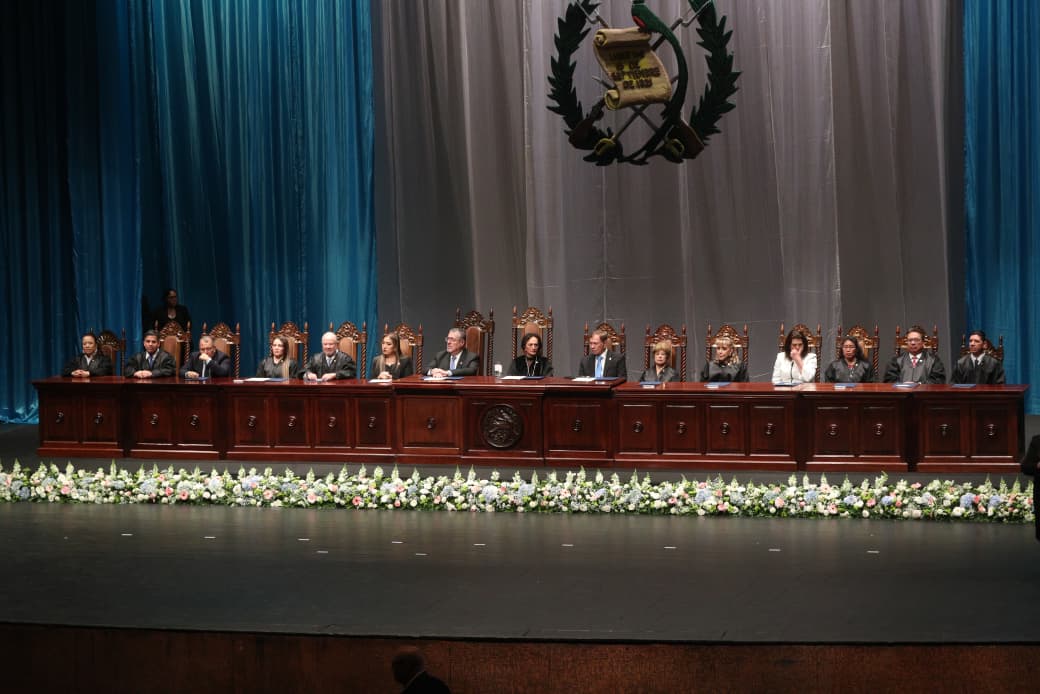
The ninth magistracy of the Constitutional Court (CC) was installed in a formal ceremony in the Great Efraín Recinos Room of the Cultural Center, Miguel Ángel Asturias, where Anabella Morfín also took office as the first president of the new Court.
The new constitutional authorities were elected for a term from 2026 to 2031, after the transfer of command was reflected in a private ceremony held at midnight on April 14 at the CC facilities.
The previous Court was chaired during the last year by Leyla Lemus, who claimed to have independent management, leaving a legacy of technology in the constitutional instance.
“The commitments that the CC has with Guatemala, including those that circumstances left unresolved, are now the responsibility of the ninth magistracy,” Lemus said in his farewell speech.
The installation ceremony was attended by the outgoing judiciary, accompanied by representatives of the bodies that appointed the new constitutional authorities.
The president of the Republic of Guatemala, Bernardo Arévalo; the president of Congress, Luis Contreras; the president of the Supreme Court of Justice (CSJ), Claudia Paredes; and the president of the Board of Directors of the College of Lawyers and Notaries of Guatemala (Cang), Patricia Gámez.
The only representative of the bodies that appointed magistrates who did not arrive was the rector of USAC, Walter Mazariegos, who delegated representation to the dean of the Faculty of Humanities.
Look for objectivity
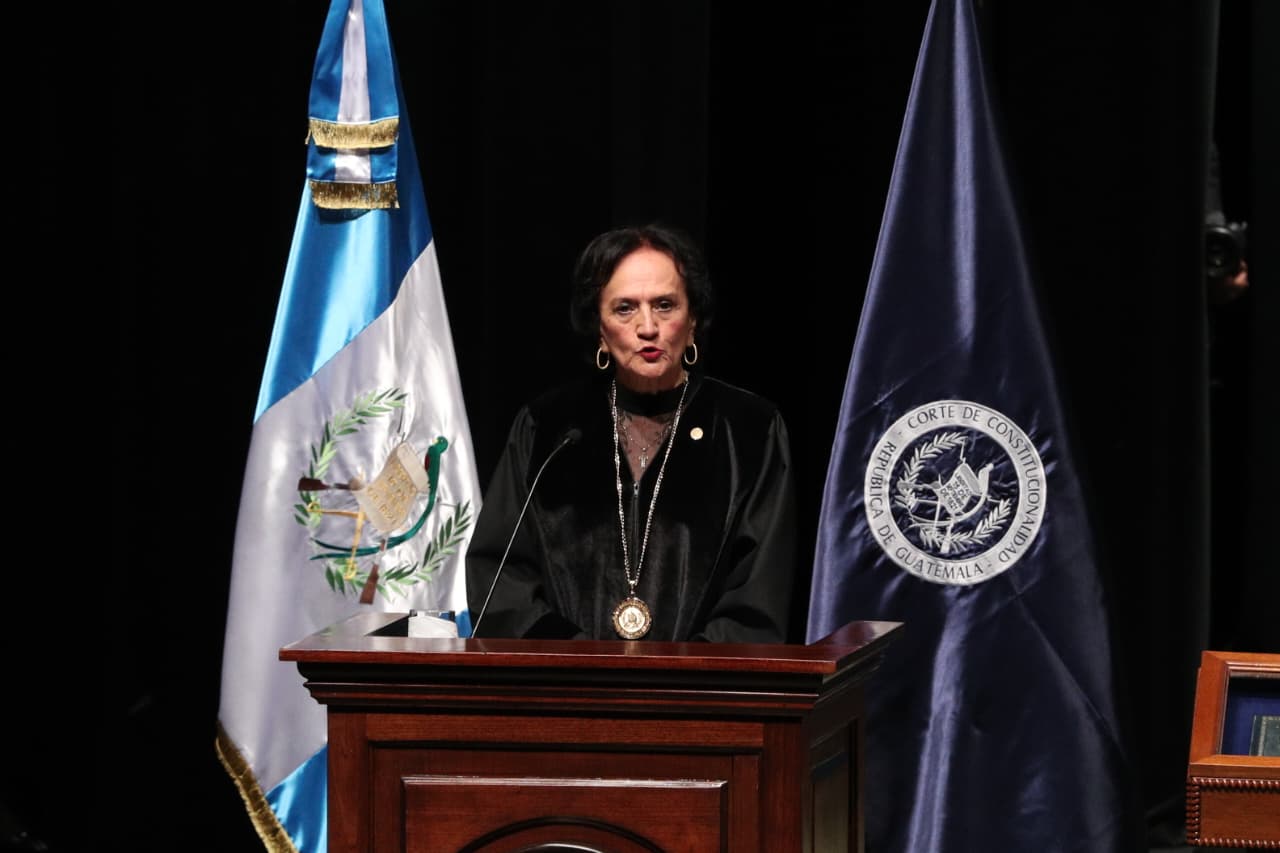
The presidencies of the CC are rotated among the titular magistrates, starting with the oldest until reaching the youngest, making this first presidency fall to the magistrate Anabella Morfín, appointed by President Arévalo.
In her speech, Morfín assured that one of the main objectives of her administration as president, which will be from 2026 to 2027, will be to direct an independent and objective Court.
“To exercise this position with the determination to ensure respect for supremacy and constitutional order. In compliance with the principles and values established by the Constitution of impartiality, objectivity and independence that must underpin the actions of every judge,” said.
The constitutional president acknowledged that there are challenges, highlighting that one of the challenges they will have in this first year is to regain citizen trust, which in recent years has been decreasing.
“An important challenge, particularly in a situation where the institutions of the State are going through a crisis of credibility and trust,” Morfin said.
He also highlighted the need for the CC to resolve without invading the competence of other State institutions; as well as not delaying cases by giving a prompt constitutional response.
The second presidency will correspond to magistrate Astrid Lemus, elected by the Cang; the third to Roberto Molina Barreto, elected by the full Congress; the fourth to Dina Ochoa, appointed by the CSJ; and the fifth to Julia Rivera, appointed by the Superior University Council (CSU) of the Usac.
The integration
The five regular magistrates and the five substitutes will serve for five years, with the main responsibility being the defense of the Political Constitution of the Republic of Guatemala.
Headlines
- Anabella Morfín, appointed by President Bernardo Arévalo
- Astrid Lemus, elected by the Cang
- Roberto Molina Barreto, elected by the full Congress
- Dina Ochoa, elected by the plenary session of the CSJ
- Julia Rivera, appointed by the CSU of the USAC
Substitutes
- María Jocholá, appointed by President Bernardo Arévalo
- Luis Bermejo, elected by the Cang
- Luis Rosales, elected by the full Congress
- Claudia Paniagua, elected by the plenary session of the CSJ
- Luis Aguirre Pumay, appointed by the CSU of the USAC