
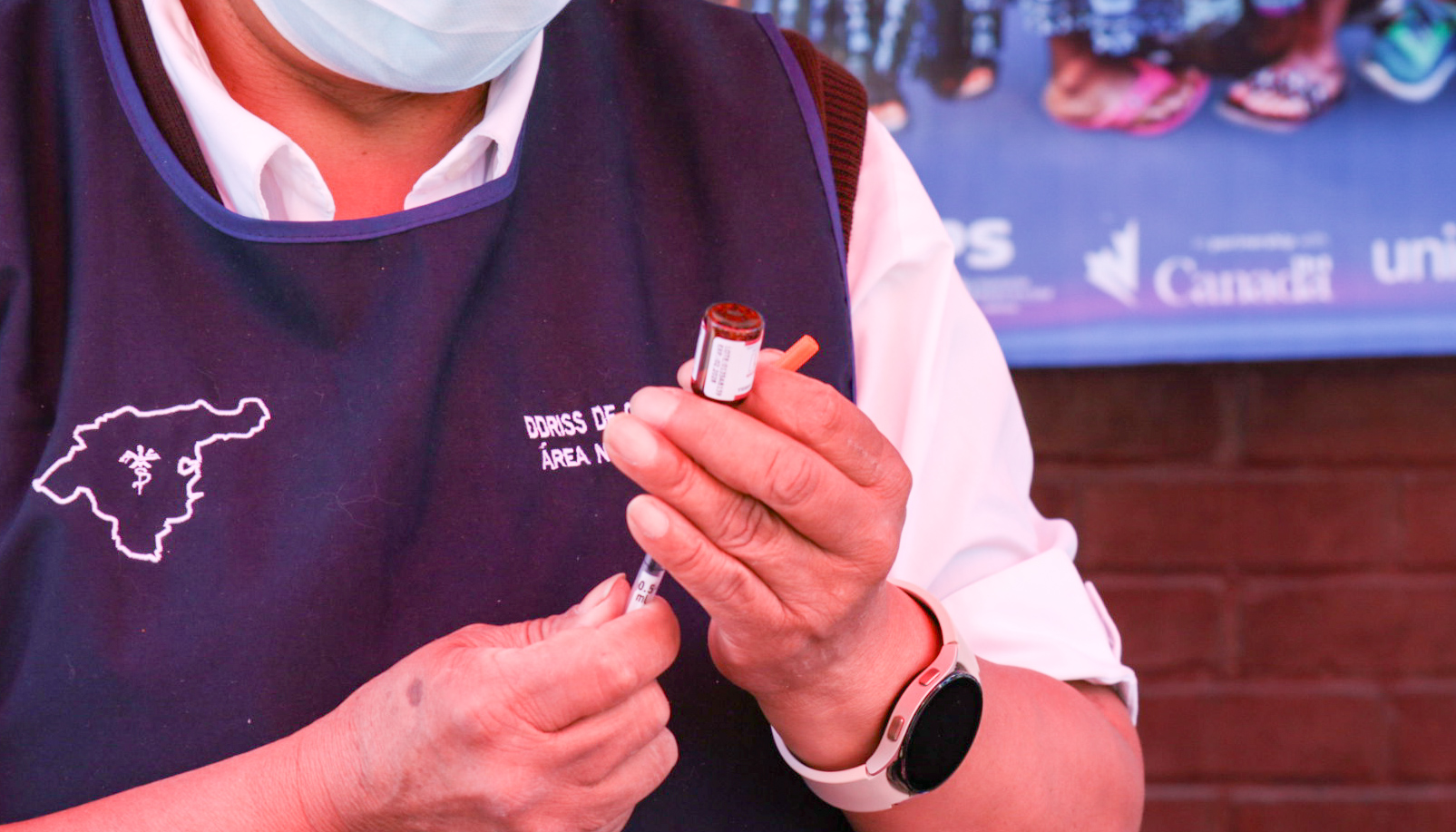
In the country they are confirmed four deaths from measles. The cases They have in common that they correspond to children under one year of age.the group most vulnerable to getting sick and presenting serious illnesses. Given this scenario, the Ministry of Health decided to generalize the application of the zero dose of the vaccine, since the virus has spread in the country and has already reached the epidemic level.
The first two victims were confirmed on March 30: an 11-month-old child who was infected by his mother, in Quiché, and another 10-month-old child with congenital heart disease, whose case occurred in the department of Guatemala.
For April 15, Salud reported two more deaths: in Totonicapán an 8-month-old child died; The diagnosis was pneumonia and heart disease. In Quiché, a 2-month-old child died, presenting with acute respiratory failure and pneumonia.
Official information indicates that children under one year of age are the most biologically vulnerable and that, Of every thousand who get sick from measles, eight die.
Mario Melgar, pediatric infectious disease specialist, and member of the National Council of Immunization Practices (Conapi), points out that children under five years of age are the most vulnerable to getting sick; However, within this group, those who present The most serious conditions are those under one year of age.
This has an explanation: the doctor indicates that at this age the immune system is still immature and the body finds it difficult to handle the infection.
“When children are born they have defenses that the mother transfers to them through the placenta and through breastfeeding, but over the months these run out. In the first six months of life it is considered that they have sufficient defenses; after that time is when they can get sick.”
Mario Melgar, pediatric infectious disease specialist
For this reason, Health implemented the application of a zero dose of the MMR (measles, mumps and rubella) or SR (measles and rubella) vaccine to population between 6 and 11 monthsin addition to the two that are applied within the routine scheme, at 12 and 18 months.
The official record indicates that, as of April 15, 5,308 children with this “extra” dose.
But what about children under 0 to 6 months? Melgar indicates that there is no scientific evidence on the effectiveness of vaccinating them at that age.
“The vaccine has not been used in that group and there is no indication. It will not give very good defenses because they are very young. The recommendation would be not to expose them to spaces where there may be cases. Because, even though they have defenses from their mother, we cannot ensure that they are sufficient. The ideal is not to expose them and make sure everyone at home is vaccinated“adds the infectologist.
Éricka Gaitán, epidemiologist responsible for the surveillance of vaccine-preventable diseases at the Ministry of Health, points out that the MMR vaccine is not applied to newborns, as is done with others, because it has been shown that immunological maturity is not achieved with this biological when administered very early.
“The longer the use of the biological is prolonged, in the case of MMR, the better the response: 95% immunity with the first dose and, with the second, 98%. By achieving this immunity with a mature patient system, it will be for life,” he adds.
Vaccination in children
At the beginning, the Ministry of Health’s strategy was to apply the zero dose in the municipalities where there were more cases of the disease; However, with the spread of the virus in the 22 departments of the country, it forced the authorities to extend the measure to the entire country.
According to doctor Daniel Salas, executive director of the Special Immunization Program of the Pan American Health Organization (PAHO), during the webinar Measles in Latin America: a persistent threat, measles in Guatemala can already be considered an epidemic, due to the sustained transmission of registered cases.
Due to the high risk of contagion, Melgar advises parents to go to health services to have their children vaccinated and then continue with the regular two-dose schedule. The vaccine provides lifelong protectionhe insists.
Measles is a highly contagious viral disease that is transmitted by droplets that an infected person spreads when talking, coughing or sneezing. The virus can remain floating in the air for up to two hours.
Unvaccinated children are at risk of developing complications such as pneumonia, pneumonitis and encephalitis —when the virus reaches the brain—.
“Although we see that there are many young people who are sick, they are not the ones who go to the hospital the most or those who get seriously ill. The most vulnerable is those under 5 years of age, especially if they are malnourished. The youngest children, under one year old, are more likely to get sick as they do not have defenses and become seriously ill,” he adds.
There is a possibility that the mother could catch measles during pregnancy, which is dangerous and can cause premature birth, low birth weight and perinatal death. The mother can also infect the child at the time of delivery or in the days surrounding delivery. The problem is that, due to her pregnancy, she cannot receive the vaccine.
It should not be forgotten that measles cases can become complicated and cause deathas happened with the four deaths reported in the country.
Outbreak
The Ministry of Health reports, until April 15, 4,794 cases positive for measles, and one in two corresponds to the department of Guatemala.
The first infections in the country were confirmed on January 9: Five people tested positive for the disease after participating in a massive religious activity in Santiago Atitlán, Sololá, and subsequently dispersed throughout the country. Since then, the days with the most reports were March 22, 23 and 24, with an average of 147 cases identified daily.