
He Green Corridor advances and its developers reveal new details about how it will strengthen the urban mobility in the metropolitan area, through a system of road safety based on 24 hour cameras artificial intelligence (AI)which seeks to transform the way of traveling between Guatemala City and Mixco.
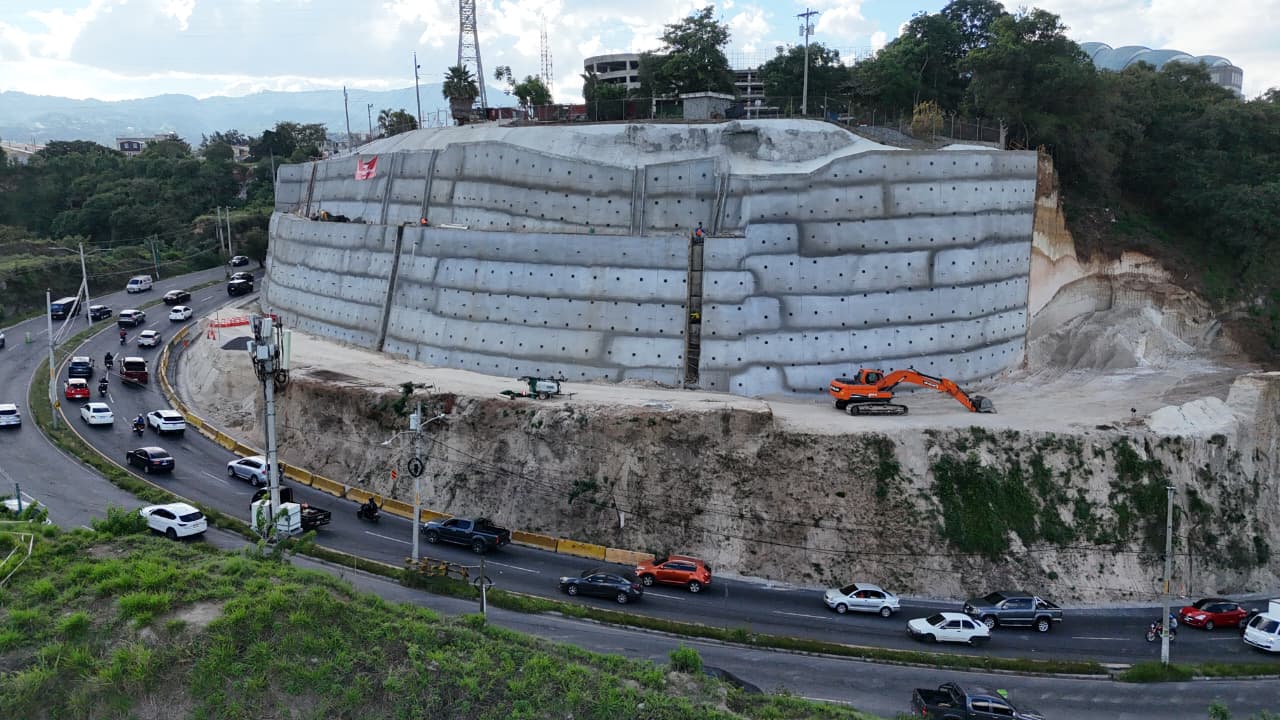
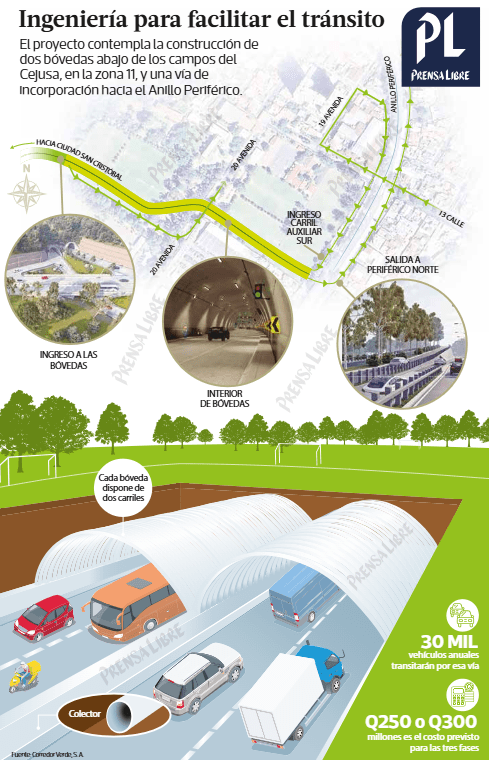
According to Diana Larissa Montesfrom the project’s Engineering Department, the route will cover territories of both municipalities. The tour will begin at Peripheral Ringat the height of the fields of Cejusawhere a false tunnel is already being built that will allow vehicular passage without affecting the surface.
From that point, the road will advance south with connection to the San Cristobal Boulevard through ramps and bridges, to later link with the South Boulevard and project towards Villa Lobos.
Infrastructure, route and time
He Green Corridor It will have an approximate length of 6 kilometers and will include tunnels, bridges and overpasses designed to maintain a continuous flow of vehicles.
- Start: Peripheral Ring, zone 11 (Cejusa)
- End: Bulevar San Cristóbal, with exit towards Bulevar Sur, San Cristóbal and projection to Villa Lobos
As explained by Diana Montes, the Green Corridor It is initially designed with four lanes. However, he also indicated that the project contemplates the possibility of expand to six lanes in the future, depending on demand and development conditions.
This design seeks to reduce congestion and significantly improve travel times during peak hours.
Another person in charge of the project explained that, according to surveys carried out, transfers that currently take between 79 and 115 minutes—such as the trip from Ciudad San Cristóbal to zone 11, at the height of 13th street—could be reduced to between 10 and 15 minutes.
24/7 cameras and smart monitoring
One of the key elements of the project, according to Montés, will be its video surveillance. The road will have a circuit of cameras operating 24 hours a daydistributed along the entire route, which will allow permanent control of the road.
In addition, mechanisms will be implemented immediate responsesuch as the rapid removal of damaged vehicles either involved in incidentswith the aim of avoiding prolonged blockages.
Artificial intelligence for traffic management
The system will incorporate artificial intelligence (AI) to analyze the images captured by the cameras in real time. This technology will allow:
- Identify stopped vehicles
- Recognize obstacles on the road
- Classify incidents according to their severity
The ability to interpret data will facilitate the activation of faster and more accurate response protocols, improving traffic safety and fluidity.
Integrated mobility and parking
The project also contemplates an approach of integrated mobilitywith connections to other transportation systems.
According to the developers, the construction of a parking with capacity for 300 vehicles at the beginning of the section (Cejusa), where users will be able to leave their car and continue their trip by public transport such as Transmeter either TuBus.
Project phases
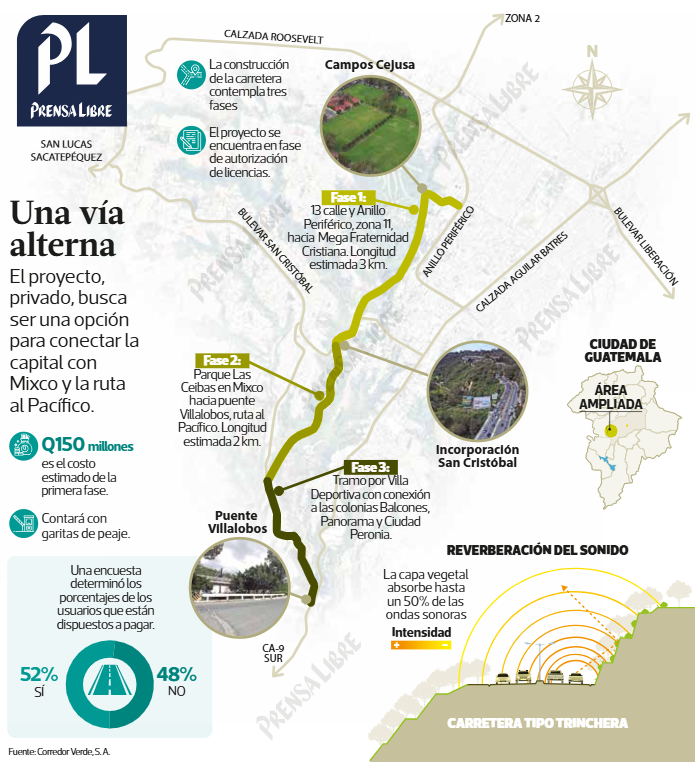
The development of Green Corridor It will be executed in three stages:
Phase 1
- Villalobos Bridge (1A): from the Peripheral Ring to zone 11, with connection to San Cristóbal
- San Cristóbal Bridge (1B): to South Bulevar, in the Parque Las Ceibas sector
Phase 2
- Extension from the Bulevar Sur de Mixco to the highway to the Pacific (in technical analysis)
Phase 3
- Connections to Balcones, Panorama and Ciudad Peronia
The authorities anticipate that the first phase to come into operation at the beginning of 2028 or sooner, although the complete operation will depend on the completion of both segments contemplated at this stage.