
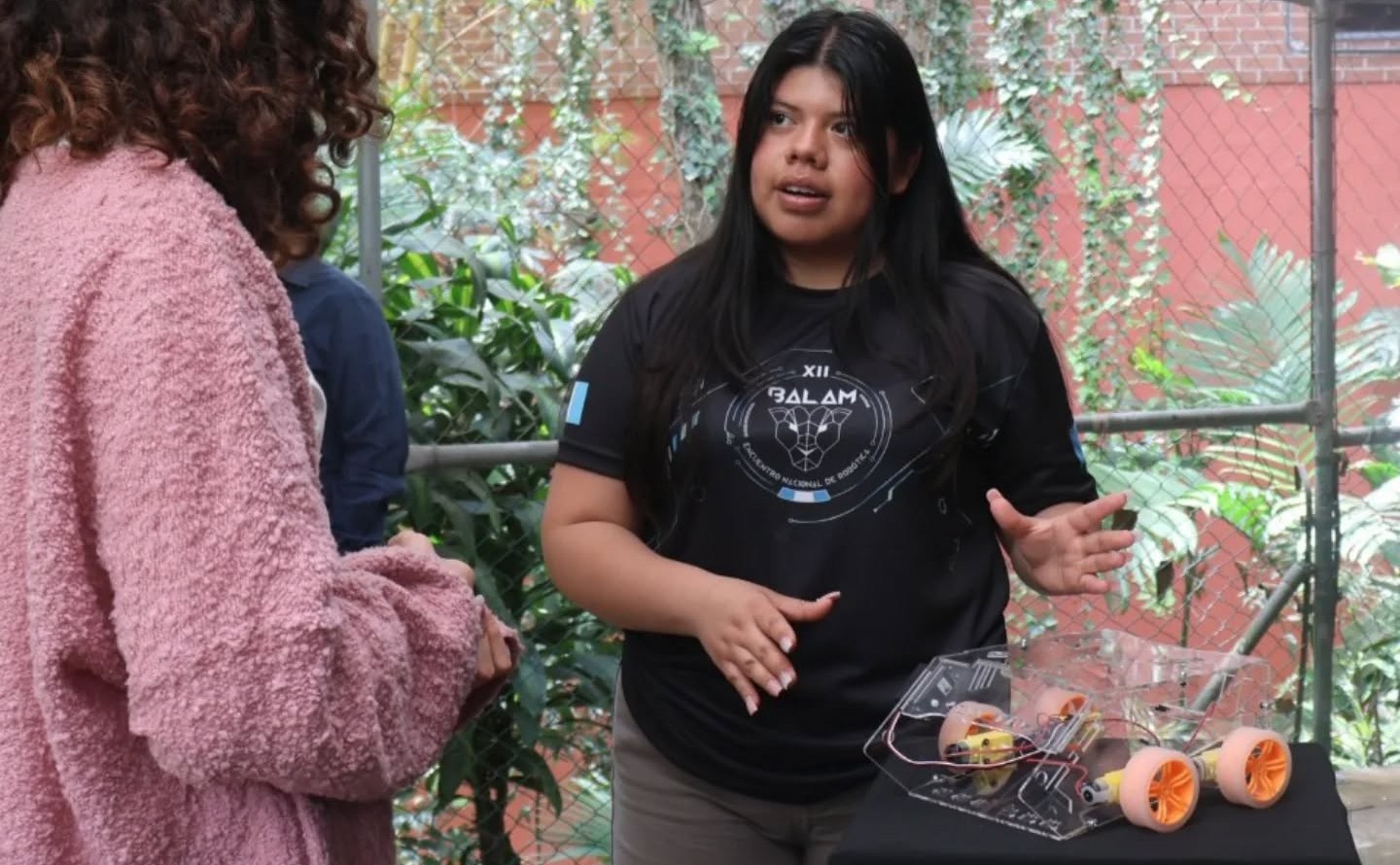
He National Robotics Meeting Balam Project reaches its 12th edition in 2026 and opens spaces for innovation, scientific talent and development of technological skills in an environment of practical learning and student competition at the national level.
More than a thousand students between 10 and 19 years oldcoming from 15 departments of the country, both from the public and private sectors, participate this year in the different phases and categories of the project, which aims to strengthen skills in programming, electronics, mechanism design, problem solving and teamwork.
“One of the strengths of the Balam Project is to spark interest from an early age, even with participants from fourth to sixth grade, which reflects that Guatemala has talent that can be discovered and enhanced from childhood“says Jean Paul Suger, administrative vice-rector of the Galileo University.
He added that There has been a growing interest of girls and young people in technological areaswhich is a positive sign of inclusion and new opportunities for more women to dream of STEM careers (science, technology, engineering and mathematicsaccording to its acronym in English) and international projection.
According to the organizers, the goal of the project is to make young people fall in love with science and technology, and help them understand that, with ingenuity, discipline and knowledge, a lot can be achieved, even with limited resources.
“Project Balam shows that Guatemala has enormous potential in young talent. Our commitment is continue opening spaces where students can transform their curiosity into passion and, subsequently, solve real problems with technological solutions developed by their creativity and ingenuity,” explained Óscar Rodas, co-founder of the National Robotics Meeting.
Under the ACC methodology: Learn, Create, Compete, students test their creativity and technological skillsand encourage innovation and the development of solutions aligned with the UN Sustainable Development Goals.
- Learn Phase: initial stage held in March. Virtually, participants learned fundamentals of electronics, programming, digital manufacturing and innovation.
- Create Phase: will be held in April, in a hybrid way. Young people will apply what they have learned with kits and tangible technology; They will assemble, connect and program a robot.
- Compete Phase: in May, in person, participants will face challenges and competitions that will test their ability to solve problems.
- The grand final will be held on June 18 and 19 at the Galileo University facilities.
The 2026 edition integrates categories for different levels of technological developmentso that students with different profiles develop their projects according to international standards in educational robotics and technological innovation.
- JR category: STEM Jr. challenge.
- SR category: STEM Sr. challenge, RoboFut, drones and all-terrain
The outstanding students in each category are technically and academically evaluated to join the Guatemalan National Robotics Team and represent the country in international competitions.such as the FIRST Global Challenge, which will be from October 7 to 10, 2026 in South Korea, and later at the Robomatrix, in Mexico.
In 2025, Guatemala reached 28th place out of 190 countries in the FIRST Global Challenge and, in Robomatrix, He has obtained gold, silver and bronze medals.
“The Balam National Robotics Meeting is a strategic piece for the scientific development of the country, so that young people dare to not only be consumers of technology, but creators of it; you are now the ones who design, build and program, and These spaces help them develop skills and competencies that they will need in the world of work.”says Gabriela Montenegro, national secretary of Science and Technology.
Throughout its 11 previous editions, Proyecto Balam has involved more than 12 thousand Guatemalan young people. The initiative emerged in 2015, founded and coordinated by the Galileo University and Grupo Intelecto, with the endorsement of the Ministry of Education and the National Secretariat of Science and Technology (Senacyt).