
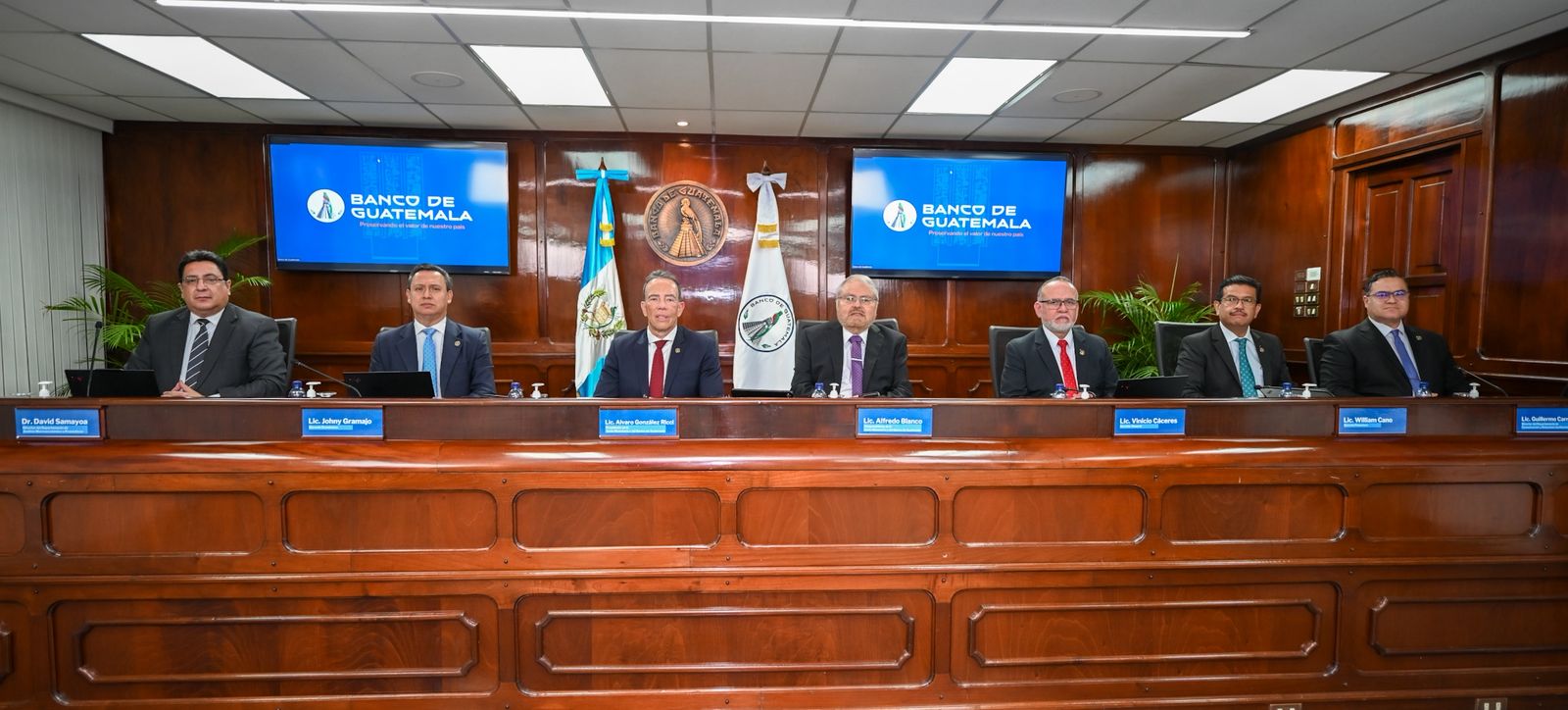
The decision was unanimous, explained Álvaro González Ricci, president of the JM, in a press conference, and assured that a inflation rate close to 3%, according to the projections presented.
The indicator remains at 3.50% for the third consecutive month.
The official highlighted that the external context was analyzed and that the prospects for economic growth worldwide continue to be positive for the present and next year, driven by the resilience of private consumption and international financial conditions that are still favorable, although in an environment of high levels of uncertainty and downside risks, due, above all, to the geopolitical conflict in the Middle East and the persistence of protectionist trade policies.
He added that the blockade of the Strait of Hormuz, caused by the geopolitical conflict, has caused a substantial increase in the international price of oil, although its effects on global inflation will depend on the intensity and duration of the aforementioned conflict.
Local perspectives
In the internal environment, González Ricci mentioned that, despite the environment of high external uncertainty, the positive growth of most short-term economic indicators, consistent with the estimate of economic growth expected for 2026, between 3.1% and 5.1%, and for 2027, between 3% and 5%. These scenarios remain.
In any case, he stressed that the supply shock in energy prices, derived from the geopolitical conflict in the Middle East, If it persists for a long time, it could affect Guatemala’s economic prospects this year.
The official emphasized that in March inflation stood at 2.50%, higher than the 1.56% in February, although below the lower limit of the goal determined by the Monetary Board (4.0% +/- 1 percentage point).
“The recent acceleration of the inflation rate reflects, to a large extent, the greater pressures from imported origin, derived from the increase in international fuel prices,” he stressed.
At the press conference it was reiterated that low inflation conditions continue to prevail and that inflation forecasts and expectations continue to indicate that it will be at the target in both 2026 and 2027.
However, these projections continue to be conditioned to upward risks, particularly due to the possible intensification and prolongation of the geopolitical conflict in the Middle East, which could cause upward pressures on imported inflation, which must be evaluated in a timely manner, as the global energy market evolves.
It was explained that The price of a barrel of WTI oil, the reference for Guatemala, exceeded US$106 this Wednesday.
The next session to evaluate the leading rate is scheduled for May 27.
Record
Since May 2022, the leading rate has risen from 1.75% to 5% but then dropped to 3.50%:
- From January to April 2022: 1.75%
- May 2022: 2%
- June 2022: 2.25%
- August 2022: 2.75%
- September 2022: 3%
- November 2022:3.75
- January 2023: 4.25%
- February 2023: 4.50%
- March 2023: 4.75%
- April 2023: 5%
- May 2023: 5%
- June 2023: 5%
- August 2023: 5%
- September 2023: 5%
- November 2023: 5%
- February 2024: 5%
- March 2024: 5%
- April 2024: 5%
- May 2024: 5%
- June 2024: 5%
- August 2024: 5%
- September 2024: 4.75%
- November 2024: 4.50%
- February 2025: 4.50%
- March 2025: 4.50%
- April 2025: 4.50%
- May 2025: 4.50%
- June 2025: 4.50%
- August 2025: 4.25%
- September 2025: 4%
- November 2025: 3.75%
- February 2026: 3.50%
- March 2026: 3.50%
- April 2026: 3.50%