
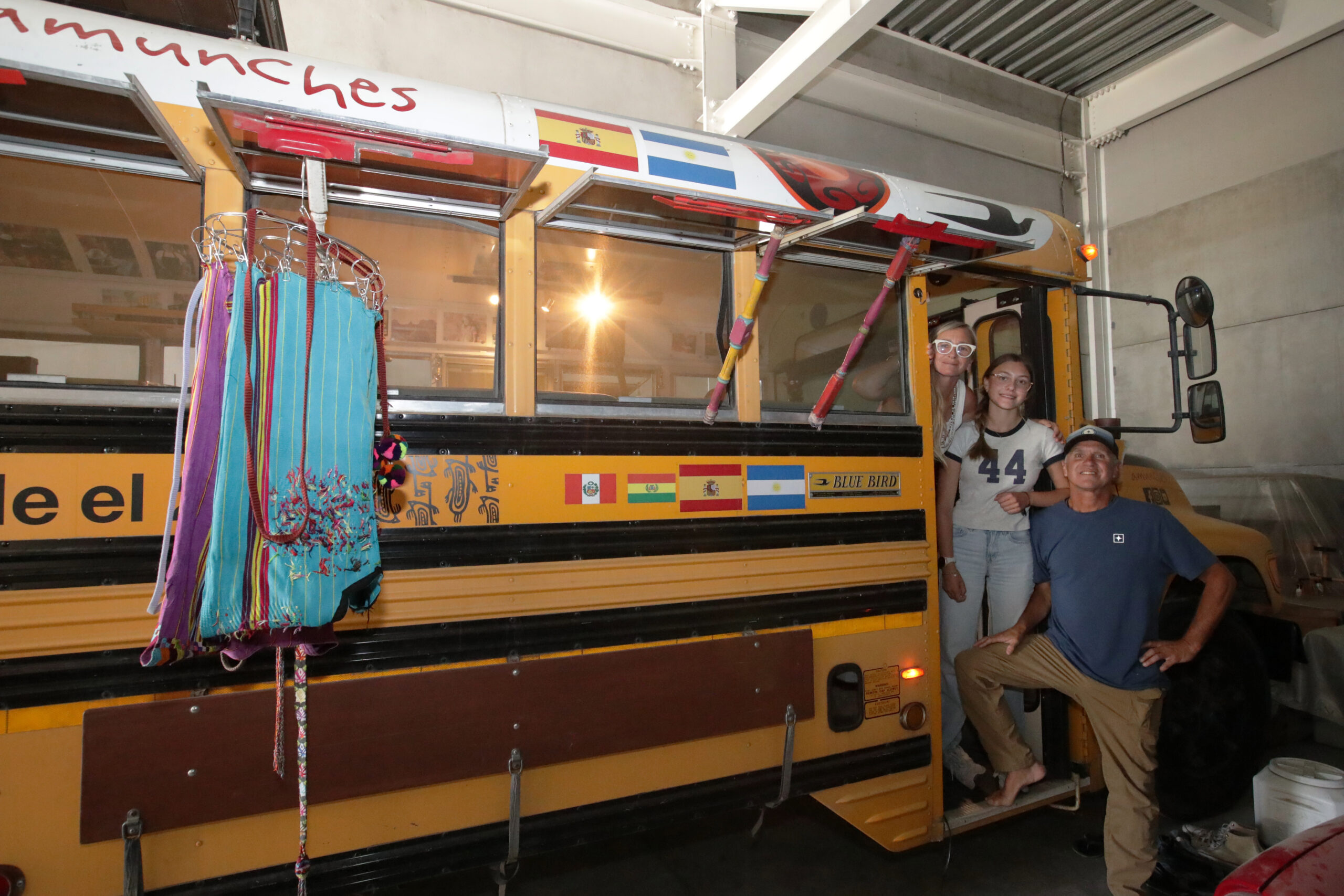
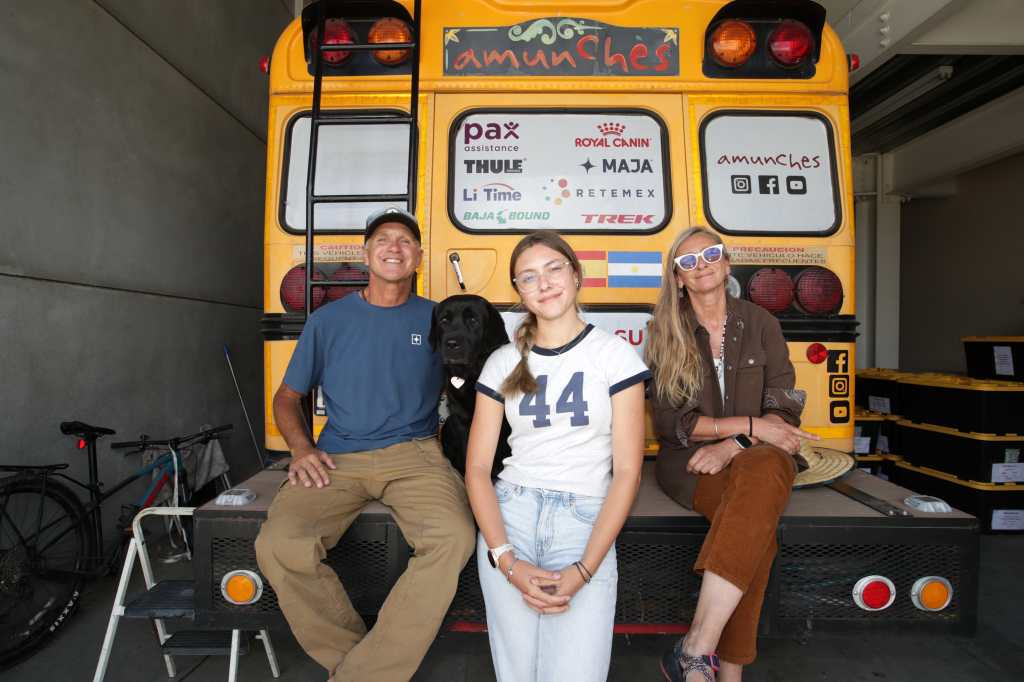
For an ordinary family, a school bus usually transports children between 3 and 18 years old to the educational establishment, but for a nomadic Argentine family it is their home, to the point that they have been traveling through America for 23 years. The yellow bus, which measures approximately 12 meters long, has stickers from different countries around it, as a reminder of the places they have visited. At the top they have a tent.
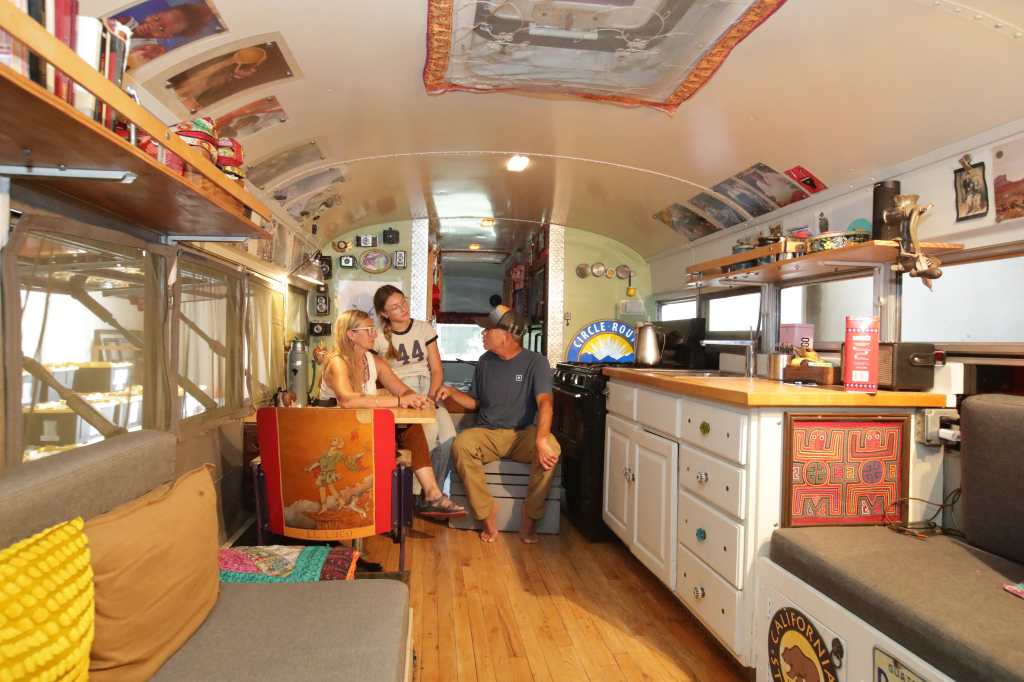
Upon entering the vehicle, the scene changes. The atmosphere recreates a family space like any other, while the aroma of eucalyptus and lemon is felt.
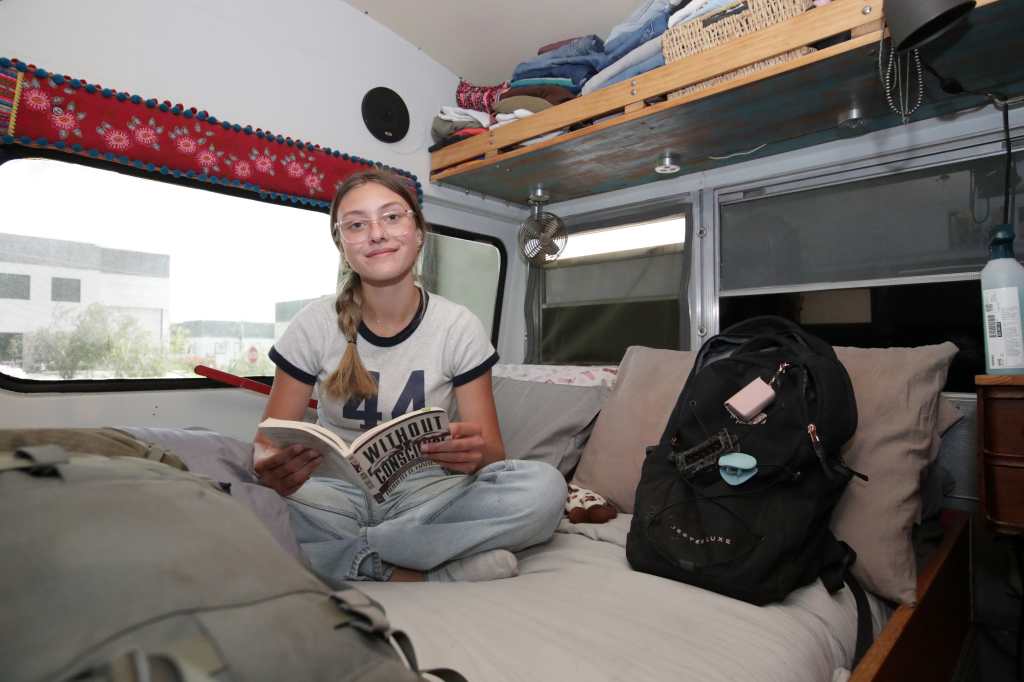
Some yellow spotlights illuminate the environment where two long armchairs have been installed with cushions and covers made of typical Guatemalan fabrics. Inside there is also a table with two chairs, framed photographs of each trip, a vertical closet and a refrigerator, a stove with an oven, a microwave and, as if that were not enough, also a dishwasher, a shower with a heater and, of course, the toilet. In addition, a bookcase and a double bed at the back of the bus.
Patricia Fehr, 51, is originally from San Nicolás de los Arroyos, in the extreme north of the province of Buenos Aires, Argentina. Since she was little, she imagined and played at being a teacher in the mountains, but where she was born there is a lack of them, as it is located on the Pampean Plain, a plain formed by the accumulation of sediment.
She graduated as an elementary teacher and obtained a specialization in adolescent and adult education.
Start of the adventure
In his fourth year of high school, he met Germán de Córdova, in 1991, and they became lovers. “We were totally different, like day and night or water and oil, but we had something in common: the desire to take a trip,” highlights Fehr, while drinking a mate.
Córdova is a public relations specialist, physical education teacher and bus driver.
Their idea was to leave southern Argentina and reach northern Alaska for a year, and return to normal, so they decided to equip a Land Rover Defender truck with the basics.
Mutual friends suggested they place a sticker or sign outside the small van with a name that would identify them.
Thus, Patricia goes to a library and asks for three dictionaries of Argentine languages: Guaraní, Mapuche and Quechua. The first was difficult to pronounce, so he switched to Mapuche, scrolled through several words in the letter A and read Amunche. They knew that amun means “walk” or “go” and ches “man” or “people”, which translates into “those who walk” or “travelers”. At that moment he knew that was the correct name.
The dream came true, and they set out in 2003 with their savings, passports and their truck. After adopting their first pet in Colombia, which accompanied them on many trips, one of the topics of conversation between Patricia and Germán was whether they would have a child with whom to share what they saw on their adventure.
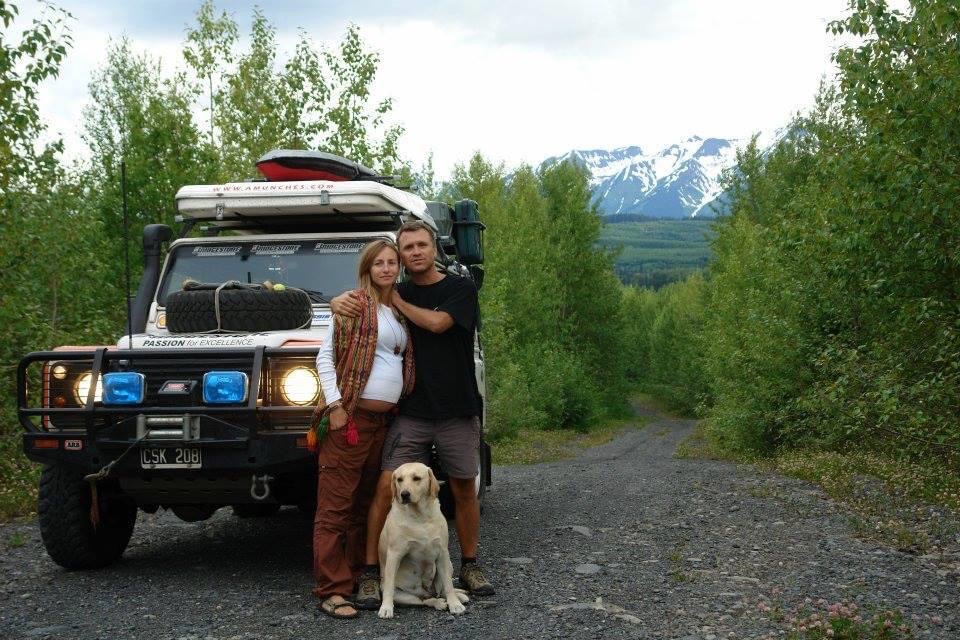
They crossed the United States, Canada and Alaska, a destination country where they arrived five years later and where they were waiting for their daughter Inti (17), but the desire to continue traveling remained. They settled in Spain, and in a public hospital, through natural birth, with the help of midwives, Inti was born after a 48-hour labor.
In 2010, they acquired a yellow school bus on a property, the classic transport in Latin America to transport students.
That bus had an original Guatemalan license plate, and they turned it into their home. “We know that a house is bought and a home is built”says Córdova. The couple highlights that, despite having some successes and mistakes, they have decorated their home with what they thought was appropriate, decorating with memories and photographs linked to the culture of each country they have visited.
Lifestyle
In the 23 years they have traveled the American continent, they have tried to protect nature, exercising responsible consumption, using three postulates: reduce, recycle and reuse. They also take care to buy their items from small producers and use the bicycle to travel short distances once settled in a country.
Lovers of traditions and cultural wealth, the nomadic family carries with them copies of the book Amunches under a new sun, which compiles the lifestyle of communities from Argentina to Alaska, and they use it to share that lifestyle with the communities.
Patricia audiovisually documents each trip with a drone and her Nikon Z7 camera and three lenses. He remembers that photography always caught his attention and, at the beginning of the trip, they used it to create postcards for themselves and also to share with their friends, despite how expensive it was.
Years later, they created accounts on Facebook, Instagram and YouTube, which over time have changed the way they show their daily lives, creating a community with whom they share their material and narratives from each place they visit.
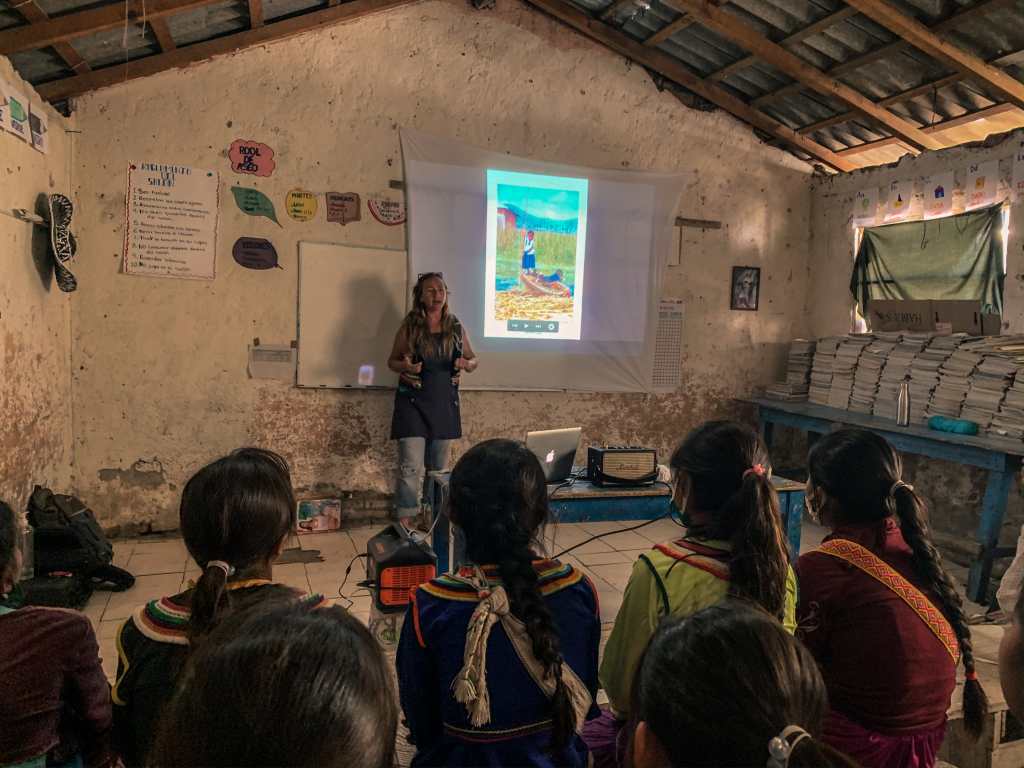
From their first trip, they acquired the commitment to share, get closer to people and their cultures, convinced that it is possible to build ties in diversity education, offering conferences, training or workshops to schools, universities, companies and organizations.
The activities are aimed at motivating and strengthening people in fulfilling their life purposes, discovering cultures, strengthening self-esteem, learning about environmental problems and their possible solutions. The cost of these is adjusted according to the region and reality to whom they are taught. The proceeds allow them to continue financing their project and continue documenting the experiences to return what they have learned as part of their social commitment.
The lifestyle has not been an impediment to Inti’s education, the academic support of her mother who is also a teacher, what she has learned on trips and the values instilled by her parents. Primary education was combined with a free public distance education system by the Ministry of Education in Argentina.
Then, by his own decision, Inti studied in a homeschooling in the United States, and is interested in studying criminology or psychology, so Patricia and Germán are looking to settle in a country to give their daughter everything she needs in this stage of growth, accompany her and give her the necessary tools.
Everyday challenges
Among the obstacles they have faced when traveling on a bus is finding a place to park it for a long time, but once installed they can enjoy what every corner offers them using their bicycles or renting vehicles to share with friends around the world.
Over the years, Amuches has learned that when arriving at a place they should not have expectations, but rather learn and absorb each culture. “One of the worst things a traveler can do when arriving in a country is to have an idea and predispose our mind. We arrive stripped of any type of beliefs, with our mind and heart blank to discover new ways of thinking, with values different from our own to be able to give and receive what we have learned,” mentions Fehr.
Another daily challenge is coexistence on a personal, family and couple level in such a small space. Most of the time, but together, they have sought to overcome obstacles to move forward and now find a place to stabilize, understanding that things change, human beings are emotional and must find a balance to be able to do things together.
The life motto that always accompanies them is: “where we are together is our home”. They share this with those they meet on their travels and invite people to dare to fulfill their dreams, to find their life purpose, which may perhaps change over time. They urge that even if you are afraid, you must take firm steps and seek happiness.
Visits in Guatemala
Guatemala has marked their journey for 23 years. They visited the country for the first time in 2006, visiting places and making friends in Sololá, Xela and the capital for a year.
This 2026 they spend some time again and decide to reunite with a family that hosted them for a month in San Juan La Laguna, but everything changed physically. They only remembered the Maná bakery, close to the local Catholic church, and a photograph they took with them. Currently he is no longer there, but, with the help of neighbors, they managed to contact him by telephone and, 20 minutes later, they were enjoying the warmth of that family, drinking chicken soup and remembering anecdotes.
On this new visit they visited Chichicastenango, Escuintla, Atitlán, Antigua Guatemala, and climbed the Acatenango and Fuego volcanoes. They highlight that Guatemala is one of their favorite destinations, since it has its ancestral culture alive, they highlight the geography and its tourist destinations, the charisma, human quality and positivism of Guatemalans has not changed and makes them feel at home.