
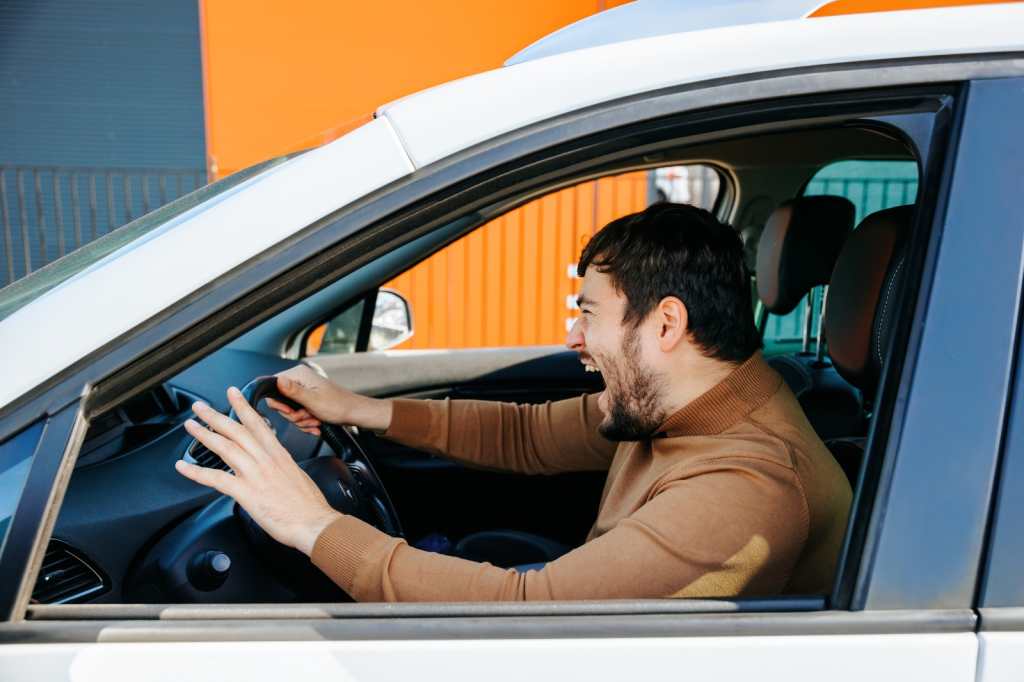
Three traffic arguments have left six dead in less than a month in different parts of the country, and authorities are investigating two attackers. Specialists warn that stress, impulsivity and the presence of weapons lead to hostile situations in traffic congestion.
Recent cases have made it clear that traffic jam violence does not just happen in the capital. The events extend to urban centers in the province and alert the authorities about the situation.
Fight on the road
On the night of April 26, at kilometer 175 of the route to the Atlantic, in Gualán, Zacapa, there was an argument between two drivers for not giving way when there was a traffic jam on that road. According to police investigations, both motorists were armed and, after the allegation, they fired shots.
Herber H, 54, one of the motorists involved in the incident, was traveling with his daughter, 21. The other driver, during the argument, shot, and so did Herber H. The young woman, daughter of Herber H, and the other motorist 64 died in the accident.
The police who went to the scene found four pistols, a carbine, eight magazines, 109 ammunition of different calibers and 20 shell casings; everything was confiscated.
Some witnesses told police investigators that the motorists were trying to pass because there was a lot of traffic, and that caused both of them to get upset until they pulled out their guns and fired.
Deadly argument
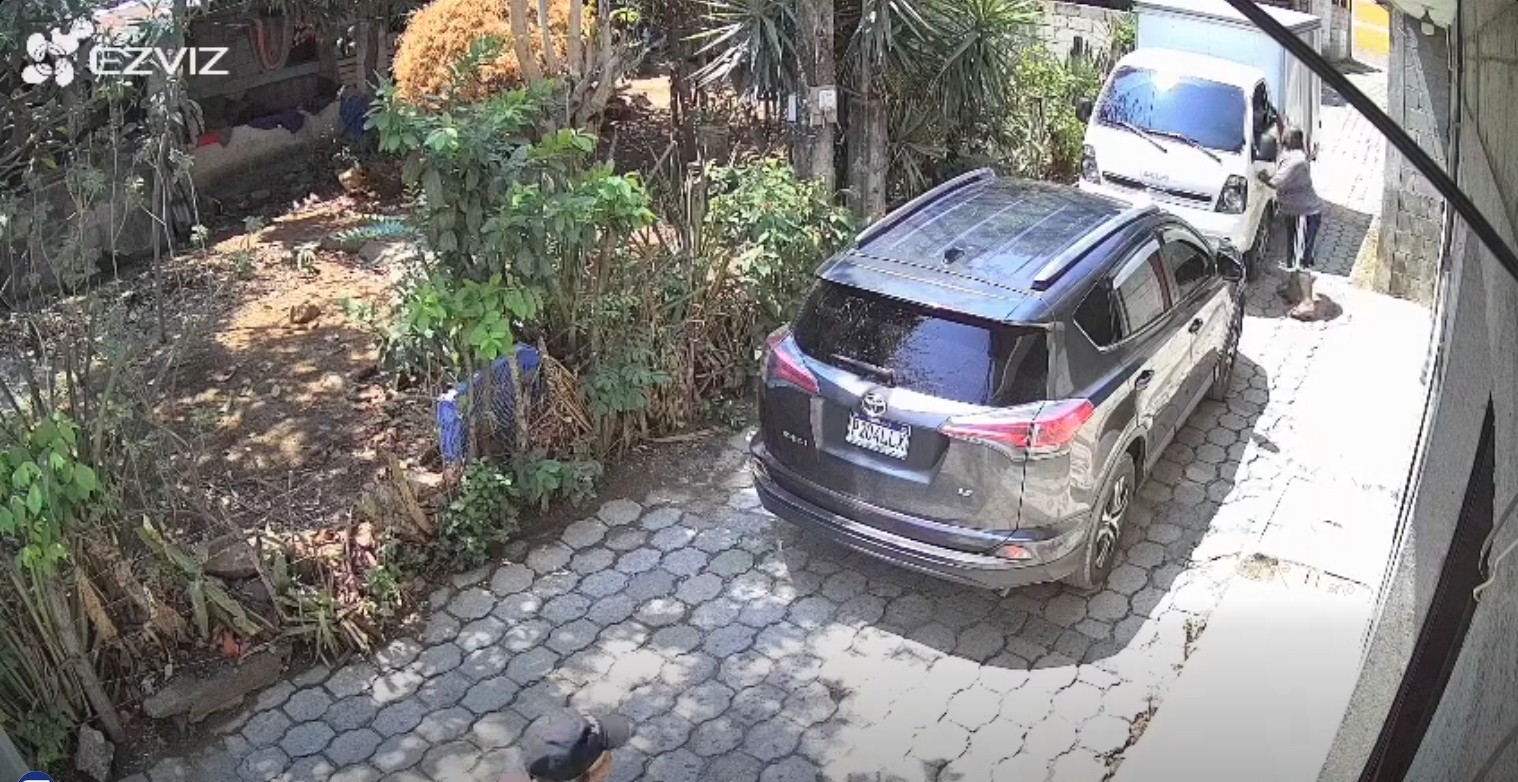
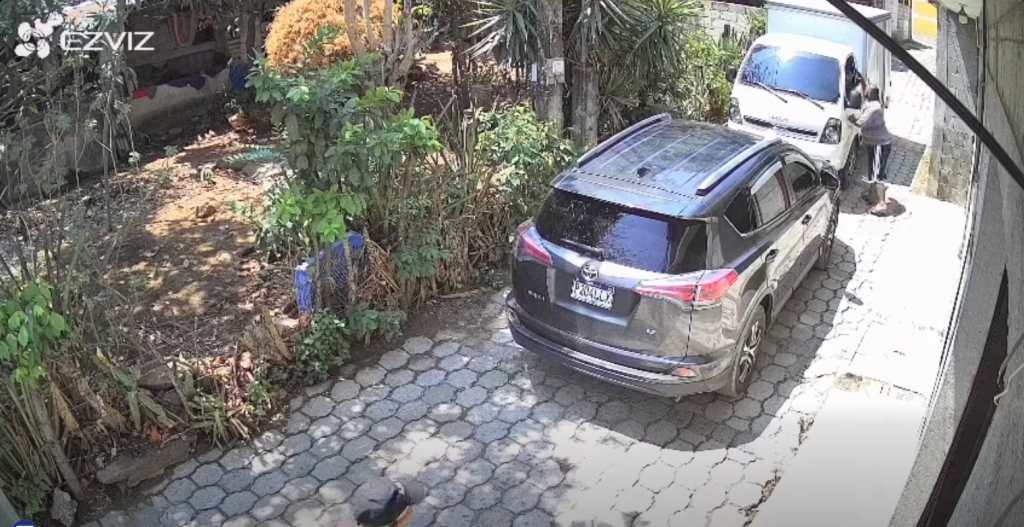
Two days before, on April 24, another death was reported due to a traffic argument, this time, in El Progreso. Currently, a team of agents from the National Civil Police of San Antonio La Paz, El Progreso, is analyzing frames of video surveillance camera recordings of a traffic dispute in which Lubin Cruz, 35, died in Santo Domingo Los Ocotes, San Antonio La Paz, El Progreso.
Cruz’s death “is under investigation,” detailed the Public Ministry (MP). Meanwhile, police investigators are analyzing what happened on Friday, April 24, when the victim argued with the driver of a truck over the passage on a one-way street, which was narrow. The event was recorded for a duration of one minute and 35 seconds, in which the discussion and, later, three shots fired at Cruz are exposed.
The victim was driving a gray truck and was accompanied by two women and a child. The three witnessed when the truck driver’s passenger shot Cruz in the back. Before, there was an argument in which Cruz pulled out a gun and hit the truck driver in the face. Then, the two women are seen distressed and screaming when they see Cruz on the ground, while the truck reverses and flees the scene.
The police officers in charge of investigating the case, 10 days after the attack, are still trying to identify the truck involved in the incident. The challenge is to find images that allow the license plates to be clearly seen and, subsequently, determine who the driver and his companion were, who they assume to be a private guard guarding the truck.
Biker shoots
Weeks before, on March 25, at 7:41 a.m., an armed attack was reported at 19 2-76 Street, Zone 1 of the capital, where three men died and it was all due to a traffic incident.
The victims were identified as Alfonso Vicente, 56; Henry Bernardo Vicente Barreno, 33; and Héctor Alfredo Morales Girón, 43. Among the fatalities were a father and his son—both merchants—and a bricklayer.
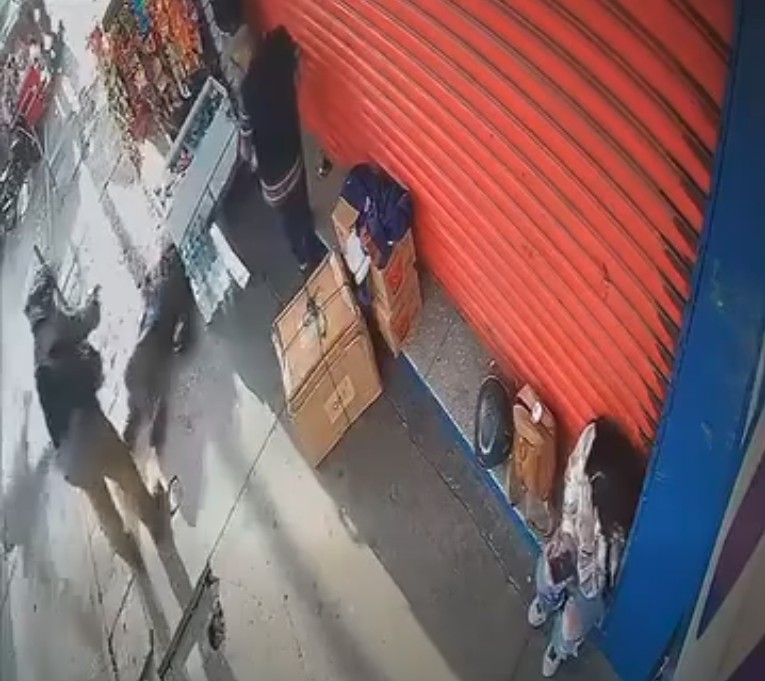
The PNC has determined that the attack originated after a traffic incident. A man who has not yet been identified after 40 days, who was driving a white motorcycle, passed on the right the vehicle in which the victims were traveling, with plates P285JSG, and that maneuver caused them to collide, details the police report from that day.
Furthermore, it is described that both drivers got out of their vehicles and had a discussion to reach an agreement for the damages caused; However, the situation escalated.
“When an agreement was not reached, the person on the motorcycle pulled out a firearm and fired it repeatedly against the victims,” details the PNC report.
The moment of the shooting was recorded by video surveillance cameras and it is observed in detail how the motorist takes out the gun and shoots the three victims. Other merchants placing their products witnessed the attack.
Subsequently, “after committing the armed attack, he ran away and then boarded the motorcycle and fled towards Bolívar Avenue,” details the police report.
At the scene, authorities found 18 9 millimeter caliber casings, projectiles and bullet fragments.
Stress and road chaos
For clinical psychologist Sandra Luna, these events reflect an accumulated pressure that manifests itself in traffic. He emphasizes that “stress levels are very high, because people have to leave their homes earlier and earlier to get to work,” which is why he considers this situation as a key factor in creating a hostile environment in traffic jams. The return home explains, concentrates drivers in more chaotic conditions.
“There is a lot of urgency among people, and that is a honking noise. Everyone wants to pass, they want the person in front to hurry,” he details. According to Luna, in this environment basic coexistence behaviors have deteriorated. “There is no kindness…there is no empathy either.” The specialist links this loss with the immediacy and frustration faced with increasingly unpredictable travel times.
Impulsiveness
Constant pressure reduces the capacity for self-control and favors immediate responses, explains Luna, and concludes that discussions stop focusing on resolving the conflict and become emotional discharges.
“Society has made us more impulsive. This pressure generates strong stress that does not allow us to act in a measured way. I am no longer interested in consensus, but rather in exploiting my emotions… I am no longer looking for who owes me, but rather who pays me.”
The specialist warns that, in many cases, the reaction responds not only to the moment, but to “accumulated tensions” during the day or week.
“Society has made us more impulsive. This pressure generates strong stress that does not allow us to act in a measured way. I am no longer interested in consensus, but rather in exploiting my emotions… I am no longer looking for who owes me, but rather who pays me.”
Weapons in traffic
In the three documented cases, those involved were carrying firearms, an element that increases the risk of fatal outcomes. According to the professional, “if a person carries a weapon, it is because they are going to use it at some point.” The difference, he explains, lies in the prior intention: “There is an intention of use from the moment it is acquired.”
Mental health
The physical and emotional state directly influences behavior, according to the psychologist, and she emphasizes that the lack of rest and adequate habits reduces the ability to control.
“Depending on how our mental health is and how capable we are of reacting in a critical situation, this is how we are going to respond,” explains Luna.
The prefrontal hemisphere of the brain, which is where we make decisions, is more relaxed and functions better when the body is in balance.
Alcohol consumption is, in Luna’s opinion, another trigger for traffic violence, because scientifically “alcohol affects the brain… it stops making good decisions and acts according to impulses.”
“Depending on how our mental health is and how capable we are of reacting in a critical situation, this is how we will respond”
Discussion and crime
From the legal field, former prosecutor Rolando Juárez, who investigated dozens of cases in the MP’s Crimes Against Life Prosecutor’s Office, warns that these events transcend a road altercation because the use of a weapon on public roads can constitute crimes such as injuries or homicide, aggravated by the risk to third parties.
“It is not just a discussion. When a weapon is used, the event takes on another criminal dimension and the consequences can be serious,” he says.
Likewise, the former prosecutor recalls that on August 12, 2025, Carlos Rolando Rodas Aldana, 46, had an argument with a motorist in traffic and pulled out a gun and fired. In that event he killed another motorcyclist.
“This person killed a motorist who was not in the discussion and injured another; his decision was fatal and he is facing trial for murder and attempted murder. I can tell you that he ruined his life because of anger,” explains Rodas.
Keys to avoid tragedy
Clinical psychologist Sandra Luna proposes recommendations to reduce impulsivity, especially in traffic:
Sleep between 6 and 8 hours
Stay hydrated
Eat in a balanced way
Plan transfer times
Perform physical activity
Reduce constant exposure to screens
Luna also appeals to those who carry a weapon: “If you think you might use it, avoid carrying it in situations where you could expose yourself.”