
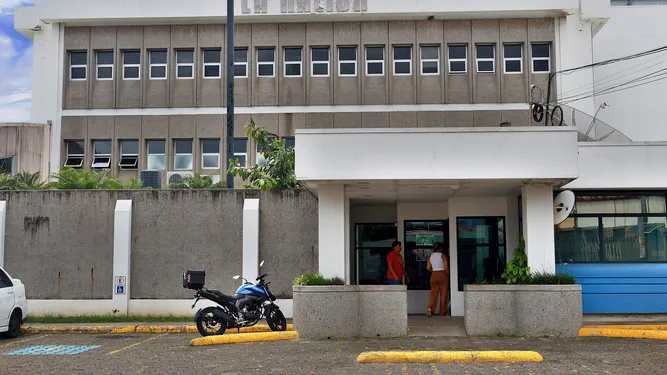
The Inter American Press Association (IAPA) expressed its concern about the visa revocation by the United States government to members of the board of directors of Grupo Nación, of Costa Rica, publishing company of the newspaper The Nation and other newspapers and magazines.
This is an unprecedented measure that, until now, has not been accompanied by a clear explanation on its foundations, as confirmed on May 2 by the newspaper The Nation.
“We fully recognize that the United States, like any sovereign State, has the power to determine the terms of entry into its territory and we respect its power to make decisions on immigration matters in accordance with its laws and policies,” the Costa Rican media stated in a statement. “However, it is unprecedented in the recent history of Costa Rica that revoke the visa of members of the board of directors of a newspaper generalist and independent,” he stated. The Nation.
The IAPA considers that decisions of this nature, which involve directors of an independent and reference medium, should be governed by principles of transparency and accountability.
According to information published by different media, including The Nationthese revocations They are part of a broader list of visa cancellations that reach judges, former deputies, former president and Nobel Peace Prize winner Óscar Arias and other actors in the political and institutional sphere of Costa Rica, in what has been described as an escalation of diplomatic pressure.
The last episode occurred over the weekend, when the newspaper The Nationone of the most important media in Costa Rica, with 79 years of existence and whom Chaves usually criticizes publicly, announced that the members of his board of directors had their visas withdrawn.
“Under no circumstances will these events alter the commitment or independent exercise of journalism. that has characterized ‘La Nación’ for 79 years,” published the newspaper, which described as “unprecedented in the recent history of Costa Rica” the withdrawal of the visa from the members of the board of directors of a “generalist and independent” newspaper.
The former first lady (2018-2022) and center-left opposition deputy Claudia Dobles sent a letter this May 4 to the president-elect, Laura Fernández, and the chancellor, Arnoldo André, in which He asked if the Government had any interference in the withdrawal of visas.
The College of Journalists, the Institute of Press and Freedom of Expression (Iplex) and the Freedom of Expression and Right to Information Program (Proledi), of the University of Costa Rica, issued a statement in which They asked the Costa Rican Government to ask the United States for explanations.
“If this decision is based on your critical position towards this Government, it would be one more worrying sign for our democratic system“said the statement.
In this context, the IAPA indicates, the inclusion of directors of a journalistic group is particularly sensitive and deserves a detailed explanation.
The SIP indicates that it has documented in recent years a significant deterioration of the conditions for the exercise of freedom of the press in Costa Rica during the administration of the outgoing president, Rodrigo Chaves, characterized by stigmatizing discourse towards the media and journalists, as well as an adverse climate for plural public debate.
“In this context, it is especially worrying that measures of this type affect a journalistic institution such as The Nationwhich in its almost 80 years of history has been a pillar of independent journalism and a reference in the defense of freedom of expression in the region,” says the IAPA.
“He use of administrative tools without clear explanationsin cases that involve the media, generates concern and can have inhibiting effects on the practice of journalism,” said Pierre Manigault, president of the IAPA and head of the group. Evening Post Publishing Inc.based in Charleston, South Carolina, United States.
For her part, Martha Ramos, president of the Committee on Freedom of the Press and Information of the IAPA and editorial director of the Mexican Publishing Organization (OEM), stated: “Transparency is an essential principle in consolidated democracies. It is essential that the criteria that support decisions are explained that impact key actors in the information ecosystem.”
The IAPA requests that the corresponding authorities provide clear and timely information about the reasons for this decision, in safeguarding democratic principles and respect for freedom of the press.
As indicated The Nationthe United States Embassy in Costa Rica reported that the Government policy is not to comment on individual visa cases.
The newspaper, which published the news on the front page on May 3, stated that it is striking that “the initial disclosure of these events occurred through means unrelated to any official notification to the affected people.” The SIP was able to learn that The news was reported in three media related to the Government of President Chaves.
⚠️This is an unprecedented measure that, so far, has not been accompanied by a clear explanation of its foundations.
— SIP • IAPA (@sip_oficial) May 4, 2026
Among the people who lost their visas is the Nobel Peace Prize winner and former Costa Rican president Óscar Arias (1986-1990; 2006-2010), a constant critic of US policies; his brother Rodrigo Arias, whose visa was revoked when he was president of Congress; the magistrates of the Constitutional Chamber Paul Rueda and Fernando Cruz, as well as other former opposition deputies.
Given what happened with The NationOscar Arias criticized Trump and Chaves on social networks, and assured that the common denominator of Costa Ricans who have had their visa revoked is being people who do not sympathize with the government or who at some point disagreed with one of its positions.
“The Trump government and that of Rodrigo Chaves think in a very similar way, since They believe that no one can criticize them: The adversary, rival or opponent is called the enemy. “Anyone who dares to criticize or disagree with the government of Chaves and Donald Trump is tried to be silenced with defamations, insults, lies or slander,” writes Arias.
Chaves, who his government will end on May 8, He has been close to the Trump administration, with which he has signed agreements to receive deported migrants and to integrate the ‘Shield of the Americas’ initiative for the fight against drug trafficking.