
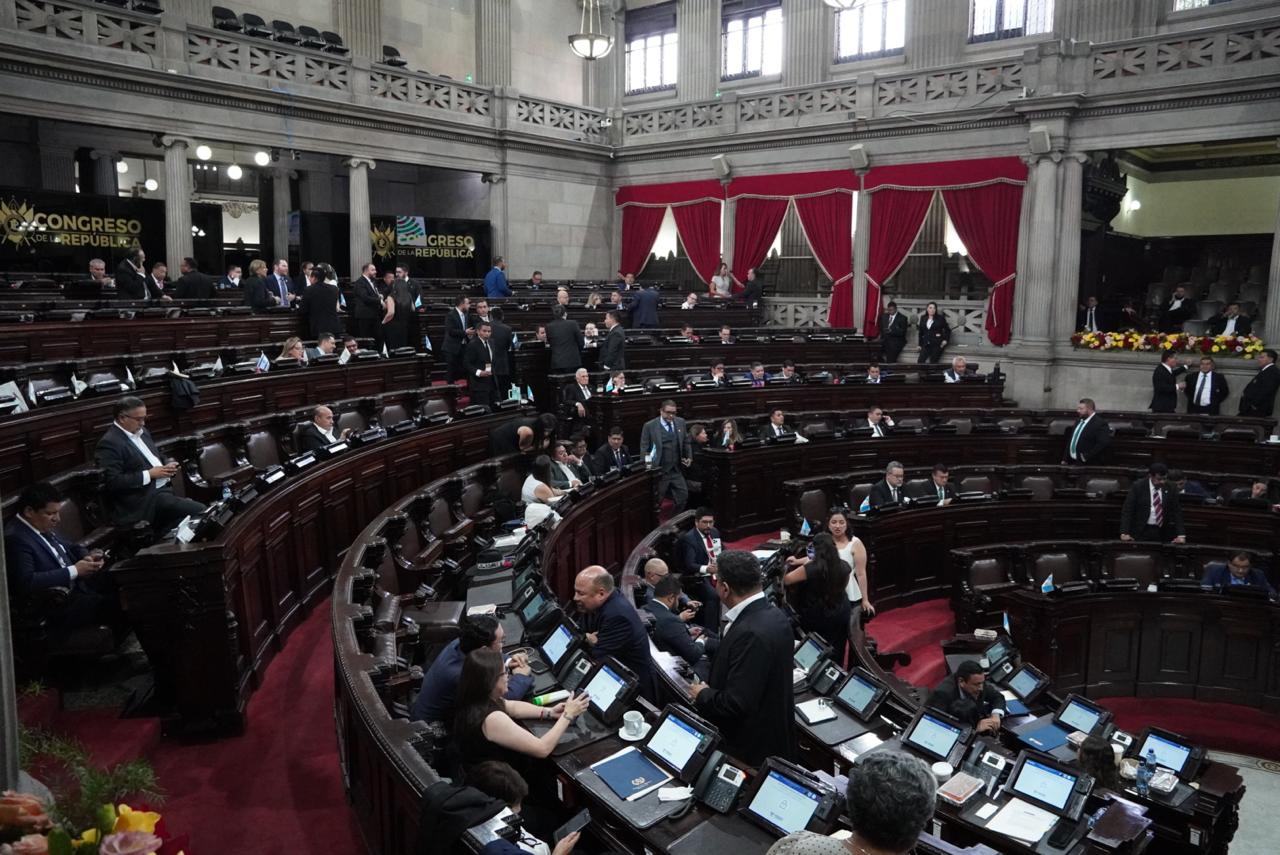
Congress was trapped again due to the lack of agreements regarding the Anti-Money Laundering law, initiative that seeks to update the legal framework to combat money laundering, but that does not convince all deputies.
The main point of the plenary session on May 5 was the approval of the final draft of initiative 6593, Comprehensive Law Against Money Laundering or Other Assets and the Financing of Terrorism.
But the session was lengthening due to the extensive processing of bill initiatives, something that is not usual in this legislature, but is usually used when deputies seek to gain time to consolidate agreements and get votes.
The processing of the initiatives lasted more than two hours, while in the chamber the deputies talked to consolidate support, not only for the Anti-Money Laundering law, but also to reform the Organic Law of the Public Ministry (MP).
Deputies from different benches, under the condition of anonymity, confirm that the negotiations to support said bill are hand in hand with a possible reform of the MP law.
Some congressmen are seeking that the president can dismiss the attorney general given the imminent departure of María Consuelo Porras, and due to the next appointment that President Bernardo Arévalo will make.
At the beginning of the tenth legislature, several pro-government deputies promoted proposals to reform the MP law, seeking a hasty departure from Consuelo Porras, but these proposals did not advance.
As the president’s first negotiator, Congressman Samuel Pérez, was not successful with that matter, this role was later assumed by José Carlos Sanabria, who failed in seeking the reform that would allow Arévalo to remove Porras.
The discussion
At 6:30 p.m. on May 5, the negotiations seemed to be at a standstill, since there were not 107 votes to approve the anti-money laundering law, nor were there all the consensuses to reform the MP law.
After concluding the extensive processing of bill initiatives and in the face of constant negotiations around the reforms that would leave Porras’s successor vulnerable, Sanabria and his deputies chose to remain silent.
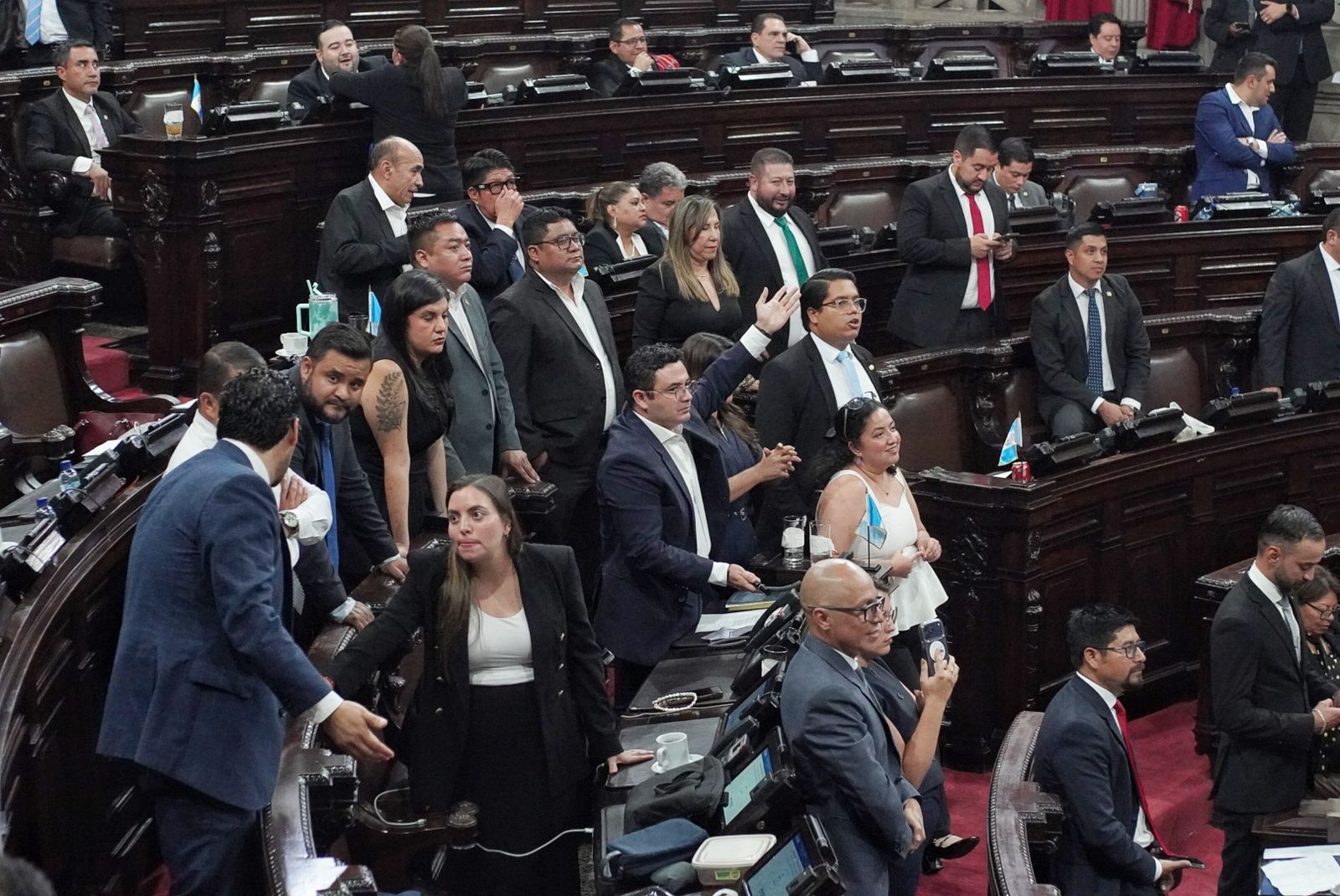
It was Deputy Pérez, joined by the ruling party members who make up the Raíces pro-formation committee, who officially presented before the plenary session the apparent intentions to reform the MP law in exchange for supporting the anti-money laundering law.
“Here it is about seeing who votes against money laundering and who are the launderers,” Pérez said, presenting a verbal motion to prioritize the anti-money laundering law and seeking to prevent another initiative from being included before that one.
Pérez’s suggestion was echoed among the deputies, ensuring that the anti-money laundering law remained a priority, but some legislators distanced themselves by reducing attendance to less than 107, the amount required to be approved.
Among the groups that were presumed to be promoting the reforms, the MP law above the anti-money laundering law is the Todos bloc, but the deputy chief, Byron Rodríguez, rejected these allegations.
“We have demonstrated our vote in favor, it has been circulated that as a party we do not want to support the law against money laundering, which is not true,” the congressman emphasized.
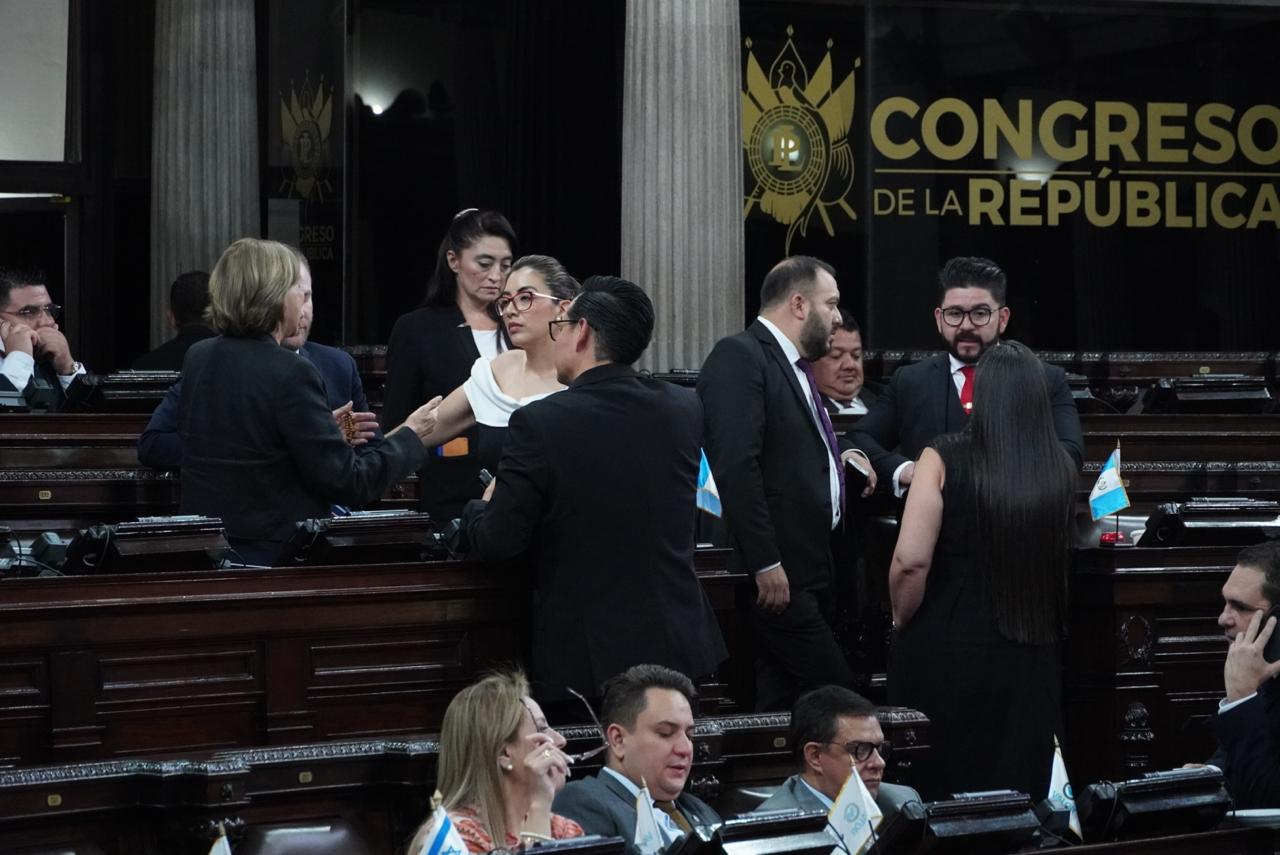
Next, deputy Orlando Blanco, from the Will Opportunity and Solidarity (VOS) bloc, reasoned his vote, asking to explain what issues are being negotiated in Congress and that relate to the MP.
“As a bloc we voted in favor, but we want to know what is being negotiated because they left, they left us two and a half hours waiting, but there is a lot of speculation, MP issues, CICIG issues and even visas,” said.
The third reasoning behind the motion was that of deputy Victoria Palala, a negotiator for the ruling party, close to the president and who seeks to revive the Semilla Movement party.
“Money laundering is not a distant issue, it allows criminal structures to grow, infiltrate and affect the economy,” said the congresswoman, exposing the need to approve the law.
Luis Contreras, president of Congress, did not respond to Blanco’s question, but said that he and the members of the Board of Directors are not going to leave the chamber, even if that requires dawning until the 107 deputies are present to approve the anti-money laundering law.
The initiative
Two years ago, on May 6, 2024, in his first months as president of Guatemala, Bernardo Arévalo walked from the National Palace to Congress.
He was accompanied by his ministers and some of the closest deputies to present an initiative to Congress, with which he sought to fulfill one of his campaign promises: dismiss the attorney general, María Consuelo Porras.
But that proposal did not pass Congress, the negotiations did not favor the president and that campaign offer was relegated while Consuelo Porras continued to serve her constitutional term.
The attorney general will leave office on May 17, not because the Executive achieved its mission, simply because she completed her second term against the MP.
But now the same initiative that Arévalo presented, and which was not successful, is being considered to leave the attorney general that Arévalo is about to appoint vulnerable to the future president.