
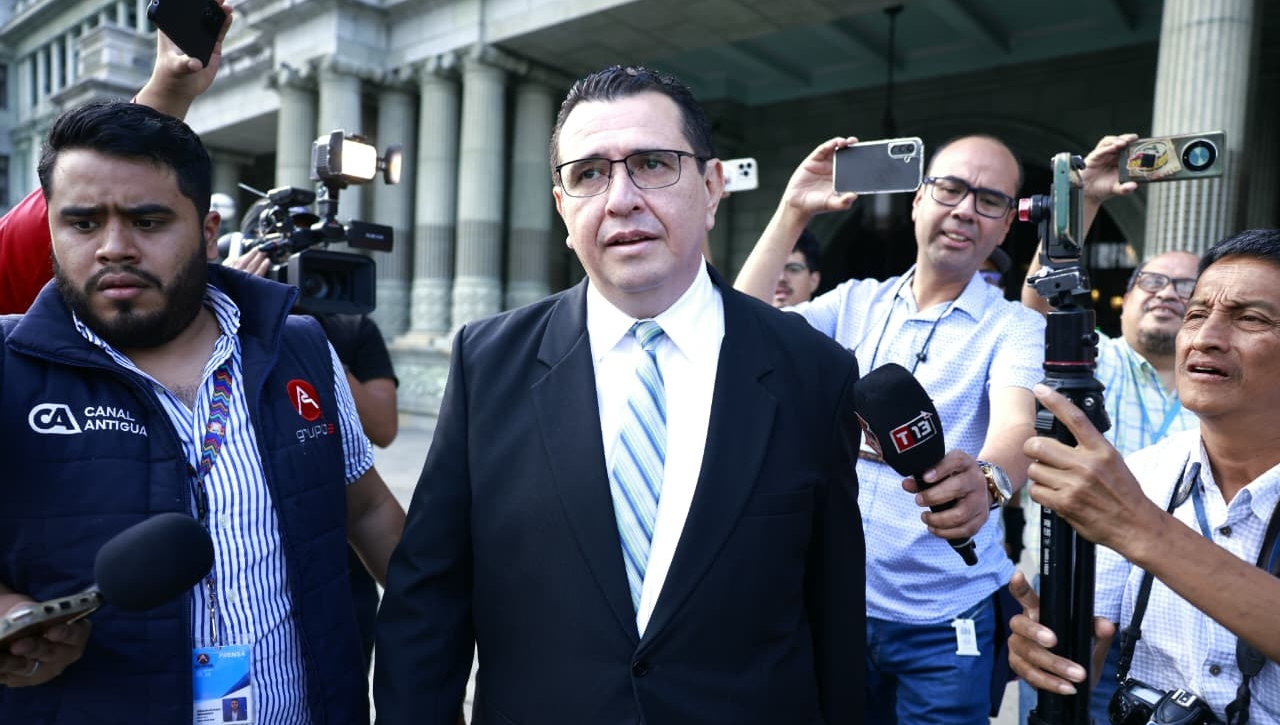
Gabriel Garcia Luna He will take office on May 17 as attorney general and head of the Public Ministry. He indicated that it will be until then that he will grant interviews to delve deeper into his work plan and first actions at the head of the institution.
His plan consists of 14 axes, according to the document that García presented to the nomination committee for attorney general and which he presented during the interview phase.
Regarding the monitoring of complaints, García proposes the dismissal review and the filing of complaints, a route that is chosen when the Public Ministry considers that there is no crime to pursue or there is no evidence to hold the aggressor responsible.
It also proposes the review of the function of the special prosecutors’ offices, according to the results obtained. Among these units is the Special Prosecutor’s Office against Impunity (FECI) and the one that follows up on the disappearance of Cristina SiekavizzaFor example.
Among his proposals, he points out that “There should be no biased or unfounded investigations” to achieve non-selective criminal justice.
In addition, it proposes reevaluating the application of the confidentiality of criminal files. During his presentation before the postulator, on April 6, García indicated that the excessive use of the reserve causes wear and tear on the MP. The function of not disclosing details of the cases has the function of not hindering the investigation and the violation of the victims, he pointed out.
Excessive use of the reserve, misuse of criminal law and a resolution of cases, mainly through dismissal and filing, have been some of the questions regarding the management that Attorney General Consuelo Porras is about to close.
This is a list and synthesis of the 14 axes of Gabriel García Luna’s plan:
- Efficient Administrative Area
Strengthen public administration through adequate selection of personnel, based on meritocracy, and separating administrative functions from fiscal ones. The coverage of the Public Ministry must also be improved with sufficient resources to meet the demand for justice.
- Criminal Policy of the Public Ministry and the State
It is necessary to analyze and link the State’s Democratic Criminal Policy, the Criminal Prosecution Policy and the current regulations of the MP to guarantee its effective application and prevent quantitative results generate impunity.
- Research and fundamental principles
Investigations must be carried out with objectivity, independence, impartiality and autonomy, avoiding biased actions and guaranteeing non-selective criminal justice.
- Litigation and Management Model of Prosecutors’ Offices
Strategic litigation and dejudicializing measures must be applied in accordance with the law. The natural fiscal system must also be strengthened, rpropose special prosecutors and use the reservation of cases only when strictly necessary.
- Transparent tax career
The system of promotions, transfers, training and evaluation must be transparent, with clear rules, prioritizing meritocracy, professional ethics and strengthening human resources.
The members of the Public Ministry must act with adherence to legality and ethical principlesmaintaining prudence both in his duties and in his personal life.
- Supervision and judgment of disciplinary offenses
There must be an efficient and transparent system of internal audit and disciplinary sanctions, guaranteeing the right of defense and accessible mechanisms for citizen complaints.
Permanent training programs must be implemented for Public Ministry officials, in accordance with their functions and specialties.
- Technology and special units
The use of technological tools within the legal framework will allow improve criminal investigation and prosecution capacity.
All actions of the Public Ministry must respect human rights and the Constitution, without affecting criminal investigations.
- Violence against women
It is necessary to reevaluate the specialized structure on violence against women to improve prevention and guarantee a real impact on the protection of victims.
- Protected legal assets and vulnerable groups
The Public Ministry must investigate all crimes, especially those that affect vulnerable groups and high-impact crimes, guaranteeing effective responses and robust court processes.
- Transnational crime and regional cooperation
Guatemala must strengthen cooperation and communication mechanisms with countries in the region to confront transnational crimes such as drug traffickingor, human trafficking and weapons smuggling.
Constant monitoring and emotional support must be implemented for Public Ministry personnel, due to the psychological impact generated by its functions.