
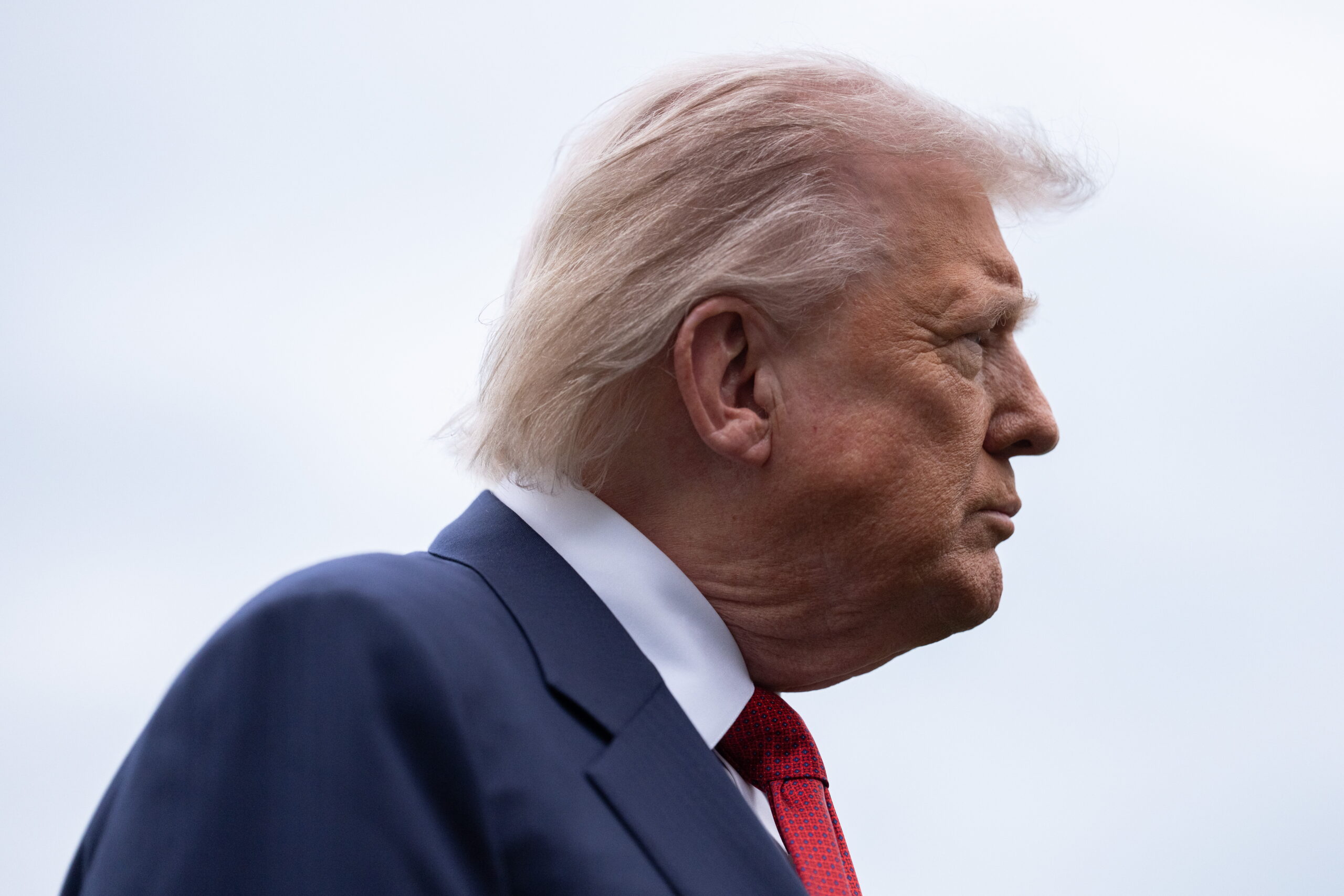
The official confirmation comes two days before the start of the trip, after the White House had placed the visit around those dates and Beijing, as is usual in this type of event, had not confirmed it until this week.
The trip takes place after trade truce agreed by both leaders in October in the South Korean city of Busan and will be preceded by the trade negotiations that the Chinese Vice Prime Minister He Lifeng and the US Secretary of the Treasury, Scott Bessent, will hold this Wednesday in Seoul, in a context marked by the tariff and technological tensionsTaiwan and the war in Iran.
The visit will be the first by a US president to China since the one Trump himself made in 2017, during his first term, and comes at a time of fragile stability between the world’s two largest economies, after months of tariff war that amounted to a ‘de facto’ trade embargo.
Trump had already planned to travel to China at the end of March, but the trip was postponed after the president stated that he had to remain in the United States to manage the war launched by Washington and Israel against Iran.
The Chinese ambassador to the UN, Fu Cong, recently warned that, if Hormuz was still closed during Trump’s visit, that issue would be “inevitably at the center of the talks,” and Iranian Foreign Minister Abbas Araqchi visited China last week, where he met with his counterpart. Wang Yi.
Trump himself stated last week that he will speak with Xi about Iran and maintained that the Chinese leader has been “very kind” regarding a conflict that directly affects China’s energy needs, largely dependent on supplies from the Persian Gulf.
Condemns attacks
Beijing, Tehran’s main trading partner, has repeatedly condemned the attacks by the United States and Israel against Iran and has defended a solution through dialogue, although it has also stressed the need to respect the sovereignty and security of the Gulf countries.
The trade agenda will remain, however, at the center of the meeting, after the Busan truce reduced part of the tariff pressure, allowed Chinese purchases of American agricultural products to be reactivated and partially alleviated Chinese restrictions on rare earths.
In March, He and Bessent led a two-day “constructive” round of trade talks in Paris that also included U.S. Trade Representative Jamieson Greer.
In those talks, delegations addressed rare earths, US trade deficit, possible Chinese purchases of agricultural products, energy and aircraft, and the creation of a kind of “trade board” to manage bilateral exchanges.
The visit also comes marked by technological rivalry, after Washington strengthened export controls on advanced chips used in artificial intelligence and China accelerated its self-sufficiency efforts in semiconductors and other critical components.
Added to these issues is Taiwan, whose sovereignty China claims and which Beijing considers the core of its fundamental interests and the political basis of the relationship with Washington.
The US Secretary of State, Marco Rubiorecently announced that “it will be a topic of conversation” during the meeting between Trump and Xi.