
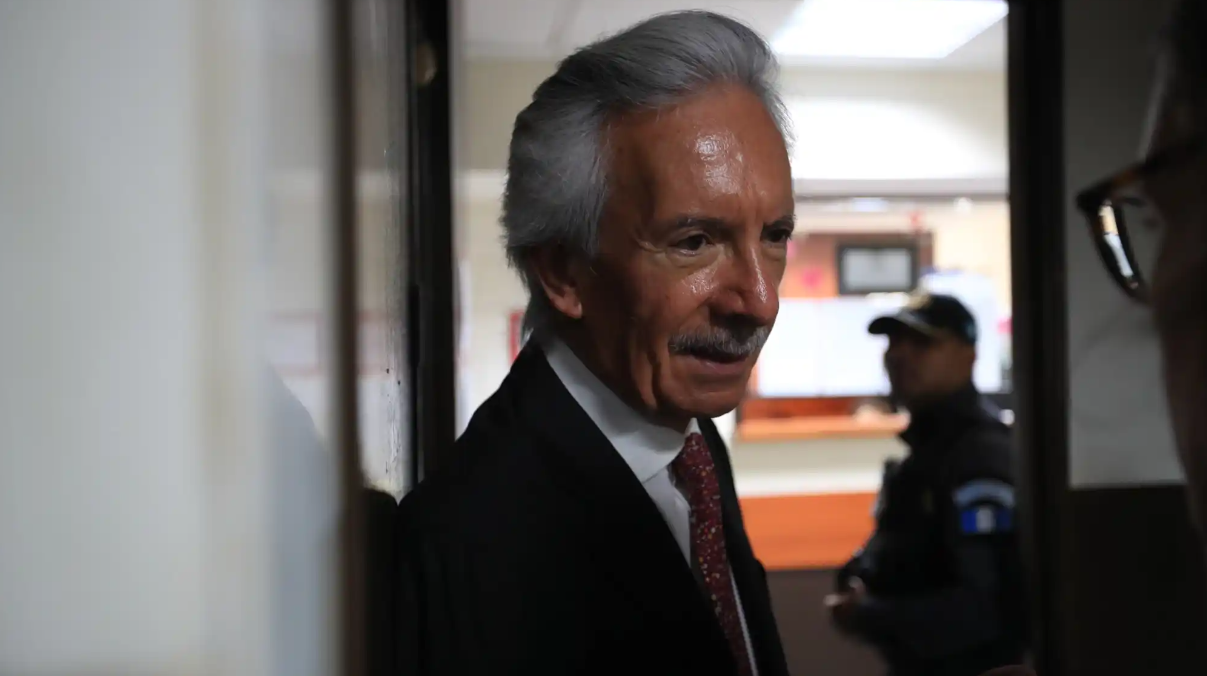
On May 11, journalist Jose Rubén Zamora published a thread on his X account in which he warned about an alleged attempt to criminalize the publications of elPeriódicohalf of which he was director.
“Journalism is not a crime. Communiqué in light of the new attempt to criminalize journalistic publications of public interest,” Zamora wrote.
He added: “Given the new intention of the Public Ministry (MP) to promote an arrest warrant against me for events related to journalistic publications in 2021, I consider it necessary to express the following to public opinion.”
According to the journalist, the MP has already identified him as accused within a new criminal prosecution that “lacks serious legal basis and that constitutes an act of criminalization against the exercise of journalism and the dissemination of information of public interest.”
Zamora stated that, as has been made known, the investigating entity intends to attribute criminal responsibility to him for the publication of a note related to the case known publicly as “the magic carpet”, published by elPeriódicoby maintaining that there was an “alleged disclosure of confidential or reserved information.” However, this statement “does not find support in the criminal offenses in force in Guatemala.”
“First, the crime of disclosure of confidential or reserved information, regulated in article 67 of the Law on Access to Public Information, requires, objectively, that the information has been revealed by a public servant, official or employee who has knowledge of it by reason of their position, or by a person who has a specific legal obligation to maintain confidentiality or confidentiality. This rule was not created to persecute journalists, media outlets or people outside the public administration who receive or disseminate information of public interest,” he argued.
Zamora stated that the publication of a journalistic article does not automatically turn the journalist or the media into an active subject of the crime, especially when there is no prior legal obligation of confidentiality nor is it proven that the information was formally and legally classified as confidential in accordance with the law.
He explained that the crime of revealing State secrets, regulated in Article 366 of the Penal Code, is also not applicable, since said criminal offense was conceived to protect information linked to State security, military operations, fortifications, strategic material or matters of national defense. “Attempting to extend this criminal figure to journalistic publications related to investigations of public interest constitutes an extensive interpretation and contrary to the principle of criminal legality,” he stressed.
“The note published by elPeriódico It did not contain military, strategic or national security information in the terms required by article 366 of the Penal Code,” Zamora added.
He added that Guatemalan criminal law is governed by the principle of legality and strict typicity. “This means that no person can be criminally prosecuted when their conduct does not fit clearly, precisely and accurately within a criminal offense previously established by law. In this case, the attributed conduct does not satisfy the objective elements of any of the aforementioned crimes.”
“The exercise of journalism and the publication of information of public interest cannot be confused with criminal acts. Doing so represents a serious risk for freedom of expression, freedom of the press and the citizen’s right to be informed, rights protected by the Political Constitution of the Republic of Guatemala and by international human rights instruments,” the journalist warned.
According to Zamora, the use of criminal law to persecute journalists or criminalize publications constitutes a disproportionate measure and incompatible with democratic standards and with inter-American jurisprudence on freedom of expression.
“I categorically reject any accusation that seeks to present as a crime an activity protected by fundamental constitutional guarantees, and I publicly denounce that this new attempt at persecution lacks a typical and legitimate legal basis,” he indicated.
On April 29, Judge Maximino Morales postponed the intermediate hearing of journalist José Rubén Zamora due to a pending challenge that must be resolved by the Third Court of Appeals. The new hearing was scheduled for May 28.
On February 17, the MP appealed the judicial resolution that granted house arrest to journalist José Rubén Zamora Marroquín, 69 years old. The appeal was transferred to the Third Court of Appeals of the Criminal Branch.
Zamora Marroquín, founder of the newspaper elPeriódico, He left the Mariscal Zavala military prison on February 12, after spending 1,295 days in prison. preventive.
Zamora was arrested in July 2022, days after publishing investigations into alleged acts of corruption in the environment of former president Alejandro Giammattei.
Following Zamora’s statements, the MP was asked for his position, and a response to the request is awaited.
Stay up to date with the Now newsletter. Key information at the moment it happens. Subscribe here.