
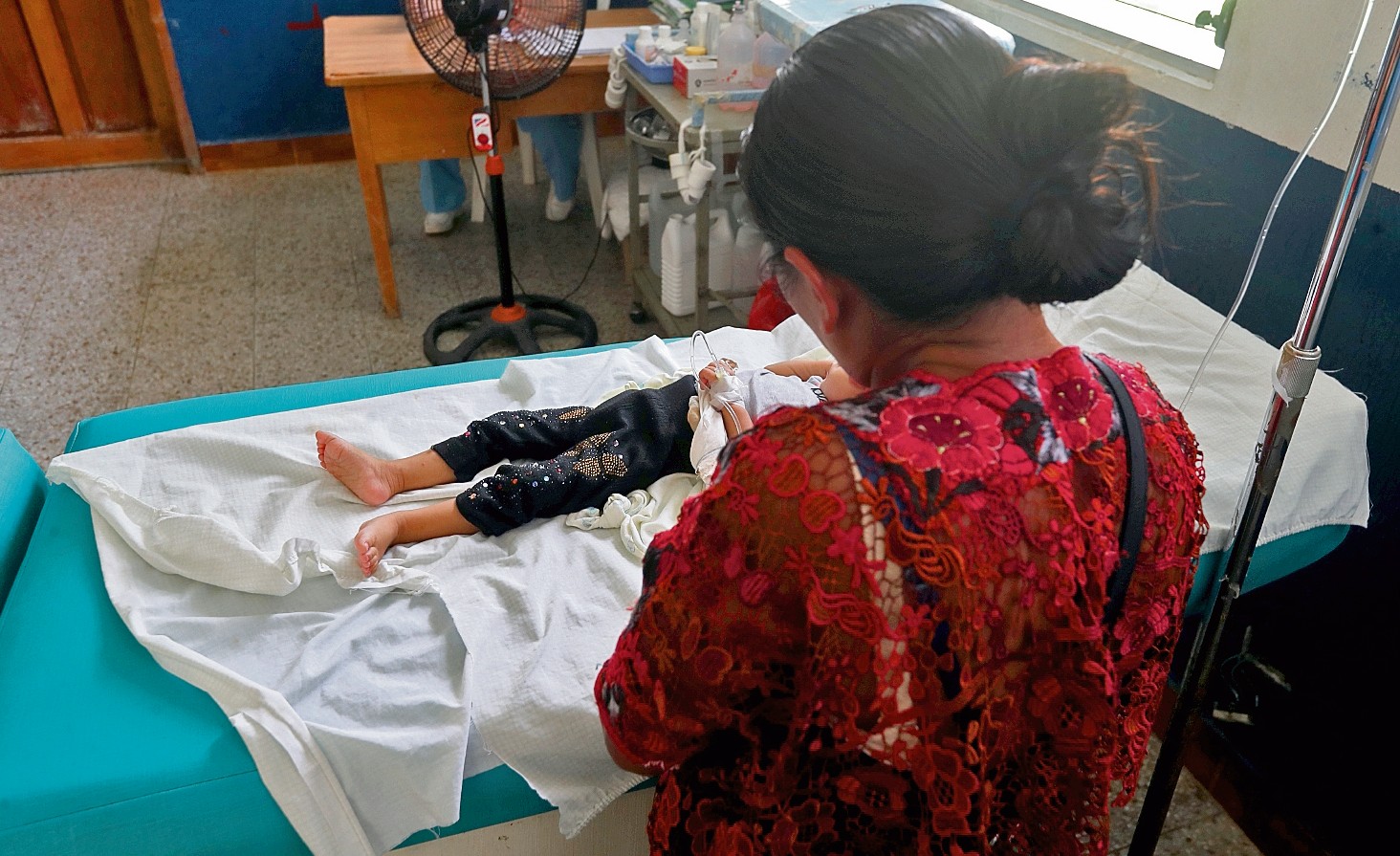
A follow-up analysis 75 deaths from acute malnutrition of children under five years of age during 2025 reveals that failures in detection and medical care, added to food insufficiency, other diseases and congenital conditions, contributed to these deaths.
“Acute malnutrition, if it is not treated in a timely manner, if all efforts are not made to recover the child adequately, can end in death or chronic malnutrition,” says Mireya Palmieri, head of the Secretariat of Food Security (Sesán).
Sesán analyzed the obstacles and delays that can lead to a child with acute malnutrition dying. The report Comparison of the epidemiological burden of acute malnutrition cases: morbidity and mortality in the period 2024-2026 evaluates the result reached by the technical table of the Ministry of Health to establish whether or not said condition was the direct cause of the death.
As of May 2, nine children under the age of five have died from acute malnutritionaccording to official reports, while it is determined whether another 30 deaths are related to that condition.
The failures
The study concludes that in 24% of the cases in the home there were lack of recognition of the “risk or problem” of health that the children faced. This delay occurs because the family fails to recognize, due to lack of information, the seriousness of the situation.
According to the Sesán analysis, children with acute malnutrition, especially in severe cases, are very vulnerable because their defenses are low and their body is weakened. Loss of appetite or an additional illness often worsens the condition, but parents ignore it.
In another 24% of cases, despite recognizing the seriousness of the child, the problem was delay in deciding whether or not to seek medical support, since the health of a minor in these conditions can deteriorate quickly. At this point, it was not reported that the delay was related to difficulties in transferring or accessing the posts or care centers.
Palmieri indicates that the ability of mothers to recognize the emergency must be improved, that when their children have diarrhea they can become malnourished and that they should seek timely care. They must also be taught that when they get sick, it is common for them to lose their appetite, but it is important that they know the dietary management of the sick child.
It is the primary care health services that must be in charge of this educational part aimed at mothers, to avoid tragedies due to acute malnutrition.
The greatest difficulty in the chain of preventing the death of children with severe acute malnutrition occurs in health services. In 43% of the cases, the main failure was in the care that the minors received; However, the Sesán report does not specify what these obstacles and delays are to prevent children from dying.
In 9% of the cases it was not possible to specify whether there were difficulties or delays on the part of the parents in recognizing the risk in which the infant was, in the transfer to the services or if the child did not receive timely care.
Where did they die?
The data on the failures in health services to care for children who arrive with acute malnutrition is complemented by the place of occurrence of the deaths.
The record of the Directorate of Epidemiology and Risk Registry, of the Ministry of Health, analyzed by Sesán, indicates that three quarters of the deaths in 2025 occurred in centers in the public service network. While 16% occurred at the child’s home, 4% died in a private hospital, 3% on public roads and 1% in units of the Guatemalan Social Security Institute (IGSS).
Of the 75 minors who died last year, the main causes were septic shock, hypovolemic shock and pneumonia, which require a “high capacity for intensive management” of the cases.
If three out of four deaths occurred in services of the public health network and the most frequent delay was related to failures in care, It is demonstrated that the health system has great challenges to improve its response and resolution capacity in cases of acute malnutrition and prevent the death of children, according to the Sesán analysis.
María Ramos, coordinator of the Consultation and Social Participation Instance (Incopas) until 2025, indicates that acute child malnutrition should not be analyzed only as a last-stage medical event, without considering all the previous failures that led the child to that condition, since it is the result of multiple accumulated vulnerabilities: poverty, repeated illnesses, lack of food, lack of monitoring and weakness of health and social protection systems.
He questions whether the responsibility falls only on the parents or on the last health service that treated the minor, since These children have usually spent months with warning signs and contact with different institutions without receiving an adequate response.
Furthermore, he states that the problem is not a lack of resources, but rather the absence of commitment, coordination and preventive actions. Consider that each case of acute malnutrition reflects a collective failure of the state and society to protect children and guarantee early and timely care.
Deaths 2026
The Ministry of Health report indicates that, As of May 2, nine children under five years of age were confirmed dead. as a consequence of acute malnutrition. 77% of the deaths occurred in January.
The deaths are distributed in five departments: Chiquimula and Escuintla, with one case each; Huehuetenango and Petén, with two, respectively, and Alta Verapazwhich accumulates three.
These cases were confirmed by a technical panel that received 60 reports of deceased children under five years of age, in which malnutrition appears as one of the causes. After performing the analysis, 21 deaths were ruled out and another 30 are pending analysis.