
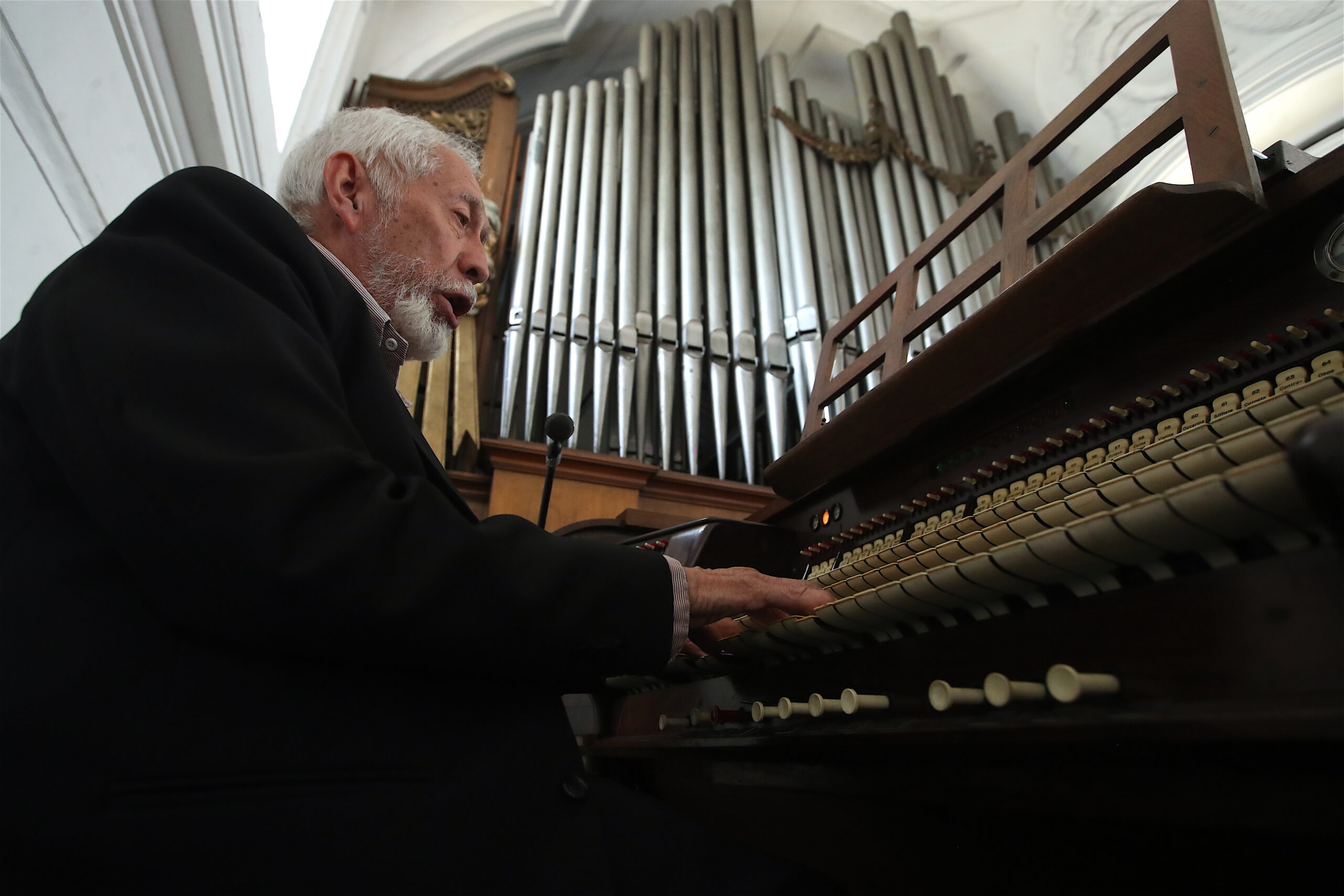
An instrument that has been struggling for centuries to adapt to new times, the evolution of sounds and musical tastes, and refuses to be relegated to being a decorative element, although it is increasingly difficult to remain current.
Although its origin is somewhat difficult to clarify, the organ is such an ancient instrument that in some texts its existence is mentioned even before the birth of Jesus, while others place it in the first centuries of the Christian era.
“Since the 9th century, good organs were built in Fresing, Germany, and around this time they began to spread throughout Europe. In the 10th century they were introduced into temples when the art of polyphony of the organum and diphonia was born, which seems to develop simultaneously with the capacity of the instrument until reaching the construction of monumental organs in the main European churches, projecting itself in Spain, where it radiated to the New World,” quotes Luis Fernando Urquizu Gómez in his thesis. The organ as a musical instrument and work of art in Guatemalafrom the University of San Carlos of Guatemala.
For many decades, its use was mainly religious, but in modern times the organ enlivened the projection of films during the silent film era, in addition to also establishing itself in concert halls, mainly in Europe and the USA.
The man and the machine
Héctor Raúl Padilla has been the principal organist of the Metropolitan Cathedral for more than two decades.
Getting to the instrument requires climbing narrow stairs, crossing many doors and going through a hallway that few people know about. Upstairs, far from the bustle of the masses and the murmur of the parishioners, the organ waits. Three keyboards, a bottom bracket that you play with your feet and a sea of tubes hidden in a dark room behind the instrument.
Flutes of different sizes, some the thickness of a pencil, others so large that they go almost from floor to ceiling. Everything is connected by a system of bellows, levers and mechanisms that time and humidity slowly wear down.
The organ of the Metropolitan Cathedral was manufactured in 1937 by the German company EF Walcker & Cie Ludwigsburg. It is romantic baroque, a classification that, according to Padilla, alludes to the incorporation of sounds typical of the time in which it was built.
The teacher comments that 50 instruments were made from that series. Several remained in Germany, one went to South America and another to the United States. The one from Guatemala arrived at the Cathedral and, according to Padilla, it is the only one of that series that continues to operate today on the continent.
“This instrument was once called, and some still call it the same, ‘the king of instruments’, because here you have an entire orchestra,” he says, while reviewing the records with the familiarity of someone who has spent more than two decades in front of the same keys.
What comes out of the organ is not an imitation of other instruments, he clarifies. And the organ is a wind instrument, but with completely different learning and execution techniques. Each of its tubes has its own sound that can imitate the sound of “an entire orchestra,” he says.
The last formal maintenance that the instrument received from the factory was 20 years ago, when Gerald Walcker, a descendant of the founders, arrived. He spent 16 days working and, since then, time has done its thing.
The only functional tubular organ in the country survives thanks to the hands of a few musicians.
Free Press Photo: Esbin García
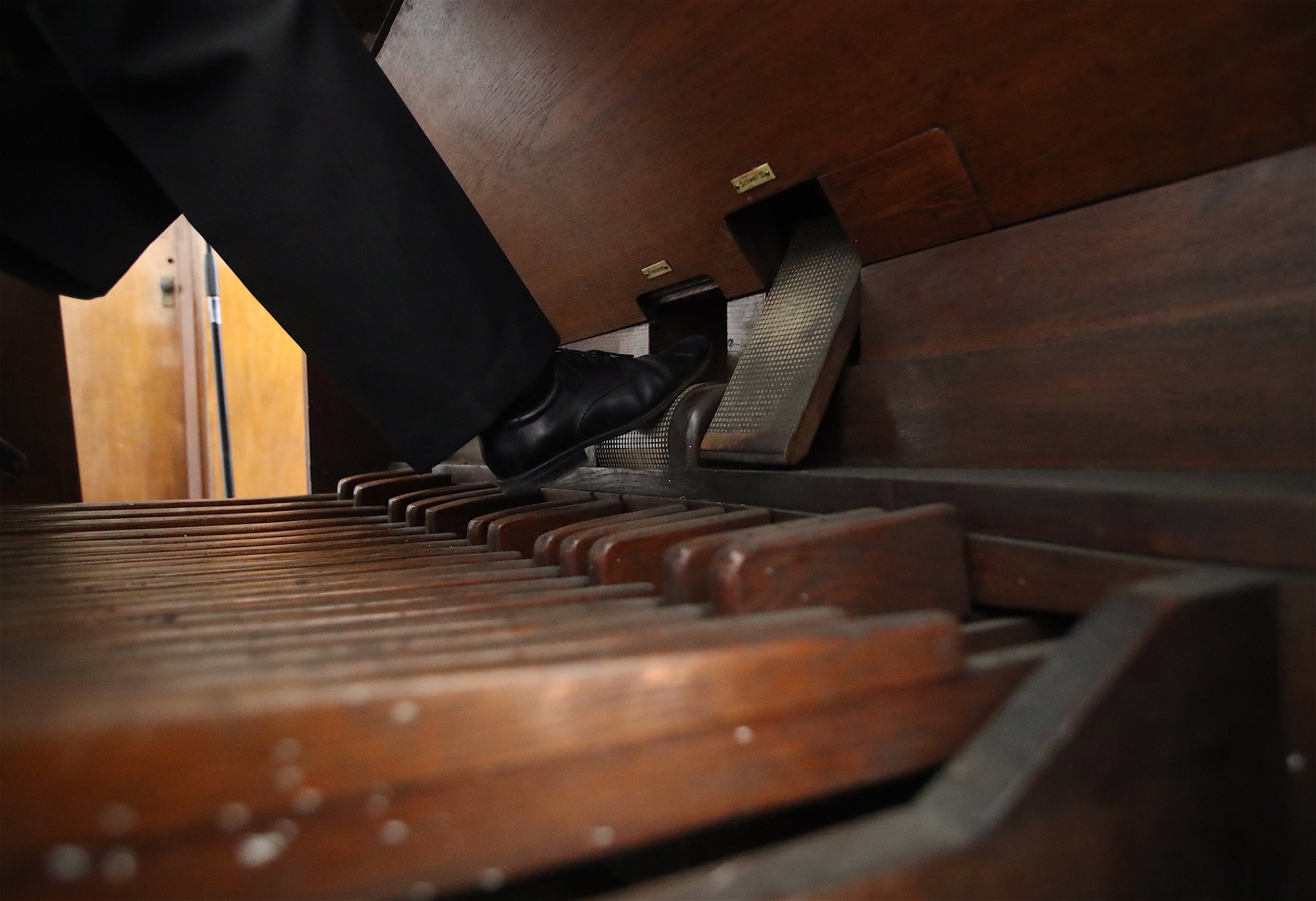
The organ requires agility of feet and hands to interpret a melody.
Free Press Photo: Esbin García
religious instrument
The organ is the instrument of liturgy par excellence in the Christian West. In fact, the constitution Sacrosanctum Concilium on the Sacred Liturgy of the Second Vatican Council dedicates number 120 exclusively to this instrument, establishing: “The pipe organ is held in great esteem in the Latin Church, as a traditional musical instrument, whose sound can bring notable splendor to ecclesiastical ceremonies and powerfully lift souls towards God and towards heavenly realities.”
Nery Racancoj is a Musical Education teacher and church organist. He learned to play from his father, who was an organist in the Salesian parish of Divina Providencia, in the Guarda Viejo neighborhood, zone 8 of the capital, where an Italian-made tubular organ still exists. What he remembers most clearly from his childhood is putting his hand between the keys when his father played, just to hear what it sounded like.
For Racancoj, the link between the organ and the Catholic faith is neither accidental nor decorative, but theological. “It precisely projects the spirituality and historical originality of Catholicism specifically,” he says. And he adds that the parishioners have told him directly: that when they hear the sound of the organ they feel that the prayer becomes more intimate, more collected.
It was precisely that sacredness of the instrument that made its arrival in Guatemala almost inevitable.
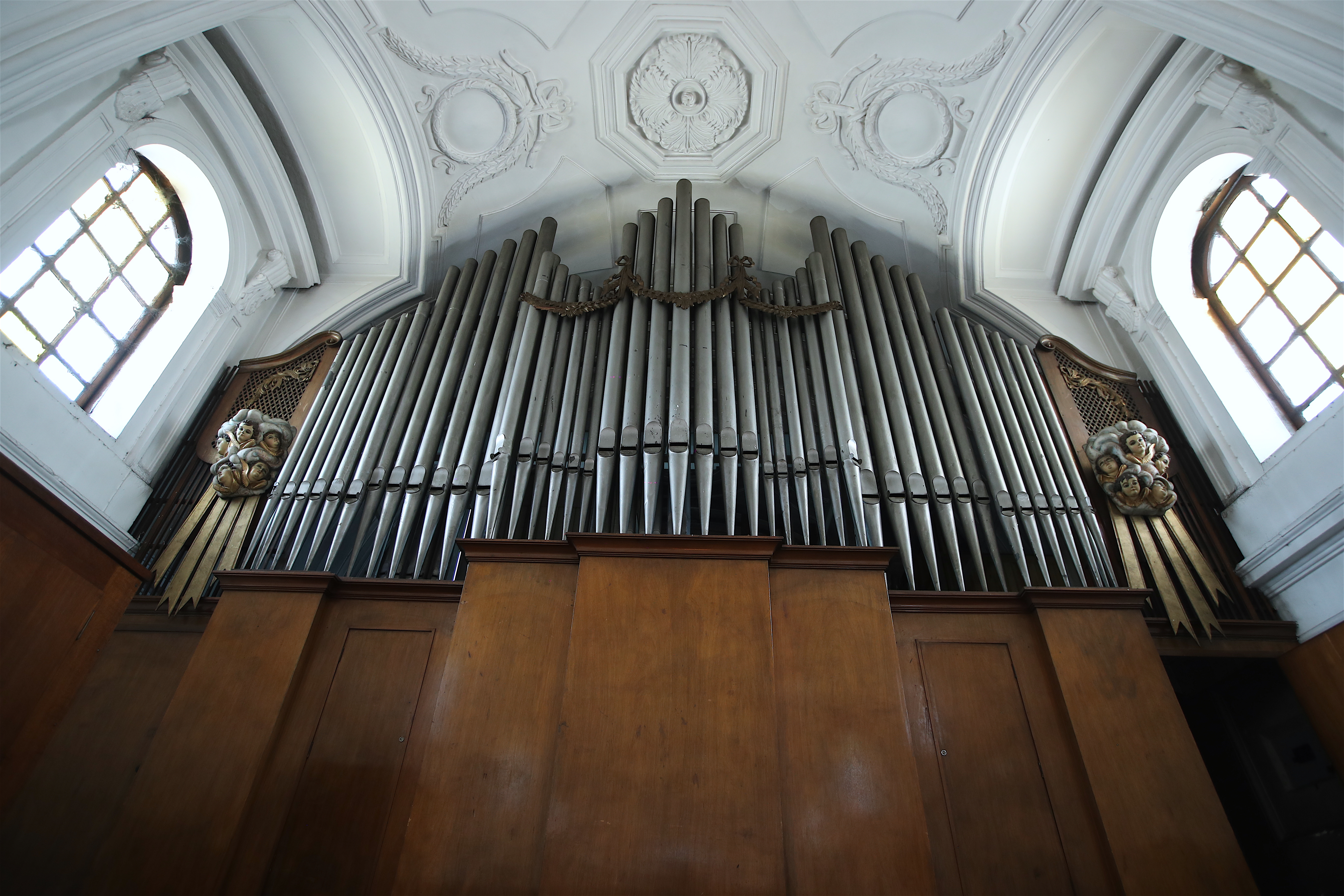
While churches change speakers for horns, the tubular organ struggles to continue playing in Guatemala.
Free Press Photo: Esbin García
The organ on Guatemalan soil
With the Spanish conquest in 1524 also came the first builders and, eventually, the first organs. Every cathedral, every important church was equipped with one. This is how Martín Corleto, director of the Germán Alcántara National Conservatory of Music, remembers it: “You visit our churches in Antigua and even in Quetzaltenango (…); you will still find organs.”
Among the chapel masters who arrived with the Colony, all of them organists and musicians trained in Spain, names such as Gaspar Fernández, Pedro Bermúdez and Rafael Antonio Castellanos stand out, according to Urquizu’s thesis.
The latter fulfilled a task that Guatemalan musical history remembers in detail: when the earthquake of July 29, 1773 forced the transfer of the capital from the Panchoy valley to the La Ermita valley, Castellanos was in charge of dismantling the organ of the Cathedral of the then city of Santiago de los Caballeros — today, Antigua — and transporting the pipes by cart to the new city. He also took care of reassembling it into the newly built Cathedral.
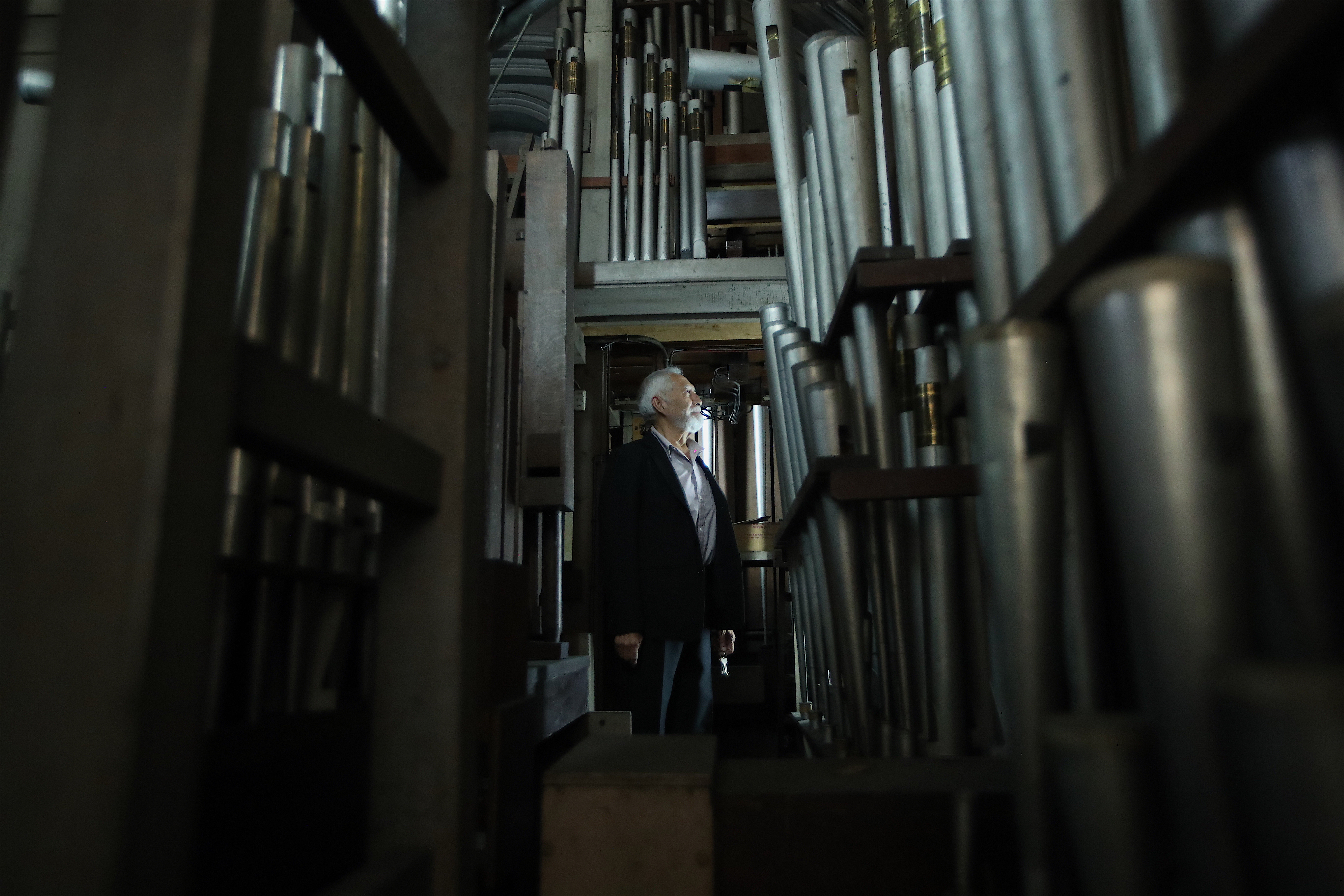
The pipes hidden behind the organ form a monumental machinery that deteriorates over time.
Free Press Photo: Esbin García
The fall of the king
But reigns don’t last forever. The organ’s decline was neither sudden nor exclusive to Guatemala. It was, according to Corleto, a global, technological and cultural phenomenon that developed in stages.
First came the change in musical taste. The polyphony, for which the organ had been designed, was giving way to homophonic music: a melody accompanied by an instrumental group.
The piano replaced the organ as the king of instruments, and with it came Frédéric Chopin, Franz Liszt, Johannes Brahms and a whole tradition of composers who redefined what classical music meant.
“The reign of the organ began its decline around the middle of the 18th century, early 19th century,” explains Corleto. Then came the electrical revolution. The amplifiers, the speakers, the portable Hammond organs that popularized the sound of the instrument in homes during the first half of the 20th century.
Finally, the synthesizers and digital keyboards that can be found in any music store today ended up democratizing sound and making the pipe organ obsolete for most churches and families. “It’s more common to see speakers in churches than a functional organ,” says Corleto.
In Guatemala, this process had an additional dimension with another instrument: the guitar. This was more practical and more versatile and began to take its place.
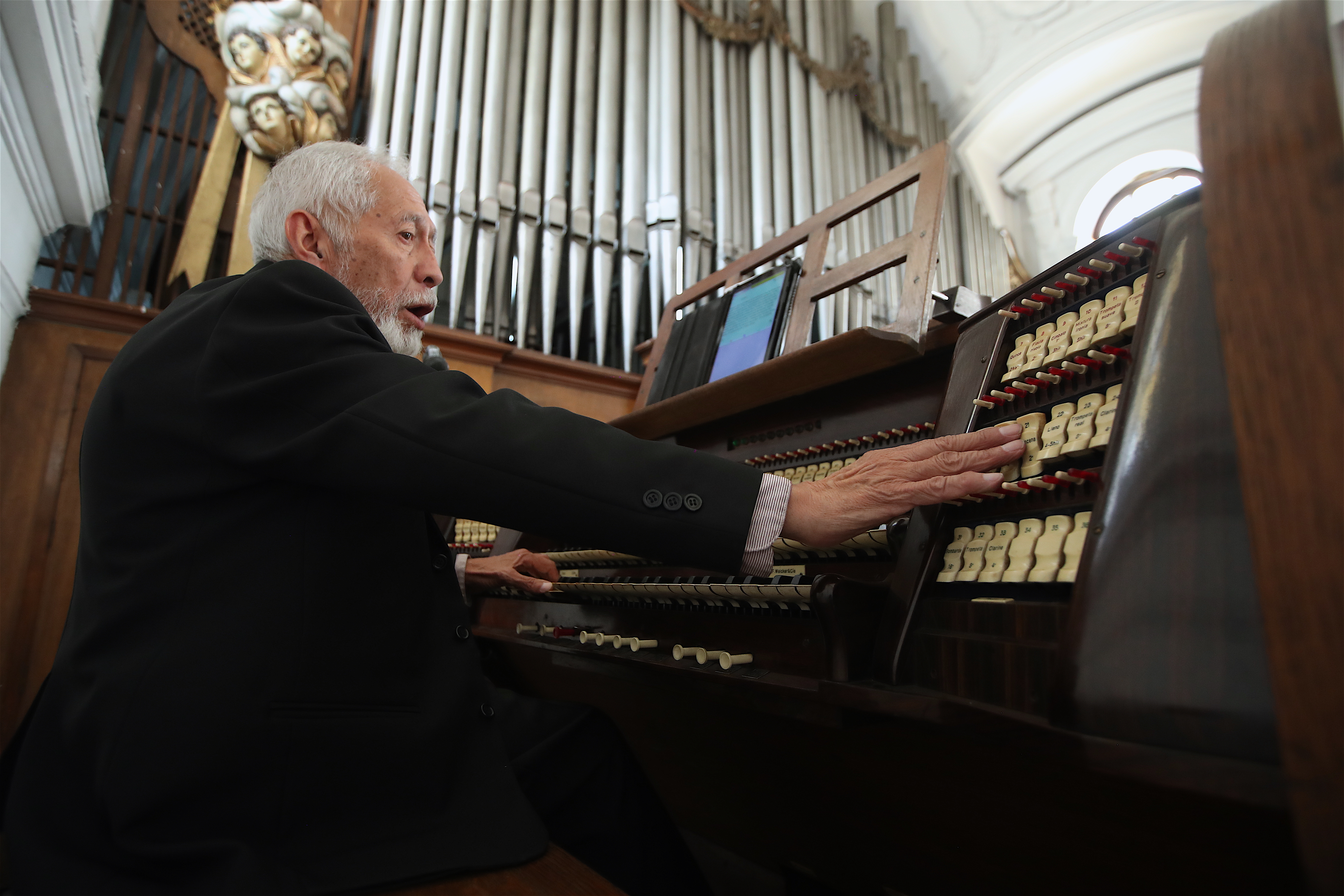
The instrument that dominated sacred music for centuries today faces the risk of oblivion in Guatemalan churches.
Free Press Photo: Esbin García
A job that goes out
The Germán Alcántara National Conservatory of Music has not had an organ chair since 1968. Corleto confirms that, since the 70s, the instrument stopped being taught regularly. The curriculum trains pianists and the organ does not have as much weight in that vision.
The problem for Padilla is the lack of instruments so that interested parties can approach them. “Because we had few instruments, the hobby did not grow, but the other way around. The population has grown enormously and the churches with organs remain the same.”
The last great Guatemalan organist of whom there is a clear record is Elías Blas, a figure from the first half of the 20th century who, according to Padilla, was his own teacher and from whom he learned the fundamentals.
After him, the chain became thinner, and today there are very few who know this instrument.
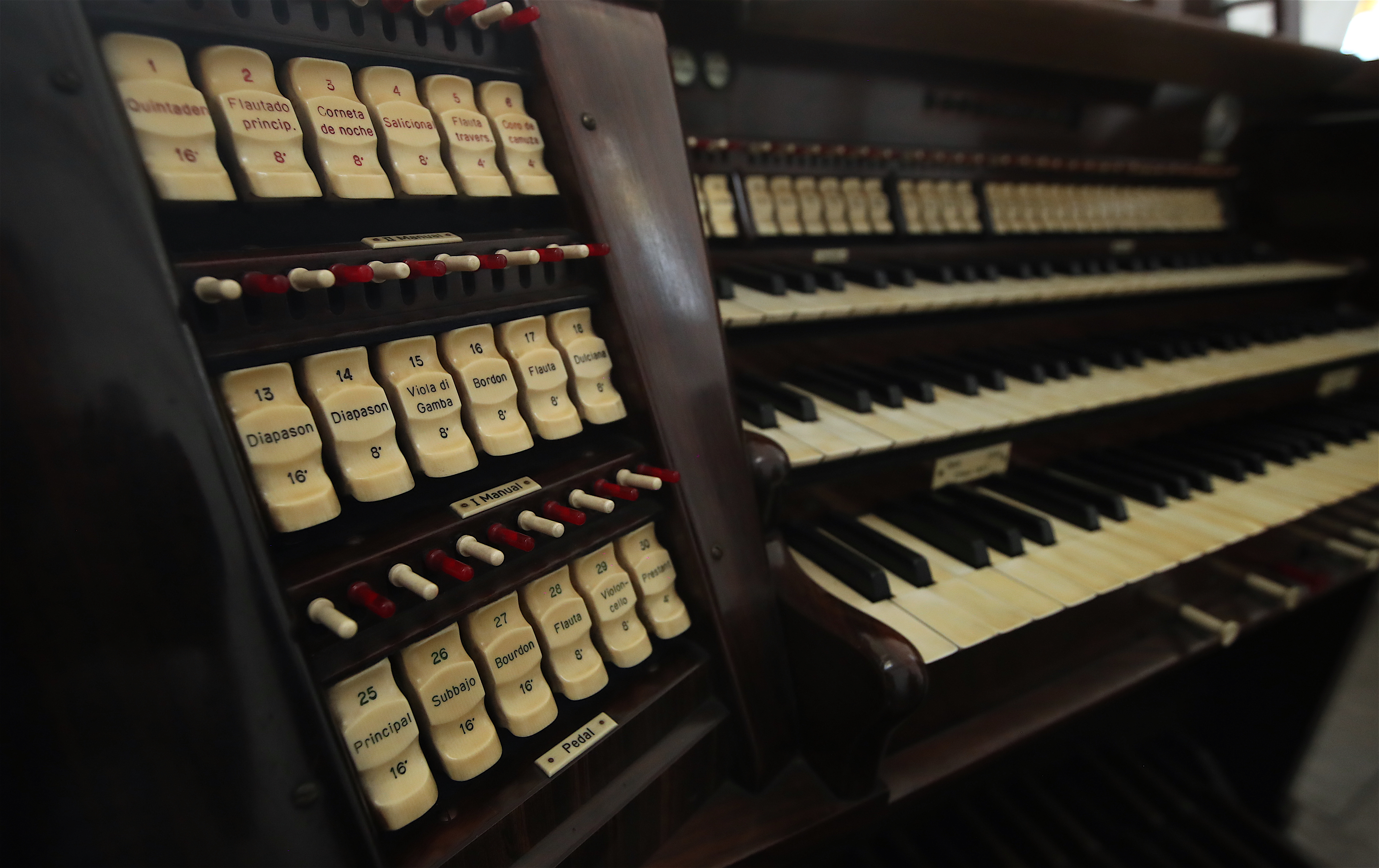
The Cathedral’s organ was built in Germany and belongs to a historical series that has almost disappeared.
Free Press Photo: Esbin García
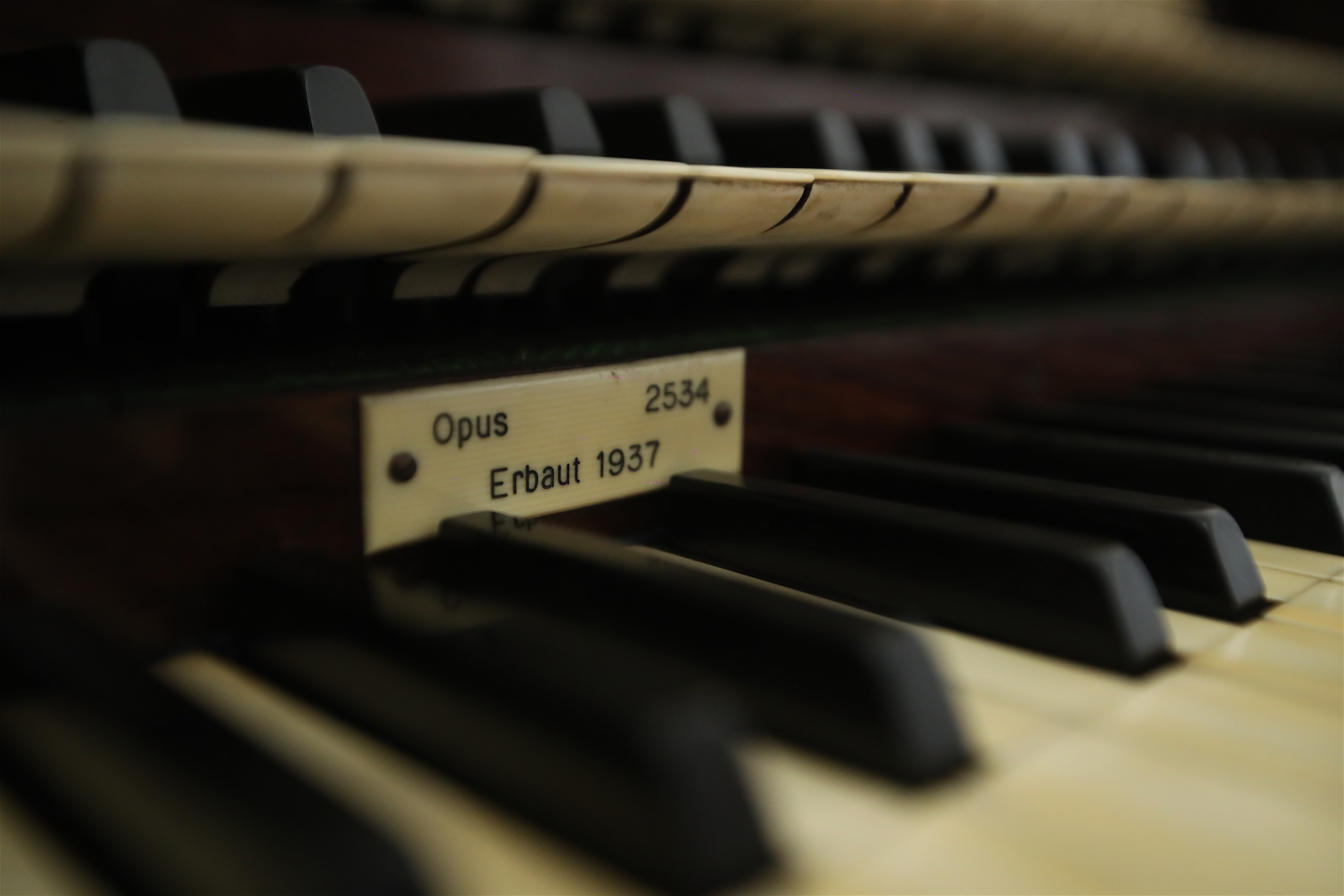
The historic German organ from 1937 still works in Guatemala thanks to the work of its last performers.
Free Press Photo: Esbin García
The sound that doesn’t give up
And yet, the instrument is not dead. Padilla says it with the calmness of someone who has been listening to others’ doubts about the future of the organ for more than two decades: every Sunday, when parishioners enter the Metropolitan Cathedral, some do so precisely to hear it. There are those who look for it, those who sit on the benches and look up.
Corleto also sees signs of a renaissance, although in spaces different from those of yesteryear. The organ has moved from the church to the concert hall. From sacred music to social networks, where young performers around the world play arrangements by contemporary composers, such as Hans Zimmer, in front of thousands of spectators. “The organ is taking on a new role. What is happening is that it is taking on a role in other spaces,” beyond the sacred.
In Guatemala, the recovery of the instrument would require international cooperation. According to Corleto, “a serious rescue initiative should involve a comprehensive cooperation plan with other countries, with other specialists. North American, Central European. The countries that have been rescuing the discipline of the body,” he says.
Padilla, for his part, believes that the answer begins with something simpler: that people listen. “Many people say: ‘I loved this piece, I had no idea.’ But they heard it once and then they keep looking for it and they’re already fond of it.”
The contribution of this instrument to music and, specifically, to sacred music has been immense. Although it is not a dead instrument, as Corleto mentions, its role has changed.
It is no longer found in temples, but in concert halls. There are electric and portable ones. Meanwhile, the king will continue on his throne, although there are fewer and fewer people who know how to interpret him.