
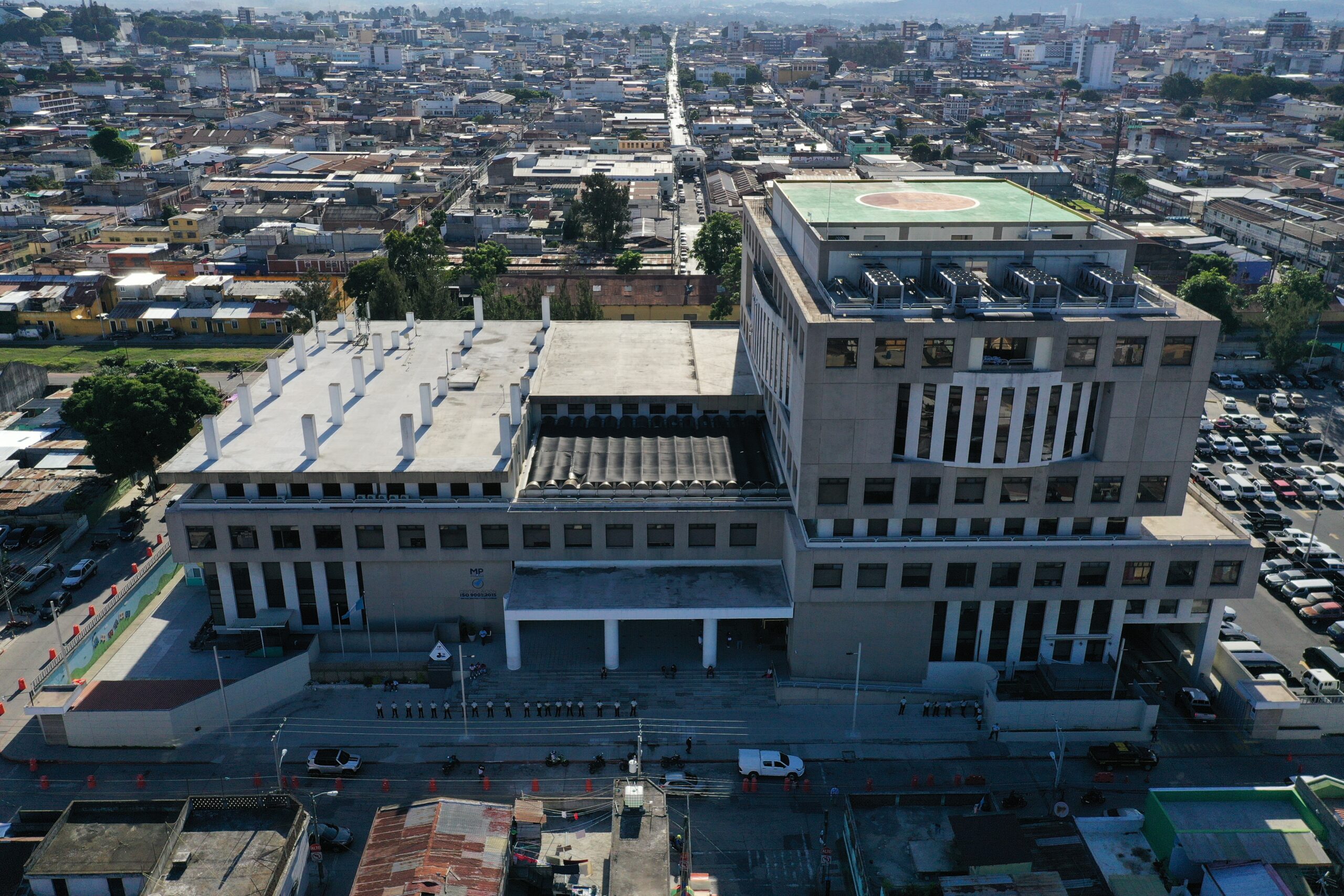
The relay in the Public Ministry (MP) It will not only involve the takeover of the institutional leadership, but also a review of the functioning of the prosecutor’s offices considered strategic for criminal prosecution, responsible for investigating complaints and cases that daily reach the justice system and affect the population.
In the midst of reviewing the results and operation of the outgoing management, the analysis of what comes next for the MP is divided into two fundamental axes: the necessary restructuring of the section prosecutors’ offices and the definition of the future of the Special Prosecutor’s Office against Impunity (Feci).
Analysts consulted agree that a review stage is opening in which the new attorney general, Gabriel Garcia Lunamust evaluate the performance, independence and internal structure of different prosecutor’s offices before deciding on possible changes in leadership or rotations.
With the arrival of another administration, the new leadership inherits an MP whose operation is under scrutiny.
Prosecutors under review
For experts, the internal movement of prosecutors’ offices should not respond to discretionary or political decisions, but rather to a need for control and institutional strengthening.
Mynor Melgarformer secretary general of the MP, maintains that the new prosecutor must surround himself with profiles aligned with the vision of work that he will promote in critical areas such as Narcoactivity, Corruption and Money Laundering, given that these sections mark the strategic line of criminal prosecution.
“They do require that he appoint people he completely trusts,” he stated. Although he pointed out that in other prosecutor’s offices there could be a more gradual evaluation process.
In a similar vein, Javier Monterroso, former private secretary of the Prosecutor’s Office, emphasized that the rotation must be “surgical and differentiated.” On the one hand, it proposes a qualitative and quantitative evaluation for the majority of section heads; On the other hand, it advocates for the immediate removal of those prosecutors whose public performance has been noted for criminalizing opponents, students and indigenous leaders, citing the specific cases of the prosecutor’s offices of Cultural Heritage, Organized Crime and unity against Corruption.
This debugging approach finds a technical nuance in the position of Kevin Lopezanalyst of the Association of Research and Social Studies (Asies), and Jose Carlos Ortegaexecutive director of Institute of Services to the Nation. Both warn that the rotation should not be arbitrary or destructive to the prosecutor’s career.
López proposes that, prior to any change, an evaluation be carried out that transcends the administrative and focuses on real investigative effectiveness. Define how many cases achieve sentences and how many are lost in the file.
Ortega agrees that, in highly specialized prosecutor’s offices, the permanence of technical staff is vital to not weaken the fight against crime, as long as they operate under standards of professionalism and depoliticization.
“It is not mandatory. There are different types of prosecutor’s offices and those that are very specialized, why make a rotation? If it is going to be detrimental to the investigation and detrimental to the fight against crime,” he stated.
However, Ortega stressed that no prosecutor’s office should be left out of evaluation and considered it “essential” that the new prosecutor carry out “a diagnosis of the functioning of the prosecutor’s offices, one by one”. He also maintained that “there is no one indispensable” and that institutional strengthening must allow the prosecutor’s offices to function “with one person or another.”
Among the prosecutor’s offices that should be observed with priority, he mentioned those related to extortion, gangs, corruption and femicide, although he warned that the analysis should not be limited to the media impact, but to the results obtained in the fight against crime.
Furthermore, in López’s opinion, it is not about establishing “more important” prosecutors’ offices, but rather reviewing “what has been the impact and current development” of each one.
“The analysis and evaluation of prosecutors is something that even the law itself establishes, but it must be made truly effective,” he noted. López indicated that evaluations should not be limited to administrative compliance, but rather measure “the efficiency and effectiveness of the prosecutor’s offices,” including sentences obtained, investigations developed and levels of independence.
He also warned that the constant transfers and resignations in recent years have deteriorated the fiscal career and weakened technical capabilities within the MP.
“Many of the prosecutor’s offices that were strengthened by technical capabilities (…) were transferred to other prosecutor’s offices”he stated. According to López, the new prosecutor -García Luna- should avoid “removing certain people for the sake of removing them” and opt for a restructuring based on technical criteria and transparency.
The end of “paper efficiency”
An immediate challenge for the first hundred days of management, in the opinion of former Secretary Melgar, will be the dismantling of the parameter of statistical results that has prevailed in recent years.
Warns that a “positive output” based on the dismissal and filing of complaints, which allows efficiency figures to be adjusted favorably without reducing real impunity.
“It is much easier to file a case without investigation than to take it three, four years until a sentence,” he pointed out. In his opinion, this policy led to “very poor results” in different prosecutor’s offices.
García Luna has the challenge of reversing this management model that prioritizes the number of closed files over the quality of the criminal investigation. This implies, according to the consensus of analysts, recovering institutions that have been denatured, such as the abusive use of provisional detention and the confidentiality of processes, returning to these figures their exceptional character established by law.
The Feci dilemma: Closure or restructuring?
On the future of the Special Prosecutor’s Office against Impunity (Feci), the positions of the analysts agreed on the need for a profound review of its operation, although they differed as to whether it should be maintained or disappeared.
The prosecutor’s office that was born to work alongside the extinct International Commission against Impunity in Guatemala (CICIG) today is perceived as a unit exhausted by political wear and tear, some analysts indicated.
Ortega pointed out that the attorney general must evaluate “if -the Feci- should really exist”, although before considering its disappearance, he considers that a change in technical leadership is imperative and redefining the direction of that unit to focus on high-impact criminal structures.
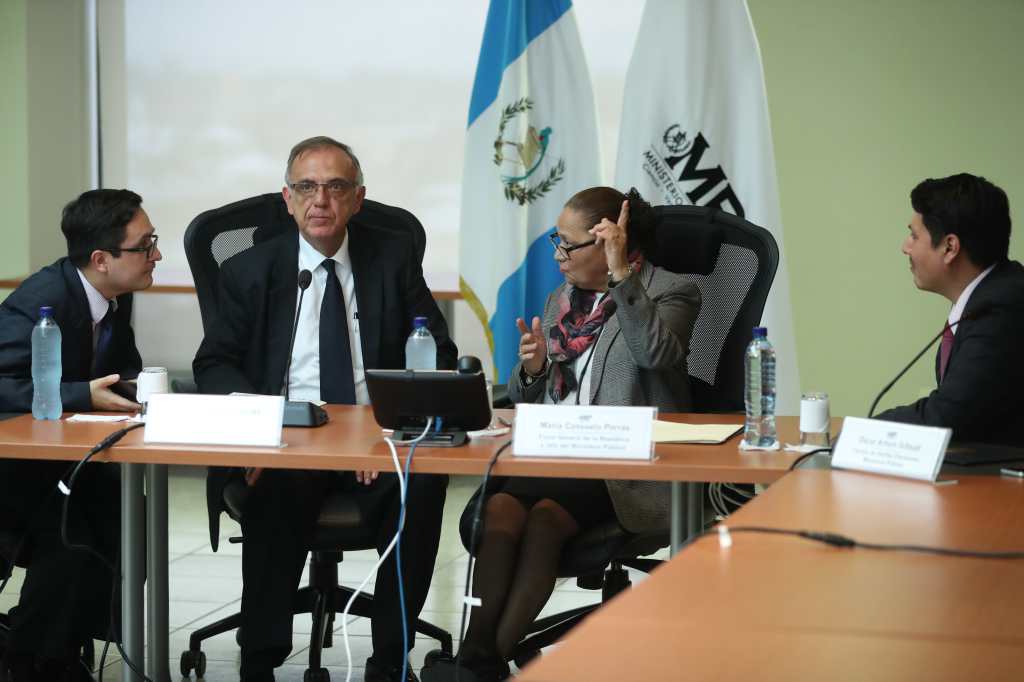
For Ortega, the removal of Rafael Curruchiche is an essential step to try to rescue the credibility of the prosecution.
“Unfortunately, Feci has become politicized not only in the exercise of this administration of the Public Ministry, but also in the previous one”he stated. He added that the new prosecutor “should replace” Curruchiche and possibly review the rest of the team.
In Ortega’s opinion, the Feci would have to redefine its orientation. “In my opinion it would have to go against drug trafficking leaders, against gang terrorists, to dismantle that kind of things. And that is not what we have seen,” held.
Monterroso agreed that the next attorney general should evaluate “the need to continue with Feci or close it”, taking into account that it was created to accompany the work of CICIG, initiating a transition process that transfers the accumulated files to the corresponding prosecutor’s offices according to the subject of the crime. In addition, he proposed that the changes should include the removal of Curruchiche.
Melgar reinforces this thesis by pointing out that the Feci has been “ideologically nuanced” at different stages, which generates a persistent mistrust that the new prosecutor should not carry. According to Melgar, “the healthiest thing would be to distribute the cases” which would allow the MP to focus on an objective criminal prosecution free of the stigmas of bias that today surround said unit.
Along the same lines, López, from Asíes, considered it feasible to carry out a comprehensive evaluation of the prosecution to determine “what results it has really obtained” and verify whether its investigations have followed adequate criminal prosecution criteria. “It is one of the prosecutor’s offices that has been in the public eye the most,” he stated.
Read also: Relief in the Public Ministry: The eight years of Consuelo Porras are rated