
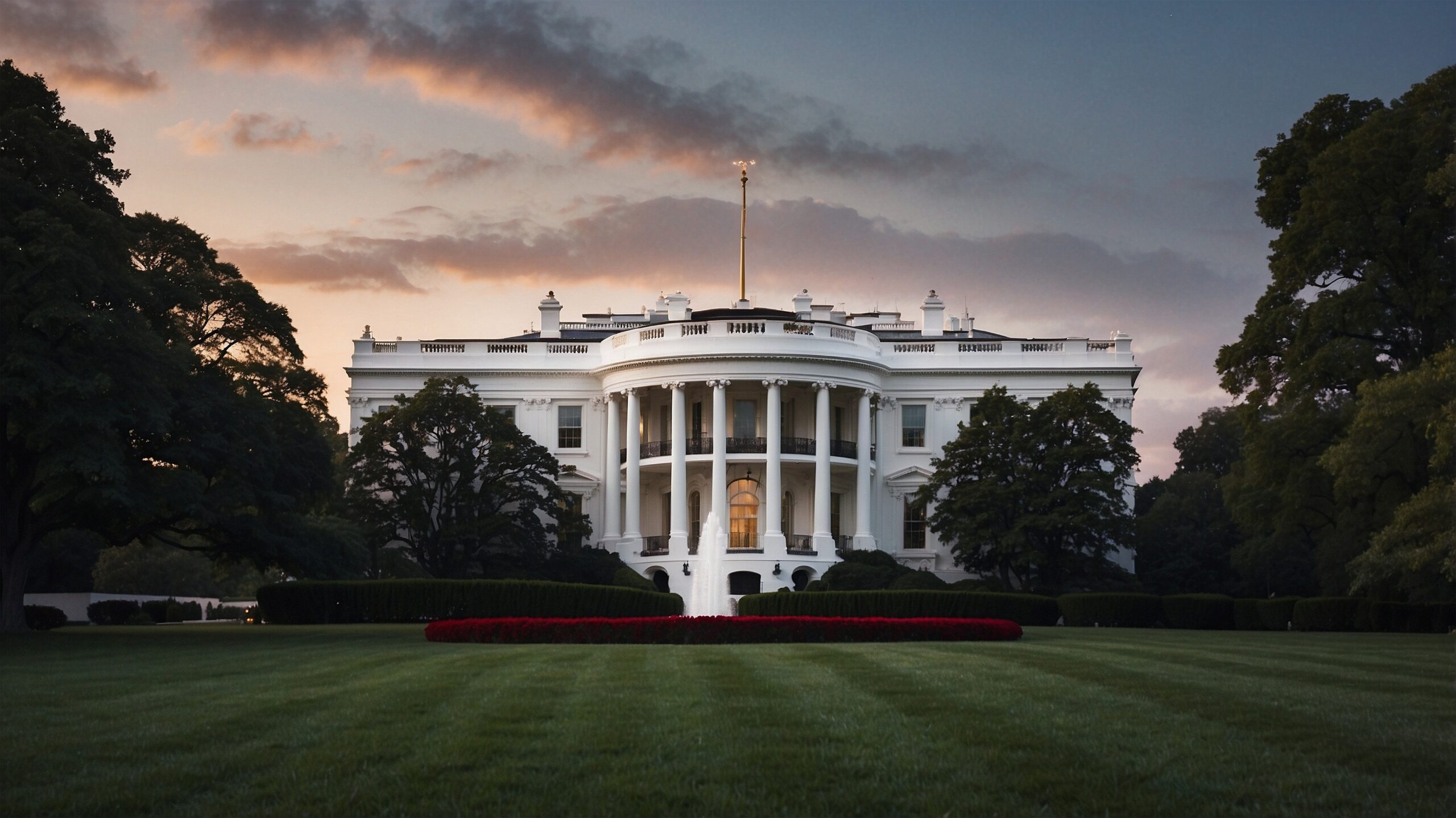
Defenders of American historical heritage filed a lawsuit to stop the project, and a federal judge ordered it stopped. However, the construction of the ballroom thatPresident Donald Trump’s plans to build the White House move forwardand the first sections of the structure are already rising above ground level, amid an ongoing legal battle and a dispute in Congress over how to finance it. For the first time, workers have built part of the work that will be visible once the project is completed, according to two people familiar with the project, who spoke on condition of anonymity because they were not authorized to discuss the matter publicly.
Recent work includes the beginning of the first floor, where planners plan to install a professional-quality kitchen and a suite of offices for the first ladies and their staff, one of the sources said. Photographs taken in recent days show that workers have erected a concrete structure topped with columns of exposed rebar, used to reinforce the pillars that will support the additional floors. Last March, a federal judge ordered surface works to stop, but The order was suspended while an Appeals court examines the case. The surface work marks a new phase for a project that began eight months ago with tree felling and excavation.
Until recently, construction had been virtually invisible to the public, focused on the underground infrastructure needed to support the 90,000-square-foot building and what Trump has described as a “huge” military complex. According to a source, those underground works remain the main focus of the project. In his order halting construction, federal Judge Richard Leon ruled that the project requires congressional authorization, and determined that work related to national security could continue, but the ballroom itself could not. Oral arguments on the appeal are scheduled for June 5.
With Leon’s order on hold, White House officials declared last month that they would continue construction of the ballroom, including its above-grade components from the ground. Historic preservationists and outside architects have noted that as construction on the project progresses, it will become increasingly difficult to alter or undo unless it is completely demolished. The Administration has relied heavily on national security arguments to justify moving the project forward. Justice Department lawyers have argued that any pause could endanger Trump, his family and White House staff, and that the planned building is designed to defend against “hostile attacks using drones, ballistic missiles, bullets, biological agents” and other potential threats.
After a gunman bypassed a security checkpoint outside the hotel hosting the White House Correspondents’ Dinner last month, Justice Department lawyers asked Leon to rescind his order, arguing that the shooting demonstrated why the president needed a large event space within the security perimeter of the White House grounds. Leon has not been convinced and has ruled twice that the Administration has not justified its national security argument. The National Trust for Historic Preservation, which filed suit in December last to block the project, has been equally skeptical.
“Simply put, this case does not jeopardize the president’s security in any way,” Gregory Craig, a lawyer at Foley Hoag — which represents the National Trust — wrote to Justice Department lawyers last month. The legal conflict has now spread to Congress. Last week, Senate Republicans proposed $1 billion to fund new security measures at the White House, linked to what the Government calls the East Wing Modernization Project. However, lawmakers and the White House immediately disagreed over what that money would actually go to.
Sen. Chuck Grassley, R-Iowa, chairman of the Senate Judiciary Committee, introduced the funding package with an explicit clause prohibiting its use for “non-security elements” of the project, a direct reference to Trump’s ballroom. “This bill does not fund the construction of the ballroom,” Grassley spokeswoman Clare Slattery said. The White House initially stated that the legislation, if passed, would authorize and fund the entire project. On Thursday of last week, White House spokesman Davis Ingle rectified, stating that it would be used for security improvements, while the construction of the building would be financed with private funds.
The dispute contradicts previous assurances from the White House that the project would be financed entirely with private funds. Trump had pledged not to spend public money on the ballroom, which he said could cost $400 million and would be financed by him and other donors. Republicans declared last Tuesday that the project’s security measures should not fall to private donors, but stopped short of supporting public financing of the ballroom itself. Democrats argued that the proposal shows that Republican priorities are out of step with voters, who focus on housing, health care and food.
A survey conducted last month by Washington Post, ABC News and Ipsos revealed that 56% of Americans oppose Trump’s decision to demolish the East Wing of the White House to make way for the project, while 28% support it. “It’s amazing what’s happening,” said Rep. Steve Cohen, D-Tenn., who has criticized the ballroom along with other Trump signature projects. “He has no respect for anyone, for memory, for history. Everything revolves around him.” The proposed $1 billion package would be incorporated into the Senate’s budget reconciliation bill, allowing it to pass by a simple majority and avoiding any potential parliamentary filibuster by Democrats.
Before processing, the Senate parliamentarian will review whether it complies with the rules that limit conciliation to provisions on expenses and income. Rank-and-file GOP members in the Senate and House have privately expressed concern about the request, which comes six months before the midterm elections and at a time when Americans are increasingly anxious about the economy and the war in Iran.
Construction of the project continues despite everything. Where the east wing once stood, the first above-ground walls are being raised, surpassing, for now, the legal and legislative processes intended to regulate them.